Daftar Isi
Contempt Resolution Advances for Dr. Fauci
Tyunews.com – The Senate committee votes to hold Dr. Anthony Fauci in contempt of Congress following a decisive party-line ballot on Thursday. Republicans on the Senate Homeland Security and Governmental Affairs Committee cast their votes after the former director of the National Institute of Allergy and Infectious Diseases invoked the Fifth Amendment against self-incrimination. This action comes after Fauci declined to answer specific questions regarding his role in managing the COVID-19 pandemic and its origins during a heated hearing last week.
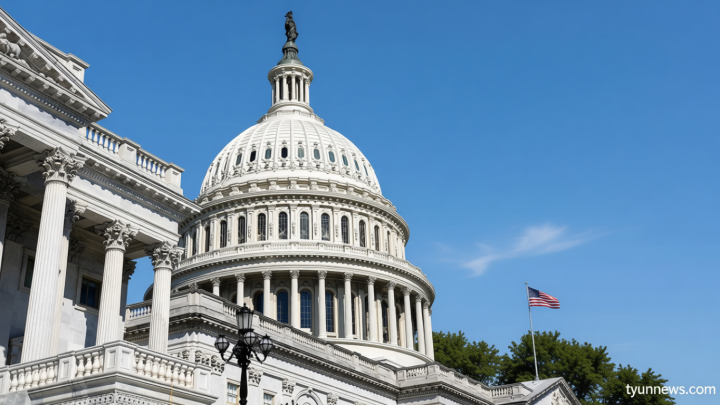
The committee's vote resulted in an 8-5 decision in favor of the resolution. Dr. Anthony Fauci appeared before the committee at the Capitol on July 29, 2026, in Washington, where he faced intense scrutiny from lawmakers. A contempt resolution typically moves to the full Senate next, where it would require a supermajority of 60 votes to pass. Given the current political landscape, it is considered unlikely that the Fauci resolution will secure enough support in the full Senate to succeed.
During the proceedings, Democrats attempted several times to table the resolution but were ultimately unsuccessful. The vote confirms that the Senate committee votes to hold the medical expert accountable for his refusal to testify fully. Republican Senator Rand Paul, who serves as the committee's chair, argued that Fauci's invocation of the Fifth Amendment was invalid. Paul stated that Fauci could not plead the Fifth Amendment because he had been preemptively pardoned by President Joe Biden, thereby removing the fear of political prosecution that typically justifies such a claim.
"Dr. Fauci's assertion of the Fifth Amendment privilege was unsupported in light of the pardon and the testimony he offered in his opening statement," Paul said ahead of the vote. "We are voting on whether a witness who has received the benefit of a sweeping federal pardon can be ordered by this committee to answer questions and then defy that order without consequence," he added.
Legal and Political Implications
Democratic Senator Gary Peters, the committee's ranking member, strongly criticized the outcome. He argued that the decision sets a damaging precedent for future congressional investigations. Peters noted that the vote disregards constitutional protections long recognized by the U.S. Senate. He emphasized that the resolution would not provide the committee with any additional information, nor would it compel Dr. Fauci to provide answers to their inquiries through this specific mechanism.
Peters clarified that criminal contempt is primarily punitive rather than compelling. He explained that it does not force a witness to answer questions or produce documents, which are the primary goals of congressional oversight. Additionally, Peters condemned Paul's suggestion of possibly referring the contempt resolution directly to the Department of Justice after the vote. He described such a move as even more dangerous and widely unprecedented in American political history.
As the process continues, the resolution awaits consideration by the full Senate. The outcome will depend on bipartisan cooperation and the interpretation of the presidential pardon's scope. For more updates on this developing story, readers can follow ABC News Politics for live coverage and analysis.
Frequently Asked Questions
What is the significance of the 8-5 vote?
The 8-5 vote represents a strict party-line division, indicating strong Republican support for holding Fauci in contempt while Democrats opposed the measure. This margin reflects the political polarization surrounding the investigation into pandemic-era decisions.
Why did Fauci invoke the Fifth Amendment?
Fauci invoked the Fifth Amendment to avoid self-incrimination, citing potential legal risks associated with his testimony. However, critics argue this privilege is less relevant now that he has received a preemptive pardon from President Biden.
What happens next in the contempt process?
After the committee vote, the resolution moves to the full Senate. It requires 60 votes to pass. If passed, it may be referred to the Department of Justice for criminal contempt proceedings, though this step is subject to debate.