Talarico Walks Back Comments on Religion and Gender After Paxton’s Win
Political Shift After Paxton’s Victory
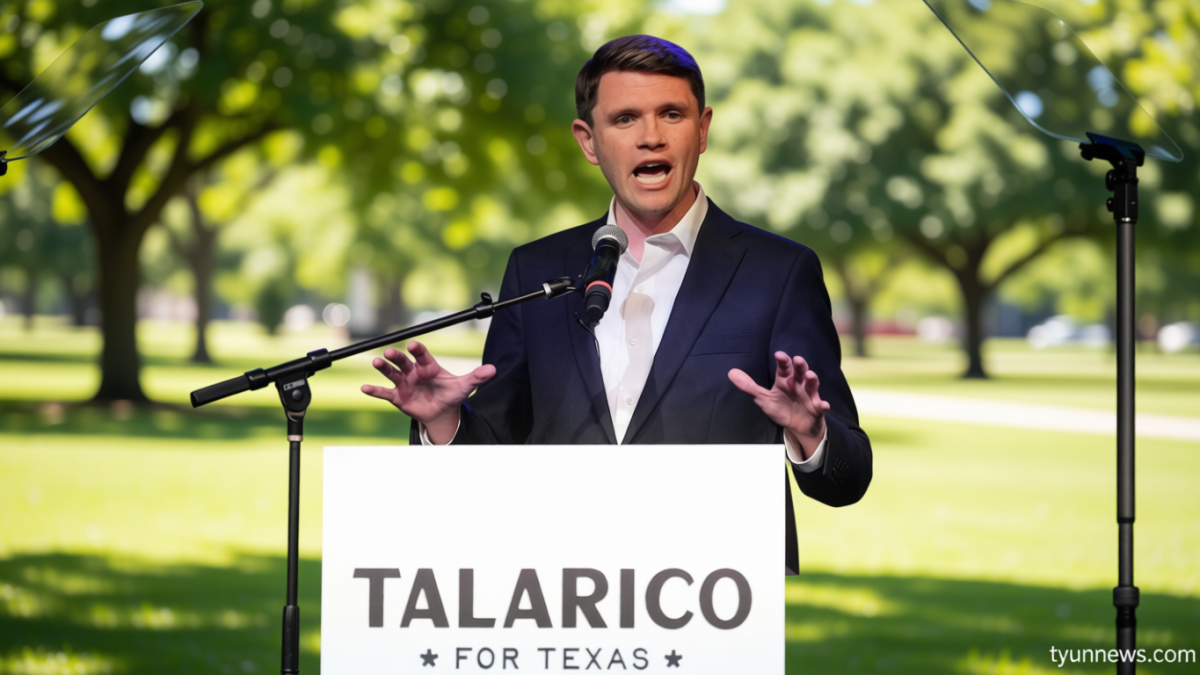
Tyunews.com – Following Ken Paxton’s triumph in the Texas U.S. Senate race, state Representative James Talarico has made efforts to distance himself from earlier remarks that sparked significant controversy. The Democratic contender, who secured the party’s nomination for the Senate seat, recently addressed his past statements during a live interview with ABC News. His comments, which suggested that “God is non-binary,” had become a central point of criticism in the race against Paxton, the Republican state attorney general.
“Ken Paxton is clipping my past cringey comments to distract from his career of corruption,” Talarico stated, describing the GOP’s strategy as part of a broader “playbook” aimed at “distraction and division.” He emphasized that his remarks were not meant to be taken literally but were instead crafted to challenge conventional understandings of religious and gender identity.
Talarico’s defense highlights a strategic pivot in his campaign, as he seeks to reconcile his progressive stances with the conservative electorate that now supports Paxton. The representative argued that Republicans are leveraging his comments to shift focus from their own policies, particularly those related to corruption and governance. “They’re using this to try and distract from the corrupt system that Ken Paxton embodies,” he explained, framing the debate as a battle between ideological extremes.
Ad Campaigns and Messaging Tactics
Paxton’s campaign capitalized on Talarico’s remarks, incorporating them into a general election advertisement that features the slogan “Radical Talarico: too low-T for Texas.” The term “low-T” refers to low testosterone levels, a phrase often used to mock masculinity in men. This ad targets voters concerned about the influence of gender ideology, linking Talarico to a perceived departure from traditional values.
Talarico’s comments on transgender rights and immigration have also been part of Paxton’s messaging strategy. By associating the Democrat with broader progressive policies, the GOP candidate aims to paint him as an outsider to Texas culture. The ad’s emphasis on Talarico’s “radical” views suggests a deliberate effort to position him as a threat to the state’s social norms, despite his support for moderate policies on other fronts.
Reactions and Strategic Implications
Democratic leaders have acknowledged Talarico’s potential to attract voters beyond their base, including independents and Republicans who are disaffected by Paxton’s record. This cross-party appeal is seen as a critical factor in securing the Senate seat, which could shift control of the chamber in the next election cycle. However, Talarico’s attempts to moderate his messaging have not fully quelled the GOP’s attacks.
Republican leadership, which initially backed Senator John Cornyn as Paxton’s primary opponent, has since aligned with the attorney general. Senate Majority Leader John Thune called Talarico a “far left liberal” during a recent radio appearance, reinforcing the narrative that the Democrat represents a radical departure from mainstream conservatism. The National Republican Senate Committee, which had previously criticized Paxton, has now issued a statement opposing Talarico without explicitly naming him, signaling a shift in focus.
Talarico’s campaign has actively sought to court Trump supporters and Cornyn voters, who are vital to winning statewide elections in Texas. In a statement to ABC News, he noted, “There is a lot of disillusionment among the president’s supporters here in Texas, and I’m extending an open hand to those Trump voters. So that they know they have a place in our campaign.” This outreach underscores his determination to broaden his appeal beyond traditional Democratic demographics.
Context and Broader Electoral Landscape
The Senate race has been marked by sharp ideological divides, with Paxton’s campaign exploiting Talarico’s comments to stoke concerns about religious and gender identity. This tactic mirrors broader strategies seen in the 2024 presidential race, where Republicans have used similar themes to mobilize their base. The Democratic National Committee’s after-action report on the election highlighted the effectiveness of GOP attack ads that labeled Kamala Harris as “for they/them,” a move that resonated strongly with conservative voters.
Talarico’s comments, though initially provocative, reflect a growing debate within political circles about the role of identity in public policy. By suggesting that human categories cannot fully define God, he aligns with progressive thinkers who advocate for a more inclusive understanding of faith. Yet, this stance has also drawn criticism from opponents who argue it undermines traditional religious teachings.
As the campaign progresses, Talarico faces the challenge of balancing his progressive values with the need to resonate with a broader audience. His ability to navigate these tensions will be crucial in determining the outcome of the race. Meanwhile, Paxton’s victory has solidified his position as the Republican nominee, with his campaign now focusing on leveraging Talarico’s comments to maintain momentum in the general election.
Editor’s Note
This story has been corrected to clarify that Texas State Rep. James Talarico’s remarks were central to the debate. It has also been updated to note that the National Republican Senate Committee, not the Senate Majority PAC, has withdrawn previous attacks on Paxton and now opposes Talarico. These adjustments ensure accuracy in the narrative surrounding the race and its key players.