Daftar Isi
Federal Officials Investigating Marine One Safety Incident
Tyunews.com – Federal officials investigating Marine One safety protocols following a notable air traffic incident this week. Aviation authorities and the National Transportation Safety Board (NTSB) are conducting a thorough review of the event involving the presidential helicopter while President Donald Trump remained safely aboard. The occurrence transpired approximately 2:30 p.m. ET on Tuesday as Marine One departed from the Ellipse near the White House, carrying the president toward Joint Base Andrews in Maryland for the initial segment of his West Coast journey, according to an official Federal Aviation Administration (FAA) statement released Wednesday.
What Happened During the Takeoff
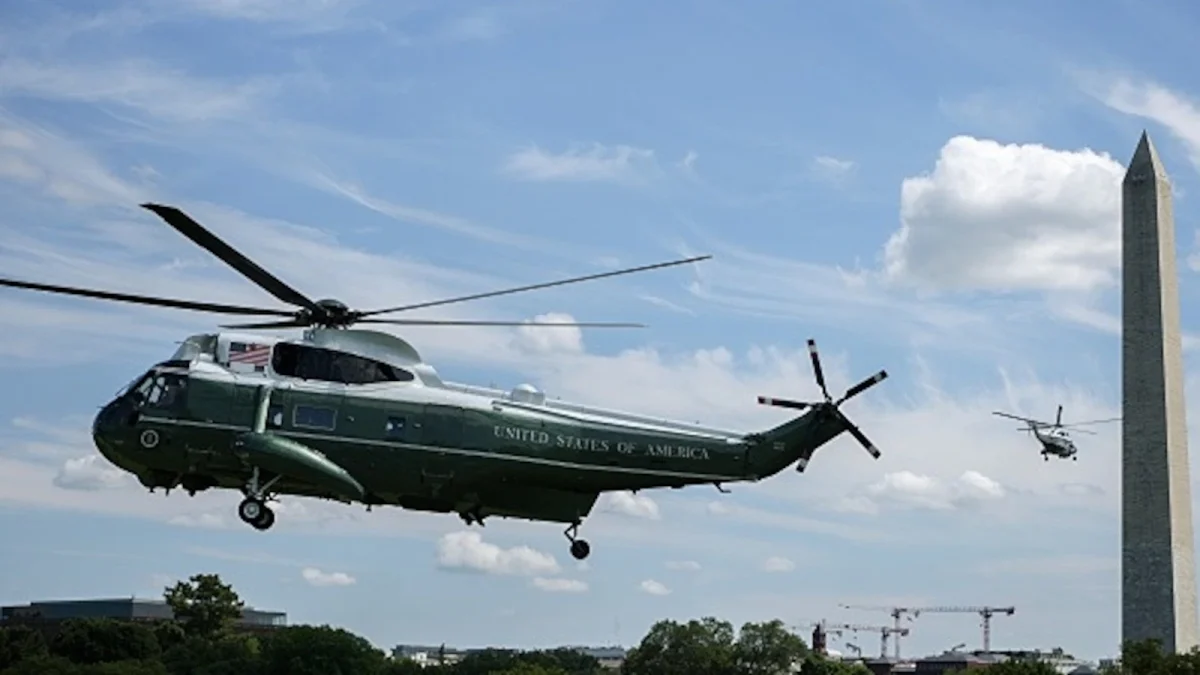
President Donald Trump boards Marine One en route to Joint Base Andrews from the Ellipse near the White House, August 04, 2026, in Washington, D.C. Alex Wong/Getty Images However, a critical protocol breach emerged during the helicopter’s departure. Commercial air traffic at the nearby Ronald Reagan Washington National Airport (DCA) failed to halt as mandated by established safety procedures. Under normal circumstances, air traffic controllers must suspend all other aircraft movements three minutes prior to Marine One’s scheduled departure time.
Audio recordings from ATC.com reveal that Marine One successfully transmitted a three-minute departure notice to controllers. Unfortunately, a controller missed this crucial transmission due to overlapping radio frequency activity from another party. Marine One carrying President Donald Trump departs, August 4, 2026, from the Ellipse near the White House in Washington, D.C., en route to Joint Base Andrews. Alex Wong/Getty Images The White House quickly addressed public concerns, stating: “Marine One flights are piloted by some of the best aviators in the world, and at no point was the President in harm’s way.”
FAA Investigation and Findings
The FAA’s preliminary investigation identified what the agency characterized as a “momentary loss of separation” between Marine One and an American Airlines regional carrier simultaneously departing from the airport. Federal Aviation Administration regulations mandate that commercial aircraft maintain minimum separation distances of 1.5 miles horizontally and 500 feet vertically from helicopters operating near DCA. The FAA confirmed that the American Airlines flight never approached Marine One at a dangerous proximity during the incident.
The Wall Street Journal initially reported the occurrence on Tuesday evening. According to the FAA’s preliminary safety assessment: “Based on our preliminary safety review, there was momentary loss of separation after which the aircraft continued to move away from one another.” The agency further noted that the air traffic controller maintained communication with both the commercial pilot and Marine One pilot throughout the separation event. The FAA has committed to implementing appropriate corrective measures once its comprehensive review concludes.
Broader Implications for Presidential Aviation
This incident has prompted renewed scrutiny of air traffic coordination procedures surrounding presidential movements. Federal officials investigating Marine One safety are examining whether additional training or protocol adjustments might prevent similar occurrences in the future. The NTSB may join the FAA in conducting a more detailed investigation into the specific circumstances that led to the missed transmission and subsequent separation loss.
Aviation experts note that while the incident was relatively minor in terms of actual risk, it highlights the complexity of managing airspace around one of the most heavily protected aircraft in the world. The coordination between military and civilian air traffic control systems remains critical to ensuring presidential safety during all travel operations.
Frequently Asked Questions
What exactly happened with Marine One?
Marine One departed from the Ellipse near the White House while commercial air traffic at Reagan National Airport failed to pause as required. A controller missed the helicopter’s three-minute departure notice due to radio frequency interference, resulting in a momentary loss of separation from an American Airlines flight.
Was President Trump in danger during the incident?
No. The White House confirmed that at no point was the President in harm’s way. The American Airlines regional carrier never approached Marine One at a dangerous distance, and standard separation protocols were maintained throughout the event.
What are the next steps in the investigation?
The FAA is conducting a thorough review and will implement appropriate corrective actions based on findings. The NTSB may also participate in examining the incident to ensure comprehensive oversight of the safety protocols involved.
How often do similar incidents occur?
While specific frequency data varies, air traffic coordination issues during presidential movements are relatively uncommon given the extensive protocols in place. This incident prompted additional review due to the protocol breach rather than any actual danger to the aircraft or passengers.