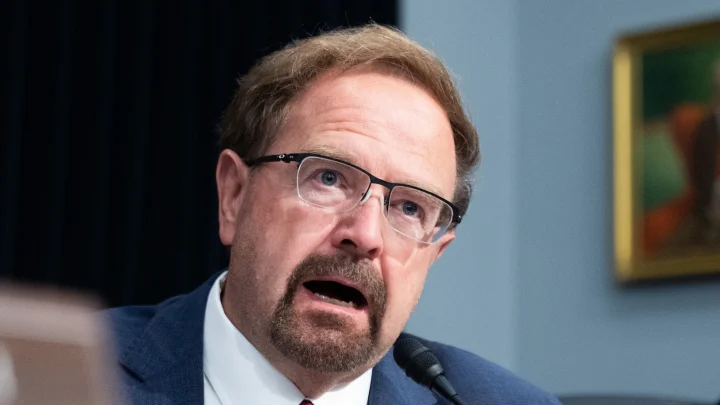
El-Sayed apologizes for comments responding to attack on Michigan synagogue

Daftar Isi
Michigan Senate Candidate El-Sayed Issues Formal Apology to Jewish Caucus Over Synagogue Attack Remarks
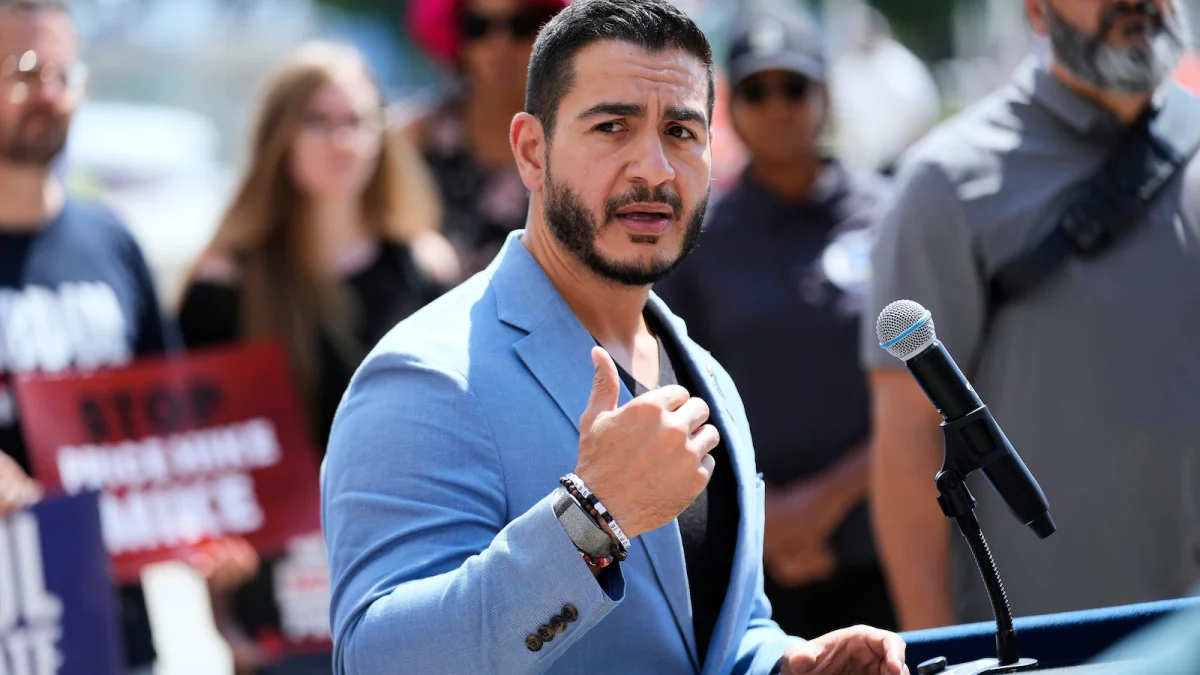
Tyunews.com – In a move aimed at mending fractures within his own party ahead of a pivotal November contest, Abdul El-Sayed delivered a pointed apology to Michigan’s Jewish Democratic Caucus on Saturday, acknowledging that his remarks in the aftermath of a deadly synagogue attack had landed poorly with many in the community. Speaking after addressing the caucus at a Democratic Party convention in Lansing, the state’s Democratic nominee for U.S. Senate conceded that his words, offered weeks after a man killed a security guard at Temple Israel in a Detroit suburb, had been read by some as an implicit endorsement of the violence.
“My comments may have been misconstrued to justify something I did not mean to justify,” El-Sayed told reporters following his remarks to the caucus. “To anyone who feels like my comments might have been hurtful, I’m really sorry. That was not my intention.”
The March Attack and the Comments That Followed
The incident at the center of the dispute occurred in March, when Ayman Mohammad Ghazali drove his vehicle into the entrance of Temple Israel synagogue, located in a suburban neighborhood outside Detroit. After ramming the building, Ghazali opened fire on a security guard stationed at the entrance. He then took his own life at the scene. In the days before the attack, Ghazali had lost four family members in an Israeli airstrike on Lebanon, a fact that drew widespread attention and sympathy across the region.
In a video statement released shortly after the shooting, El-Sayed condemned the violence and expressed grief over the loss of life. He then added the phrase “hurt people hurt people,” a line intended to acknowledge the trauma Ghazali’s family had endured in Lebanon. The remark, however, quickly became a flashpoint. Critics across the political spectrum argued that invoking the attacker’s personal grief in the immediate aftermath of a synagogue shooting risked normalizing the act or shifting focus away from the victims of the attack.
El-Sayed’s Explanation and the Apology
On Saturday, El-Sayed offered what he described as a clearer account of his intent. He said he had been attempting to supply background context for why the attack occurred, but acknowledged that the moment called for solidarity with victims rather than analytical framing.
“What I was trying to do was offer context for why it happened, but it wasn’t the time for context,” he said. “And you don’t ever want to trample somebody’s pain.”
The apology marks the most recent in a series of public gestures El-Sayed has made to reassure Jewish voters and Democratic Party leaders that he understands the sensitivity surrounding synagogue safety and the broader question of how American politicians speak about Israel’s military operations in the Middle East.
Primary Fallout and the Road to November
The controversy over the synagogue remarks was one of several flashpoints during a bruising Democratic primary in which El-Sayed ultimately defeated incumbent U.S. Representative Haley Stevens. The campaign was marked by sharp internal disputes, and El-Sayed has spent the weeks since the election working to consolidate the party’s base before facing Republican nominee Mike Rogers in the general election.
The Michigan Senate seat carries outsized national significance. Whichever candidate wins will help determine which party controls the U.S. Senate in January, making the race one of the most closely watched mid-level contests in the country. For El-Sayed, that stakes the importance of presenting a united front: any lingering perception of division within the Democratic coalition could be exploited by Rogers, a former congressman and former Army colonel who has positioned himself as a straightforward, non-ideological alternative.
Broader Questions About Antisemitism Allegations
Beyond the synagogue comments, El-Sayed has faced scrutiny over what opponents and some party figures have characterized as antisemitic undertones in his public record. Among the points raised is his social-media association with Hasan Piker, a popular internet commentator whose views on Israel and Jewish identity have drawn criticism from both Jewish organizations and some Democratic leaders. El-Sayed has not formally distanced himself from Piker, a choice that has kept the issue alive in party-internal discussions.
The Saturday apology, delivered in front of the Jewish Democratic Caucus at a formal party event, was widely read as an attempt to close that chapter. Whether it succeeds will depend in large part on how Michigan’s Jewish community and the broader Democratic establishment respond in the coming weeks. For a candidate whose path to the Senate depends on holding together a coalition that includes suburban Jewish voters, progressive activists, and working-class Democrats, the cost of another misstep could prove decisive.
El-Sayed did not elaborate further on specific policy positions regarding Israel or the Middle East during his Saturday remarks, focusing instead on the interpersonal dimension of the apology. The question of how he will frame foreign-policy issues in the general-election campaign remains open, and party strategists in Lansing are watching closely to see whether the tone of the Saturday address signals a durable shift or a temporary recalibration.
Related Reading
Frequently Asked Questions
What is El Sayed apologizes for comments responding?
El Sayed apologizes for comments responding is the main topic of this guide. The article explains the context, practical details, and next steps readers should understand.
Why does El Sayed apologizes for comments responding matter?
El Sayed apologizes for comments responding matters because readers are looking for a useful answer, not just a short summary. Good content should match search intent and help them decide what to do next.