‘I was fighting for my life’: Pilot hailed as hero recalls FlyDubai cockpit attack

Daftar Isi
Pilot Recovers After Midair Cockpit Attack Forces Emergency Landing
Tyunews.com – An Indian airline captain is recovering in an Abu Dhabi hospital after surviving a violent cockpit attack and helping prevent what could have become a catastrophic incident aboard a FlyDubai flight bound for Tel Aviv.
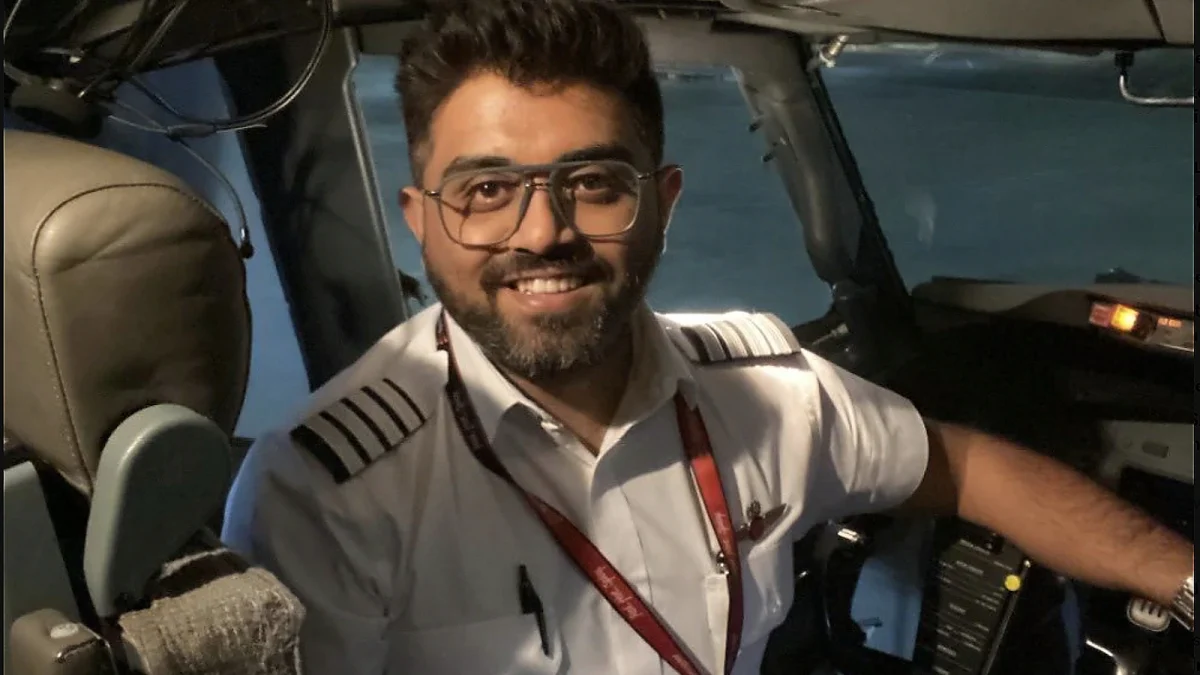
Capt. Smit Machchhar was seriously wounded on Wednesday when his co-pilot allegedly stabbed him during the flight from Dubai. Despite collapsing during the confrontation, Machchhar realized the Boeing 737 had begun descending rapidly and understood that regaining control was essential for the safety of everyone on board.
“I was fighting for my life. At one point, I realized that if I didn’t get up … then passengers would lose their lives,”
Machchhar shared his account in a televised video call with Indian Prime Minister Narendra Modi on Friday. He appeared from his hospital bed with bandages around his head and medical tubes in his nose, becoming emotional as he recalled the minutes following the attack.
The aircraft was carrying 182 people when it was diverted to Tabuk, in northwestern Saudi Arabia, where it made an emergency landing. The flight had departed Dubai and was heading to Tel Aviv.
A steep descent and a struggle for control
Machchhar said his experience in the cockpit allowed him to recognize the aircraft’s condition even while he was down after the assault. He described feeling the plane dropping sharply and knowing that immediate action was needed.
“I have been flying planes for 17 years and serving as a captain for the last 11 years. I can sense exactly what is happening with the aircraft even with my eyes closed. When I was down, I could feel that the aircraft was plummeting,”
Witnesses and Israeli authorities said Machchhar managed to open the cockpit door. That enabled passengers to enter the flight deck and restrain the alleged attacker while the plane was in distress. FlyDubai said the aircraft was secured by on-duty crew members, who diverted the flight and landed safely. A regional official identified the crew members involved as pilots in training.
The suspected attacker is an Omani national who was arrested in Saudi Arabia and was being questioned there. No motive was immediately established.
The episode drew international attention because cockpit security is built around preventing unauthorized access and protecting pilots from outside interference. A confrontation involving one crew member attacking another is an especially unusual and dangerous emergency: the people expected to manage the aircraft are suddenly forced to deal with a threat inside the flight deck itself.
Experience under pressure
Machchhar, who is from Mumbai, has been praised for his response during the crisis. Modi told him that his composure, patience and courage had protected many lives.
During the hospital call, Machchhar also spoke about finding strength through prayer. He said he recited the Hanuman Chalisa, a Hindu devotional hymn associated with Lord Hanuman and often used as a prayer for courage and resilience.
“Lord Hanuman gave me courage,”
The captain is married and has two children. He has worked for FlyDubai for roughly four years. Before that, he spent 11 years at SpiceJet, the Indian low-cost airline, where he served as a senior commander and line training captain. During his time there, he accumulated more than 9,750 flying hours.
Those years of flying gave him an instinctive awareness of the aircraft’s movement, but aviation training generally focuses on technical emergencies, weather, mechanical failures and situations in which another pilot becomes unable to perform their duties. It is not typically designed around an intentional physical assault by a colleague.
Philip Kean, chief executive of Mainland Air, the New Zealand flight school where Machchhar trained, said pilots learn how to assume control if another crew member is incapacitated. He noted, however, that a stabbing attack presents circumstances far beyond routine training scenarios.
“I don’t think there’s much in the handbook for being stabbed,”
Kean said the nature of cockpit work normally depends heavily on trust between pilots sharing a flight deck.
“You’re friends and you’re flying together,”
“Nobody would expect … a person to have a go at you like that.”
Questions remain after safe landing
The emergency landing in Tabuk brought the immediate danger to an end, but the incident leaves major unanswered questions, most importantly why the attack occurred. Saudi authorities are holding the suspect while the investigation continues.
For passengers and crew, the event illustrates how quickly an ordinary commercial journey can turn into a life-threatening emergency. The response required the captain to overcome severe injuries, other crew members to help secure the aircraft, and passengers to intervene after access to the cockpit became possible.
Machchhar’s recovery remains the immediate concern for his family and colleagues. His account of the ordeal has centered on a stark decision made while injured on the cockpit floor: he believed he had to rise because the lives of the people behind the cockpit door depended on it.
Related Reading
Frequently Asked Questions
What is I was fighting for my life?
I was fighting for my life is the main topic of this guide. The article explains the context, practical details, and next steps readers should understand.
Why does I was fighting for my life matter?
I was fighting for my life matters because readers are looking for a useful answer, not just a short summary. Good content should match search intent and help them decide what to do next.