Democratic women could make history in midterm governor and House races

Daftar Isi
Democratic women seek a larger breakthrough in governor and House contests
Tyunews.com – Democratic women are positioned to pursue a new set of political milestones in November’s midterm elections, with competitive governor’s races and House campaigns likely to determine how large that advance becomes. Four years after eight Democratic women won governorships in one election, the party is attempting to surpass that mark, including in states where Democrats face difficult terrain.
The stakes extend beyond state capitols. Democrats are also aiming to push the number of women in their House caucus above 100. Candidates and political groups see both goals as attainable, though the outcome will depend heavily on a relatively small number of closely fought contests.
A record number of Democratic nominees
Women are major-party nominees in 26 gubernatorial races this cycle, exceeding the previous high of 25 set in 2022. Nineteen of those nominees are Democrats, another record and an increase from 16 four years earlier. Republicans have nominated seven women for governor, compared with nine in 2022.
Democrats have built a broad network focused on helping women enter and advance in politics, including candidate training, recruitment efforts, political action committees and fundraising organizations. That support can help create a longer pipeline from prospective candidates to elected office.
Republican strategists have argued that the central issue is less about whether institutional support exists and more about recruiting enough women who want to seek office. The party has continued to welcome women candidates, they say, even as this year’s nominee pool has skewed more heavily male.
Ohio race puts Amy Acton in the spotlight
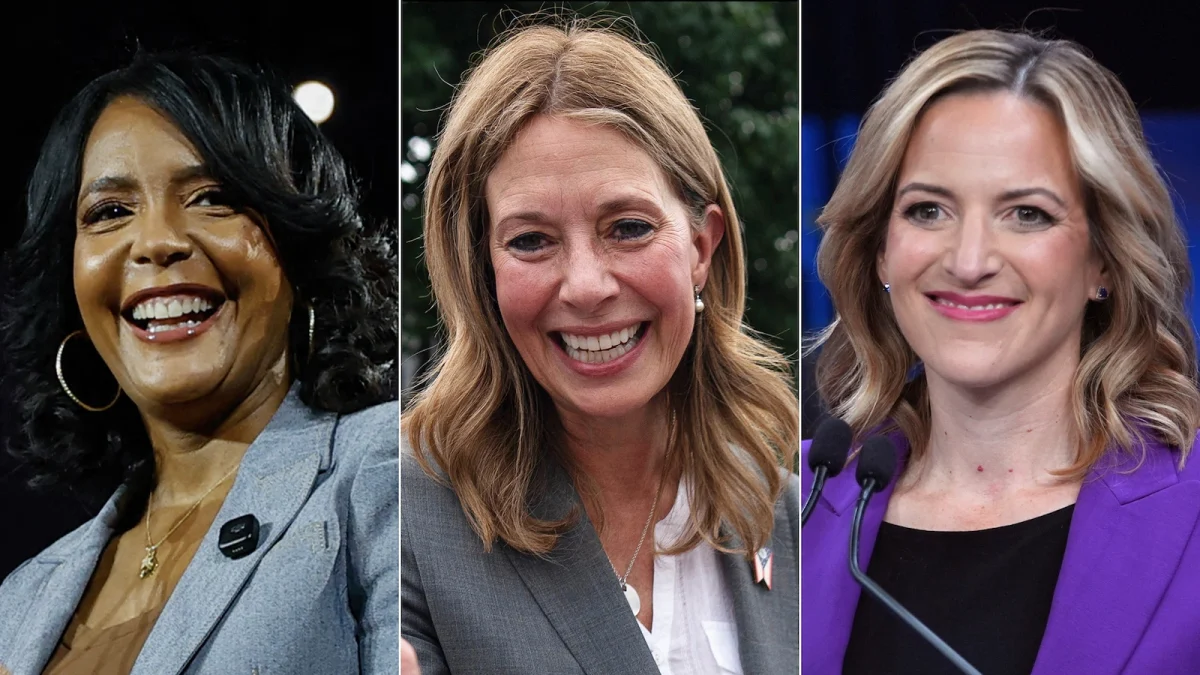
In Ohio, Democratic nominee Dr. Amy Acton is running to become the state’s first woman governor. Her contest against Republican nominee Vivek Ramaswamy has drawn attention after an attack advertisement featuring Acton’s estranged mother.
Acton has said her mother supported the man who was criminally charged with sexually abusing Acton when she was a child. The man died in 2004. Ramaswamy’s advertisement prompted criticism from figures across party lines, and Acton has condemned him for continuing to defend the ad in subsequent public appearances.
At a Cleveland rally with former President Barack Obama on Oct. 24, 2026, Acton framed the campaign as a test of resilience while rejecting the idea that compassion is incompatible with strength.
“I’m a scrappy kid from Youngstown. I’ve seen a thing or two, and I’m up for this fight. But kindness shouldn’t be seen as weakness.”
The episode illustrates how intensely personal narratives can become part of modern statewide campaigns. For voters, the race also carries the broader question of whether Ohio will elect a woman to its highest state office for the first time.
Healthcare message shapes Michigan campaign
Michigan Secretary of State Jocelyn Benson, the Democratic nominee for governor, has made healthcare a central part of her appeal. Benson has discussed her miscarriage when speaking with voters about access to care and the consequences of reduced services.
She has pointed to the closure of three Planned Parenthood clinics in Michigan following federal funding cuts. One of those facilities was the Upper Peninsula’s only Planned Parenthood clinic, a development that highlights the additional travel burdens patients may face in a large and geographically varied state.
“Behind every clinic closure is a woman who has to drive two extra hours for care or go without it.”
Benson’s race is among those that could shape the national picture for women governors. Her candidacy also reflects a campaign strategy that treats personal experience as relevant context for policy debates, particularly when discussing reproductive and preventive healthcare.
Potential firsts in Texas, New Mexico and Georgia
Several Democratic nominees could make history beyond the immediate partisan outcome of their elections. Texas candidate Gina Hinojosa could become the first Latina governor in the state’s history. In New Mexico, former Interior Secretary Deb Haaland is seeking to become the first Native American woman to serve as a governor.
Keisha Lance Bottoms, the Democratic nominee in Georgia, could become both the state’s first woman governor and the first Black woman ever to lead a state. Her candidacy carries national significance because no Black woman has yet held a governorship in the United States.
These campaigns underscore how gubernatorial elections can influence representation far beyond one state. Governors direct executive agencies, sign or veto legislation, shape state budgets and often become prominent voices in national party politics. A larger number of women in those positions could affect not only who holds office, but also who sees a viable path to seek it next.
Authenticity remains a central campaign theme
New Jersey Gov. Mikie Sherrill, the state’s first Democratic woman governor, has argued that Democrats drew the wrong conclusion from their 2024 losses. In her view, some party insiders placed too much emphasis on projecting a crass “male bro culture” as a sign of toughness.
Sherrill has instead pointed to the success of what she describes as “steely-eyed women,” arguing that voters respond more strongly to candidates who appear genuine. The debate reflects a wider question confronting both parties: whether electoral strength comes from imitating an assumed political style or from allowing candidates to communicate in ways that fit their experience and public identity.
November’s results will offer a clearer answer. The record number of women nominees guarantees a notable presence on statewide ballots, but the most consequential measure will be whether leading candidates in Ohio, Michigan, Texas, New Mexico, Georgia and other competitive states can convert historic opportunities into victories.
Related Reading
Frequently Asked Questions
What is Democratic women could make history in midterm?
Democratic women could make history in midterm is the main topic of this guide. The article explains the context, practical details, and next steps readers should understand.
Why does Democratic women could make history in midterm matter?
Democratic women could make history in midterm matters because readers are looking for a useful answer, not just a short summary. Good content should match search intent and help them decide what to do next.