The Lindsay Clancy jury says they’re still deadlocked. What happens next?

Daftar Isi
Jury in Lindsay Clancy Murder Trial Remains Deadlocked After Second Consecutive Day of Stalemate
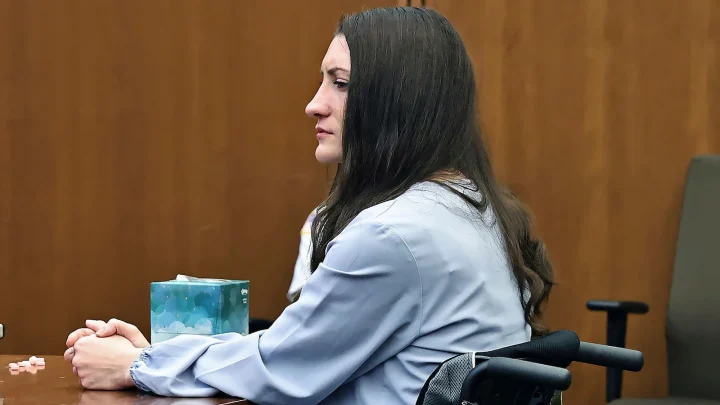
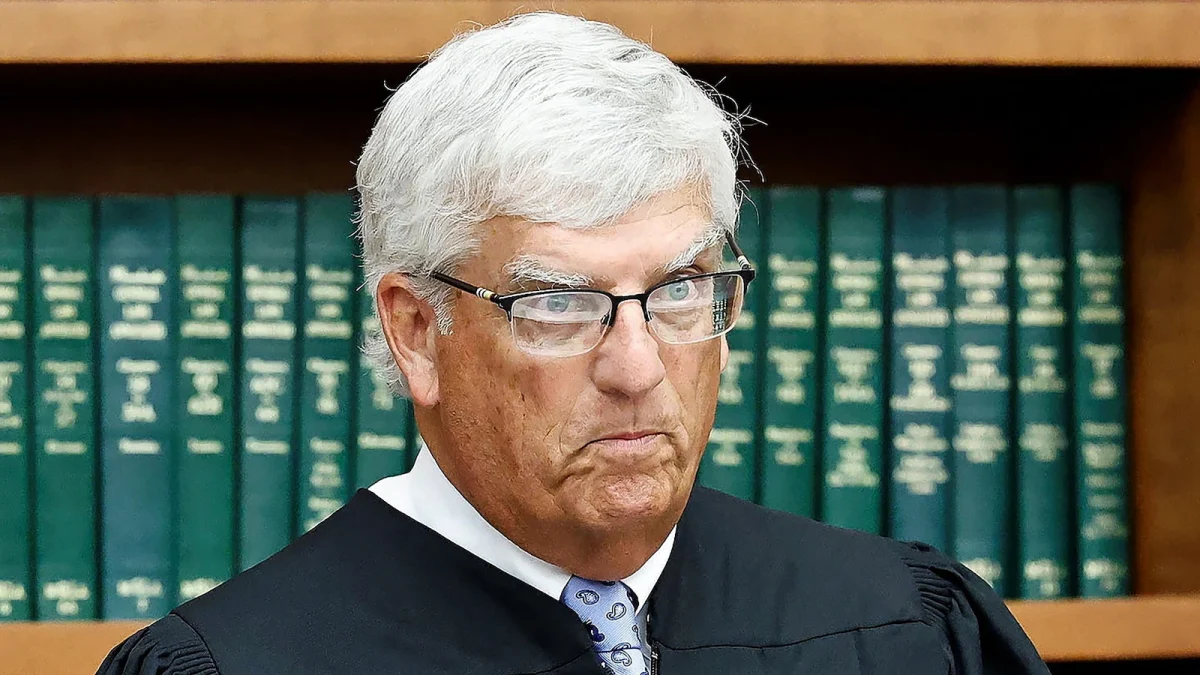
Tyunews.com – Thirty hours of closed-door deliberation across five days have produced no verdict in the Plymouth, Massachusetts, murder trial of Lindsay Clancy, leaving the court in limbo and raising urgent questions about what comes next. On Wednesday afternoon, jurors informed Judge William Sullivan that they had reached an impasse for the second straight day, prompting the judge to deliver a Tuey-Rodriguez instruction urging them to press forward toward a decision.
The trial, which consumed weeks of courtroom testimony, centered on a harrowing January 2023 incident in which Clancy strangled her young children and then attempted to end her own life. The central legal question was whether she was experiencing postpartum psychosis at the time of the killings — a condition that, if established, could shield her from criminal liability — or whether she should be held fully accountable for the deaths. A psychiatrist called to testify by the defense placed Clancy’s mental state squarely into question, casting doubt on whether a rational actor would have understood the nature of her actions.
The Tuey-Rodriguez Instruction and What It Means
When a jury reports it cannot agree, judges in Massachusetts have a standard tool: the Tuey-Rodriguez instruction, named for two landmark state cases. It reminds jurors that reaching a verdict is their obligation if they can do so conscientiously, and that no future panel of jurors will be wiser, fairer, or better informed than the one currently seated. The instruction also notes that no additional evidence will surface to tip the scales.
“There is no reason to suppose that the case will ever be submitted to six persons who are more intelligent, more impartial, or more competent to decide it than you are, or that more or clearer evidence will be produced on one side or the other.”
By reading this instruction, Sullivan signaled that he expected the jurors to return to the deliberation room and continue working. Whether they will reach consensus before the court adjourns for good remains uncertain.
What Happens If the Deadlock Holds
Boston-based criminal defense attorney Peter Elikann cautioned that sending the jury back to deliberate once more could tip the situation into a hung jury if no breakthrough occurs.
“At that point, the judge has to declare a mistrial, unless he has the consent of the jury who would want to go out again, and that’s rather doubtful.”
“This is really it. This is kind of the final push.”
A mistrial would not end the matter outright. Several procedural paths open up afterward, and the decision of which to pursue rests largely with the prosecution.
Scenario One: Bail and a Potential Retry
Legal analyst Brian Buckmire explained that the defense’s first move after a mistrial would almost certainly be a bail application — seeking either a monetary bond or outright release so that Clancy would not sit in custody while the state decides whether to bring the case back.
“First and foremost, the defense is probably going to ask for bail, some amount of money or release, that she does not have to be incarcerated pending the prosecution decision as to whether or not they’re going to retry her.”
Buckmire noted the prosecution could decide to retry Clancy immediately or within a short window following the mistrial declaration. In his assessment, a second trial is the most probable outcome.
Scenario Two: Plea Negotiations
Elikann outlined an alternative path in which prosecutors, having seen the jury fracture, might approach the defense with a compromise offer — reducing the charges to something substantially lesser in exchange for a guilty plea.
“In many cases, the prosecution, after having a deadlocked jury, will kind of say to the defense, ‘Let’s compromise. We’ll break down the charges to something much lesser, and can we agree on that, that you’ll plead to something, a much more minor charge.'”
Buckmire acknowledged the possibility but added that prosecutors might simply refuse to dilute any of the original charges and proceed straight to a retrial.
Scenario Three: Dropping the Case
Elikann acknowledged the theoretical option of the state declining to retry altogether, though he characterized that outcome as unlikely given the gravity of the charges and the public interest in the case.
Why This Deadlock Was Anticipated
The conventional wisdom among criminal lawyers is that an insanity defense almost never succeeds; most such cases end in conviction. Elikann argued that Clancy’s trial was an exception to that rule from the outset.
“Everybody had a sense that they would never get 12 people to convict her of first-degree murder. And it was anticipated, by many people, that this would be either not guilty by reason of insanity or a hung jury.”
The postpartum psychosis evidence, combined with the intimate domestic setting of the killings, made a straightforward first-degree murder conviction difficult for many observers to foresee. The jury’s inability to reach unanimity after two consecutive days of reported impasse suggests the division among the twelve jurors runs deep — likely along the line of whether the psychiatric testimony was sufficient to negate criminal intent.
Broader Context
Postpartum psychosis is a rare but severe psychiatric condition that can emerge in the weeks following childbirth, producing hallucinations, delusions, and episodes of extreme agitation. It affects roughly one to two women per thousand births. When it manifests in the context of infant care, it can produce behavior that appears, to an outside observer, inexplicable or even monstrous — yet the affected mother may have had no capacity to understand what she was doing. The question before the Plymouth Superior Court was precisely whether Clancy fell within that narrow window of diminished capacity, and whether the law should treat her actions as those of a person who could not appreciate their wrongfulness.
The trial drew significant public attention in southeastern Massachusetts, with courtroom proceedings at Plymouth Superior Court drawing press and spectators. On September 2, 2026, Judge Sullivan issued a warning to members of the press and gallery spectators not to record images of the jury, a reminder of the strict protections afforded to jurors during deliberation. A woman was subsequently arrested for photographing the jury, underscoring how closely the case has been watched.
As the jury was sent home for the day amid what the court described as an “unforeseen circumstance,” the legal community in Plymouth waited to learn whether Thursday would bring a verdict, a renewed instruction, or the formal declaration of a mistrial that would send the case down one of the paths outlined above. For Clancy’s family, for the children’s surviving relatives, and for the broader question of how Massachusetts courts weigh psychiatric evidence against the gravity of taking a child’s life, the answer remains pending.
Related Reading
Frequently Asked Questions
What is The Lindsay Clancy jury says they?
The Lindsay Clancy jury says they is the main topic of this guide. The article explains the context, practical details, and next steps readers should understand.
Why does The Lindsay Clancy jury says they matter?
The Lindsay Clancy jury says they matters because readers are looking for a useful answer, not just a short summary. Good content should match search intent and help them decide what to do next.