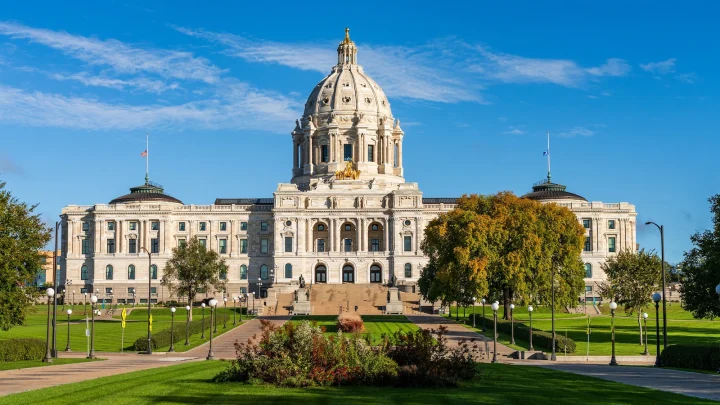
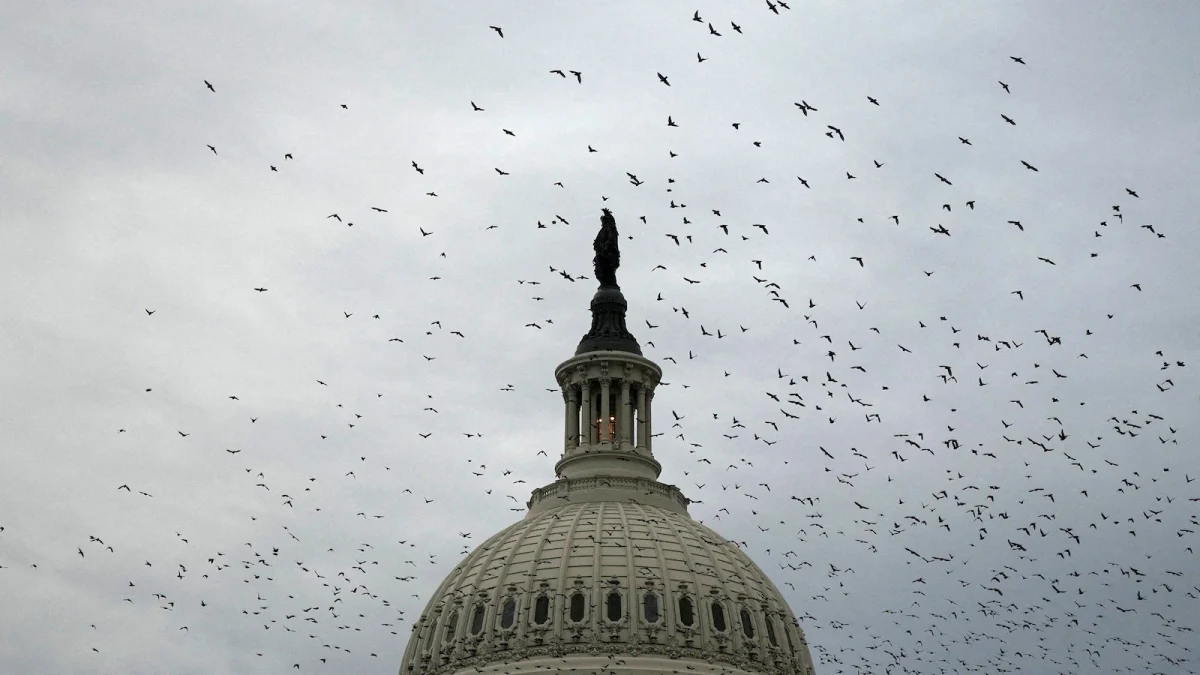
House passes funding bill, avoiding shutdown ahead of midterm elections

Daftar Isi
Government Gets a Lifeline: House Clears Stopgap Funding Weeks Before Election Season
Tyunews.com – Washington’s legislative calendar just got a lot less tense. On Tuesday, the House of Representatives voted overwhelmingly to approve a continuing resolution that keeps every federal agency funded through December 11, effectively eliminating the specter of a government shutdown in the weeks leading up to the November midterm elections. The measure, which had already cleared the Senate on August 8, now heads to President Donald Trump’s desk awaiting his signature.
The final tally stood at 370 to 48 — a margin so lopsided it underscored how little appetite either party had for letting the government lapse on the eve of a national election. Only 19 Republicans and 29 Democrats cast dissenting votes, a small coalition of holdouts on both sides who nonetheless could not move the needle.
A Rare Bipartisan Moment in a Polarized Era
What made the Tuesday vote unusual was not merely its outcome but its timing and its cross-aisle character. Congress has grown accustomed to letting funding deadlines expire, forcing last-minute scrambles or, in more extreme cases, full stoppages of federal operations. Here, lawmakers acted weeks before the October 1 deadline that would have triggered a lapse, and they did so with broad bipartisan support. For a chamber where every member faces reelection in the fall, the calculus was straightforward: no one wanted to be the face on the evening news explaining why passport offices, national parks, and Social Security checks had ground to a halt.
A continuing resolution, often abbreviated as a CR, is a short-term funding vehicle that keeps agencies operating at roughly their current budget levels rather than enacting new spending priorities. It buys time. In this instance, it buys time until December 11 — past the election, past the lame-duck period’s opening weeks — giving the next Congress a cleaner slate to negotiate a full appropriations package without the pressure of an imminent shutdown hanging over every negotiation.
Johnson Claims Credit, Dismisses Skeptics
Speaker Mike Johnson wasted no time framing the vote as a Republican achievement. After the gavel fell, he addressed the chamber and the cameras with characteristic bluntness.
“House Republicans are in charge here, and we’re continuing to do the grown-up thing and make sure we get the job done. And we’re happy that we just passed that continuing resolution to fund the government through early December, and then we’ll continue through the process after the election,” Johnson said. “But there will be no government shutdown. You can thank Republicans for our leadership in getting that done.”
The framing — bipartisan vote, Republican ownership — is a familiar rhetorical move. By emphasizing the size of the majority and the absence of a shutdown, Johnson positions his caucus as the responsible adult in the room while quietly acknowledging that Democrats’ participation was essential to clearing the 60-vote threshold in the Senate earlier in the process.
The Shadow of Last Year’s 43-Day Shutdown
The urgency behind this week’s action cannot be separated from what happened late last year. A 43-day government shutdown — the longest in American history — paralyzed federal operations, furloughed hundreds of thousands of workers, and turned airport security lines and delayed benefit payments into nightly headlines. The sticking point then was an extension of Affordable Care Act premium subsidies. Democrats insisted the extension be bundled into any funding deal; President Trump and Republican leadership declared they would not negotiate until the government reopened, effectively holding the lapse hostage to their negotiating position.
That episode left a bruise on both parties’ electorates. Voters who missed paychecks, who watched national-park rangers go home unpaid, who saw Medicare processing stall, remembered who was in charge. The memory of those weeks made the prospect of a repeat shutdown in the run-up to midterms politically toxic for nearly every member of Congress, regardless of party.
What Happens Next
With the CR now awaiting presidential signature, the immediate crisis is over. But the underlying budget question — how to fund the government beyond December 11, whether to extend ACA subsidies, how to handle discretionary spending for the next fiscal year — remains unresolved. The lame-duck session following the midterms will be the arena where those fights resume, this time with a freshly elected chamber whose composition may shift the balance of power.
For now, federal employees can clock in without wondering whether their paychecks will arrive. Passport offices will keep processing applications. National parks will keep their gates open. The government, at least through early December, keeps running. And the midterm campaign season can proceed without the backdrop of a shutdown dominating every news cycle.
Whether that breathing room translates into productive budget negotiations or simply into a longer, more bitter standoff next winter remains to be seen. But the immediate threat has been defused, and Washington can turn its attention to the voters who will decide, in November, who gets to argue about the next deadline.
Related Reading
Frequently Asked Questions
What is House passes funding bill avoiding shutdown?
House passes funding bill avoiding shutdown is the main topic of this guide. The article explains the context, practical details, and next steps readers should understand.
Why does House passes funding bill avoiding shutdown matter?
House passes funding bill avoiding shutdown matters because readers are looking for a useful answer, not just a short summary. Good content should match search intent and help them decide what to do next.