SCOTUS greenlights White House ballroom construction, despite chief justice’s dissent

Daftar Isi
White House Ballroom Rises Toward Completion as Supreme Court Clears Path for Construction
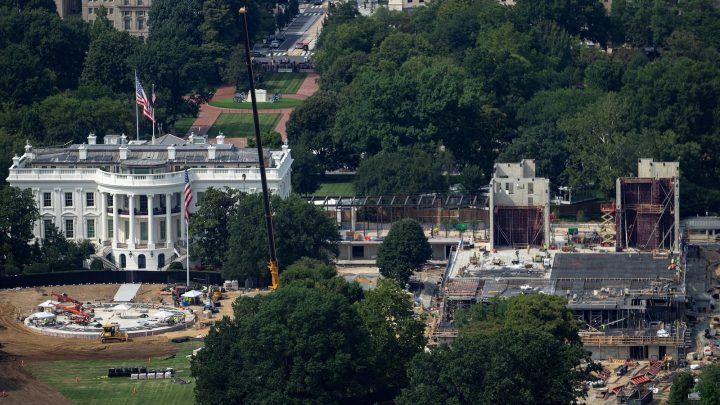
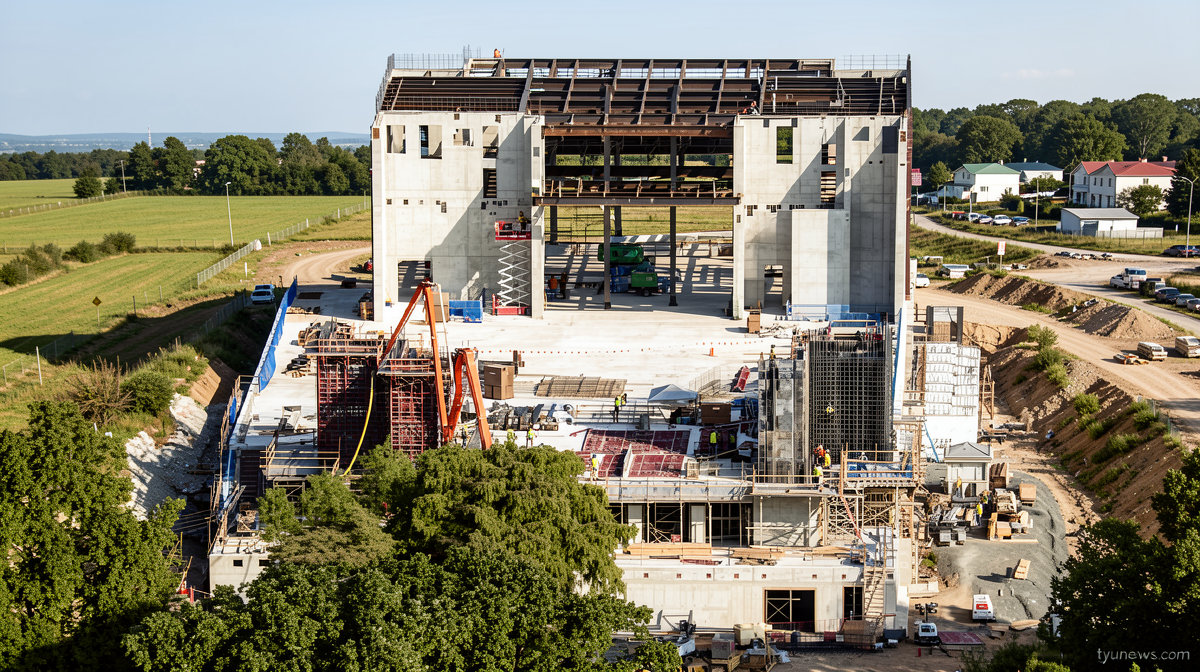
Tyunews.com – Workers on the White House East Wing site have been told to keep swinging their hammers. In an unsigned opinion issued Monday, the Supreme Court sided with the Trump administration, granting permission to press ahead with the roughly 90,000-square-foot ballroom and military complex even as the underlying lawsuit remains unresolved. With the structure already reported at 65 percent completion and a crew of approximately 250 laborers operating around the clock, the ruling effectively ensures the building will be largely finished long before any appellate court reaches a final verdict on its legality.
The Court’s Narrow Ruling
The majority did not declare the project lawful. Instead, it took the narrower path of concluding that the plaintiff probably never had a valid claim to bring before a federal tribunal in the first place. The opinion stated plainly that the government was likely to demonstrate the challenger lacked Article III standing, and that the balance of equities favored letting construction proceed while the case wound through the courts.
“Today, we do not pass upon the legality of the government’s East Wing project. We conclude only that, based on the submissions before us, the government is likely to prevail in showing that the Trust lacks Article III standing to challenge the project in federal court and that the remaining stay factors favor relief.”
That framing preserves the status quo: the building goes up, the litigation goes on, and no judge will ultimately rule on whether the demolition and reconstruction were constitutionally authorized. The administration had argued that halting above-ground work while appeals were pending would cause irreparable harm to the project.
Roberts and Three Colleagues Dissent
Chief Justice John Roberts broke ranks with the court’s three liberal justices — Sonia Sotomayor, Elena Kagan, and Ketanji Brown Jackson — to file a dissent that drew sharp lines around separation of powers. Roberts characterized the majority’s move as permitting a “likely” encroachment on Congress’s constitutional role to continue unchecked.
“The White House is not just any building, and — when it comes to historic preservation — Hoagland [member of National Trust for Historic Preservation] is not just any person. In failing to appreciate as much, the Court misconceives the plaintiff’s injury, allowing the Executive’s likely infringement of the Legislature’s power of the purse and authority to regulate federal property in the District of Columbia to continue.”
Roberts added that the better course would have been to “ensure that those responsible follow the rules in deciding what to tear down and what to build up at the People’s House.” Earlier in the month, he had personally issued an administrative stay of a lower-court order that had paused most above-ground work, a temporary measure that kept crews on site while the Supreme Court considered the broader question.
The Lawsuit Behind the Ruling
The National Trust for Historic Preservation filed suit seeking to halt the ballroom project. Its central argument was straightforward: federal law vests Congress with control over federal property, including the grounds surrounding the Executive Residence, and no statute has delegated to the president the authority to approve a project of this scale. The Trust contended that President Donald Trump acted unilaterally when he ordered the demolition of the East Wing in late 2025 to clear the site for the new structure.
A lower court had agreed with that reading, ruling that the president exceeded his authority by tearing down the wing and beginning to erect the replacement without congressional approval. The administration appealed, and the Supreme Court’s Monday decision sidestepped that question entirely by finding the plaintiff likely lacked standing to raise it.
Trump’s Reaction and Funding Claims
The president took to his social media platform Monday to celebrate what he framed as a definitive win. He wrote:
“I am pleased to report that the United States Supreme Court has just ruled in favor of the Ballroom/Military Complex being built without any further contingency, doubt, or threat. We are living in the Golden Age of America, and this Building will be one of the Greatest ever constructed in Washington, D.C.”
He also dismissed the Trust’s lawsuit as “baseless” and asserted that the project carries no cost to taxpayers, declaring: “The Ballroom is totallly funded by Great Patriots and Corporations and, therefore, is a Gift — At no cost to the American Taxpayer.” Questions persist about the provenance and scale of that private funding, though no independent audit of the project’s finances has been made public.
Legal Framework and Broader Implications
Federal property law has long drawn a line between routine upkeep and transformative alteration. Presidents may direct the “care, maintenance, repair, alteration, refurbishment, and improvement” of the Executive Residence, but Congress retains overarching authority over federal real estate. Where a project crosses from renovation into demolition-and-reconstruction of an entire wing, the question of who holds the penultimate approval has historically pointed toward the legislative branch.
The Supreme Court’s decision to resolve the case on standing grounds rather than on the merits leaves that constitutional question unanswered. Future presidents and future Congresses will inherit both the completed structure and the open legal question about whether its creation required legislative authorization. For now, the cranes remain over the East Wing site, and the 250-member workforce continues its shift toward what the administration describes as final completion.
Related Reading
Frequently Asked Questions
What is SCOTUS greenlights White House ballroom construction?
SCOTUS greenlights White House ballroom construction is the main topic of this guide. The article explains the context, practical details, and next steps readers should understand.
Why does SCOTUS greenlights White House ballroom construction matter?
SCOTUS greenlights White House ballroom construction matters because readers are looking for a useful answer, not just a short summary. Good content should match search intent and help them decide what to do next.