Nation’s Largest ICE Detention Facility Wasted Millions in Rushed Opening, GAO Report Says
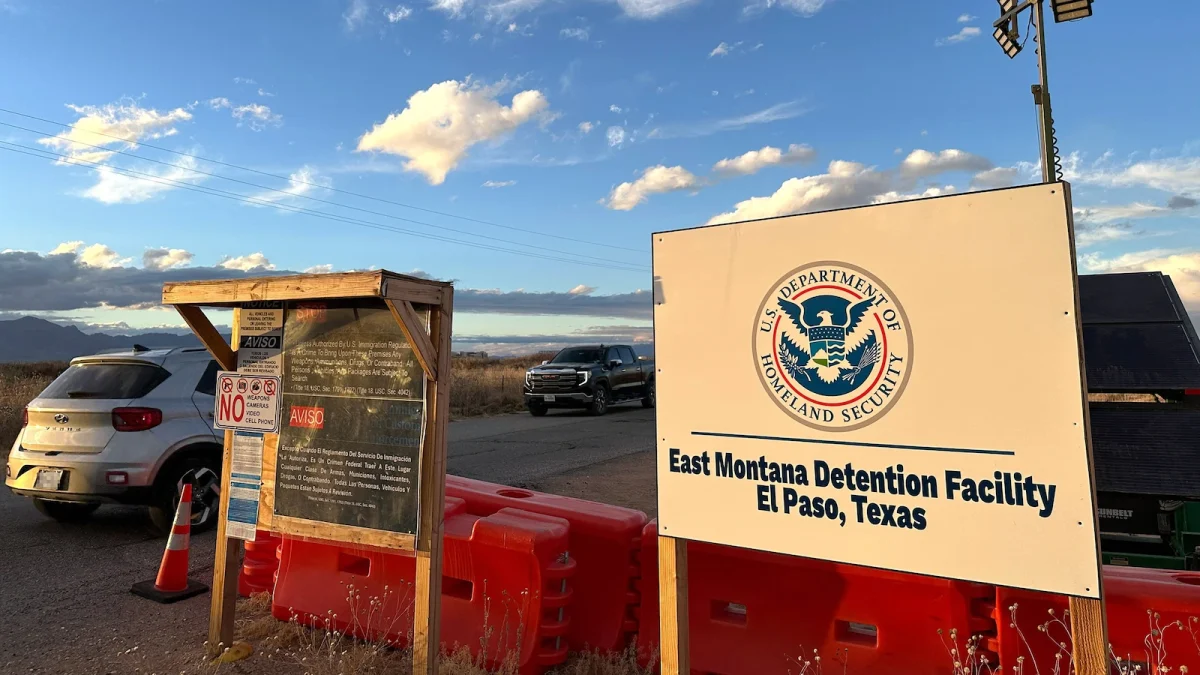
Tyunews.com – The Nation’s largest ICE detention facility, Camp East Montana at Fort Bliss in El Paso, Texas, has been criticized for incurring significant financial waste and operational inefficiencies due to its rapid construction and deployment, according to a recent federal report by the U.S. Government Accountability Office (GAO). The report, published on February 13, 2026, highlights how the facility’s rushed opening led to oversight gaps and a lack of preparedness, resulting in wasted taxpayer funds and compromised detention standards. The findings underscore concerns about the contracting process and the broader implications for immigration enforcement infrastructure in the U.S.
Expedited Contracting and Oversight Gaps
The GAO report details how the Army awarded a $1.3 billion contract in August 2025 to establish the Nation’s largest ICE detention facility. However, officials from ICE later assumed control of the contracts, raising questions about the transition process. Senior leadership’s emphasis on speed influenced key decisions, including the selection of a contracting method not commonly used for detention services and the choice of a provider with limited experience in this field. This approach prioritized timeline over thorough evaluation, creating a pathway for cost overruns and oversight lapses.
“The expedited time frames directed by senior leadership dictated several decisions related to the acquisition approach,” the GAO noted. This included streamlining procurement steps and bypassing standard due diligence, which left critical aspects of the facility’s design and operation unaddressed. The report emphasizes that these shortcuts contributed to a lack of alignment between the facility’s goals and its actual capabilities, setting the stage for financial and operational challenges.
Costly Operational Shortcomings
One of the report’s key findings was the failure to adjust contract terms for lower-than-expected occupancy levels. During the facility’s first 15 days of operation in August 2025, no detainees were present, yet the Army covered the full cost of meal services, highlighting a misalignment between funding and usage. The GAO also identified deficiencies in the facility’s infrastructure, such as inadequate perimeter security cameras, insufficient outdoor recreation spaces, and limited areas for legal meetings between detainees and their attorneys or families. These shortcomings suggest the facility was not fully operational when it opened, leaving it vulnerable to further issues.
Additionally, the report points to staffing and training gaps. Detainees reported difficulties in accessing basic necessities, including medical care and language assistance, which raised concerns about the facility’s ability to meet federal standards. The GAO found that these deficiencies were not adequately addressed in the initial planning stages, leading to a mismatch between the facility’s intended purpose and its actual readiness. The oversight in these areas has sparked calls for a review of how ICE manages large-scale detention projects.
Death Investigations and Evidence Concerns
The Nation’s largest ICE detention facility has drawn scrutiny following the deaths of three individuals since its opening. Geraldo Lunas Campos, one of the detainees, died in August 2025, initially classified as a suicide. However, a local medical examiner later reclassified his death as a homicide, citing evidence that suggested foul play. The GAO report adds that the contractor failed to submit use-of-force and death records to ICE, and key evidence from the incident was missing or destroyed, complicating the investigation.
This incident has intensified debates over the facility’s conditions and accountability. A legal petition filed by Campos’ family in January 2026 sought to halt the deportation of witnesses, alleging that guards caused his suffocation during the incident. The report underscores the importance of transparency in detention centers, noting that the lack of documented evidence could undermine trust in the facility’s operations and the justice system’s ability to investigate claims of mistreatment.
Weapon Control Flaws and Ongoing Probes
Another critical issue highlighted in the GAO report is the facility’s weapon management procedures. ICE issued a discrepancy report citing the loss of a loaded firearm within the Nation’s largest ICE detention facility, which exposed detainees, staff, and visitors to potential risks. The report warns that this lapse in security could have severe consequences, particularly in a high-profile detention center. The incident is now under a criminal investigation, further emphasizing the need for improved safety protocols in immigration facilities.
The findings have prompted the Department of Homeland Security to take steps toward addressing the problems. A spokesperson reiterated the agency’s commitment to enhancing detention facilities but acknowledged the need for more detailed responses to the GAO’s specific concerns. The report’s recommendations include revisiting the contracting process for similar facilities and implementing stricter oversight to prevent future waste and ensure compliance with operational standards.
With the Nation’s largest ICE detention facility at the center of these investigations, the report has sparked a broader conversation about the efficiency and effectiveness of immigration detention infrastructure. The financial and operational shortcomings identified in the GAO’s findings not only affect the facility’s immediate performance but also raise questions about the long-term sustainability of rapid expansion in detention services. As the federal government works to address these issues, the facility’s story serves as a cautionary tale about the importance of balancing speed with accountability in large-scale projects.