Comparing Trump’s Iran Deal to Obama’s: Key Insights
Two Distinct Agreements
Tyunews.com – Following President Donald Trump’s memorandum of understanding (MOU) with Iran, analysts have drawn parallels to the 2015 nuclear accord he previously abandoned: the Joint Comprehensive Plan of Action (JCPOA). While the JCPOA was a binding agreement to curtail Iran’s nuclear ambitions in return for sanctions easing, the MOU represents a temporary pause in hostilities. This new framework aims to halt the ongoing conflict, set the stage for future nuclear talks, and secure Iran’s commitment to reopening the Strait of Hormuz. However, it does not yet establish a comprehensive nuclear deal, as experts note.
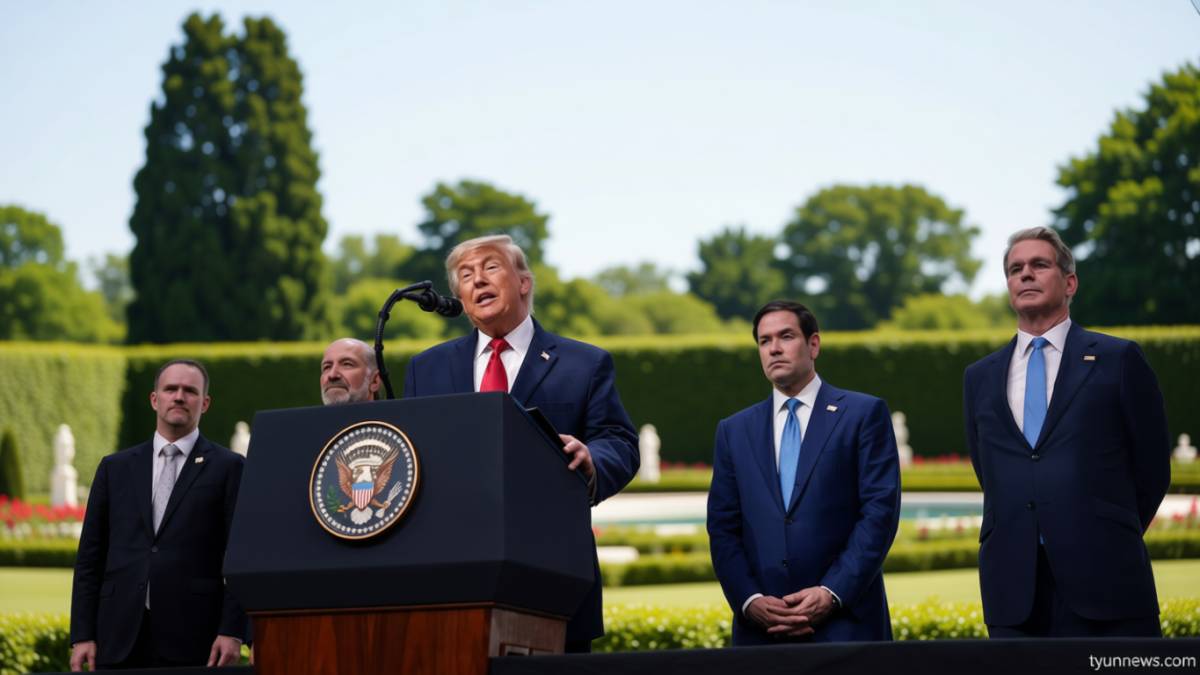
President Trump, accompanied by Treasury Secretary Scott Bessent, Secretary of State Marco Rubio, Commerce Secretary Howard Lutnick, and Trade Representative Jamieson Greer, announced the agreement during a press conference at the G7 Summit in Evian-les-Bains, France, on June 17, 2026. The MOU provides immediate sanctions relief but leaves the future nuclear program to be negotiated within 60 days. Although Iran pledges not to pursue nuclear weapons, the exact measures to enforce this commitment remain undetermined.
Diplomacy in Motion
Contrasting the approaches of both administrations, the JCPOA emerged from a lengthy 20-month diplomatic process involving Iran, the U.S., China, Russia, France, the United Kingdom, Germany, and the European Union. In contrast, Trump’s team initially pursued negotiations but shifted to military action after months of stalled talks. In July 2025, the U.S. launched a surprise attack on Iran’s nuclear facilities, reportedly halting its program for up to two years.
Months later, in collaboration with Israel, the U.S. executed Operation Epic Fury, targeting Iranian nuclear sites and weakening its military infrastructure. Iran retaliated by blocking the Strait of Hormuz and launching strikes against American bases and Gulf allies. During this period, Israel engaged in a separate conflict with Iranian-backed groups in Lebanon, resulting in the loss of thirteen U.S. service members and costing over $25 billion in taxpayer funds.
Financial Relief and Strategic Trade-offs
Both agreements offered Iran substantial economic benefits, but the nature of the concessions varied. The JCPOA reinstated billions in frozen assets, lifted sanctions from the U.S., European Union, and United Nations, and allowed Iran’s central bank to operate globally. It also permitted unrestricted oil exports and included a $1.7 billion cash transfer for previously seized assets.
“The agreement included cash transfers of previously seized assets amounting to $1.7 billion,” said analysts at the time.
Meanwhile, the Trump MOU removed oil export restrictions but tied sanctions relief to future negotiations. The U.S. also pledged support for a $300 billion reconstruction fund with regional partners. However, the bulk of the relief depends on progress in broader nuclear talks, which have yet to begin. In exchange, Iran agreed to open the Strait of Hormuz, restoring a pre-war status quo that may not be fully realized.