Federal Reserve raises interest rates for the 1st time since 2023

Daftar Isi
Federal Reserve Lifts Rates as Iran War Fuels Inflation Pressure
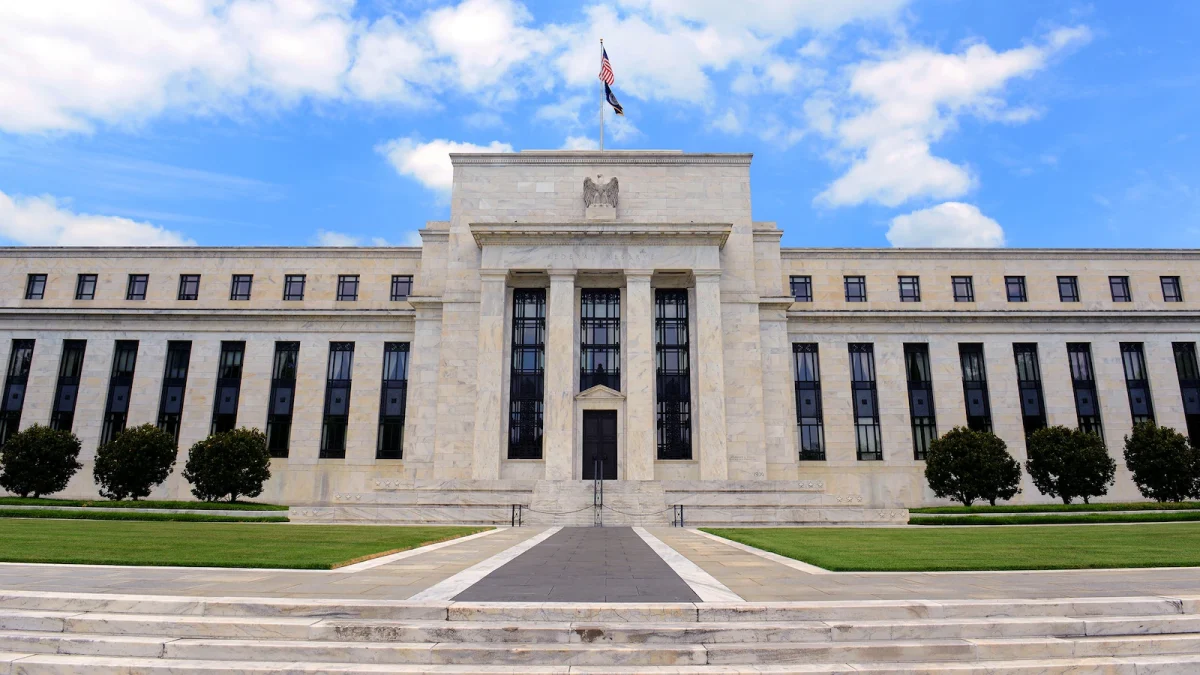
Tyunews.com – The Federal Reserve increased its benchmark interest rate by 0.25 percentage point on Wednesday, responding to an extended rise in prices linked to the war in Iran. The decision is the central bank’s first increase since July 2023 and sets its policy rate in a range of 3.75% to 4%.
Although the current level is well below the peak reached in 2023, it remains far higher than the near-zero borrowing costs put in place during the early phase of the COVID-19 pandemic. Higher policy rates can filter through to household and business borrowing, affecting products such as credit cards, mortgages and some business loans.
All 12 members of the Federal Reserve’s policymaking board backed the action. The unanimous vote followed a period in which officials had been divided over whether inflation risks outweighed concerns that tighter policy could slow the economy and weaken hiring.
Inflation remains above the Fed’s goal
Consumer prices were 3.4% higher in August than a year earlier, matching the pace recorded in the previous month. That level remains more than one percentage point above the Federal Reserve’s 2% inflation objective.
Energy costs have been a major force behind the renewed pressure on household budgets. Global crude prices remained above $105 per barrel on Wednesday, roughly 50% higher than before the Iran war began in late February. Oil was hovering near a four-month high as disruptions in the Middle East constrained the flow of crude.
The national average price of regular gasoline reached $4.36 per gallon, more than $1.30 above its level before the conflict, AAA data showed. Diesel prices have also climbed to record levels, increasing transportation expenses that can affect the cost of groceries, clothing, furniture and other goods moved through supply networks.
The conflict began after a large-scale U.S.-Israeli attack during the winter. Iran subsequently moved close to shutting the Strait of Hormuz, a route that handles about one-fifth of global crude supply. Saudi Arabia then halted operations on a key pipeline designed to bypass the strait over the weekend, adding another constraint to oil deliveries.
Warsh emphasizes price stability
Federal Reserve Chair Kevin Warsh, who became head of the central bank in May, has made clear that controlling persistent inflation is a central priority. In comments delivered last month at the Fed’s annual gathering in Jackson Hole, Wyoming, Warsh said policymakers should concentrate on rising prices.
The Fed’s predominant focus right now should be on prices,
The central bank had left rates unchanged at its July meeting. At that time, three members of the 12-person board supported an increase, the largest group of like-minded dissenters on a Fed vote in a decade. Wednesday’s decision indicates that officials have now united around a more forceful response to price pressures.
The policy challenge remains delicate. Raising rates is intended to temper demand and prevent higher costs from becoming embedded more broadly in the economy. But tighter financial conditions can also make it more expensive for consumers to borrow and may lead businesses to reconsider investments, hiring plans or expansion.
Economy shows resilience despite new strains
Recent economic data have presented a mixed picture. The labor market continued to show strength in August, when employers added 162,000 jobs. Economic output also expanded during the three months ending in June, countering earlier worries that the Iran war could quickly produce a broader downturn.
At the same time, financial markets have shown signs of stress. A bond selloff has contributed to higher borrowing costs, including for credit cards and home loans. For households already facing elevated gasoline and everyday goods prices, those increases can add another layer of pressure.
The Fed’s latest move signals that officials see inflation as a sufficiently serious threat to justify accepting the risk of slower growth. Its future decisions will likely depend on whether energy-market disruptions ease, whether price gains begin moving closer to 2%, and whether hiring and consumer spending remain resilient under higher borrowing costs.
For now, the rate increase underscores the difficult environment facing policymakers: an economy that has avoided an immediate contraction, but one in which war-related supply disruptions and costly energy are keeping inflation above the level the central bank considers consistent with stable prices.
Related Reading
Frequently Asked Questions
What is Federal Reserve raises interest rates?
Federal Reserve raises interest rates is the main topic of this guide. The article explains the context, practical details, and next steps readers should understand.
Why does Federal Reserve raises interest rates matter?
Federal Reserve raises interest rates matters because readers are looking for a useful answer, not just a short summary. Good content should match search intent and help them decide what to do next.