Why is New Jersey taking the legal battle over prediction markets to the Supreme Court?

Why Is New Jersey Taking Prediction Markets to SCOTUS?
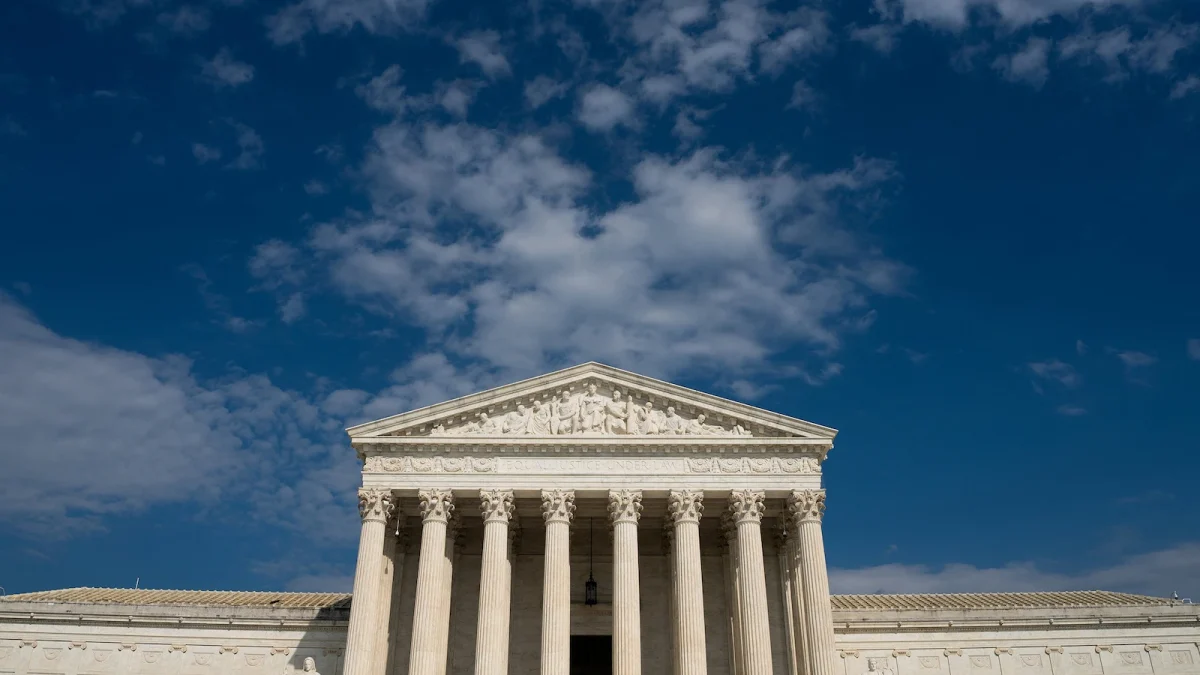
Tyunews.com – Why is New Jersey taking its prediction-market dispute all the way to the U.S. Supreme Court? The answer lies in a head-on collision between two federal appellate rulings that left state regulators without a clear rulebook. New Jersey Attorney General Jennifer Davenport filed a petition asking the nation’s highest court to decide whether states can regulate event contracts tied to sports outcomes when they are traded through digital exchanges such as Kalshi, or whether federal financial regulators hold sole authority over those instruments. The stakes extend far beyond one state: a definitive ruling would set the boundary between state gambling law and federal derivatives regulation for an industry that has grown into the multi-billion-dollar range.
The Appellate Contradiction Behind the Petition
The petition was made necessary by two circuits reaching opposite conclusions on identical facts. In April, the Third Circuit — hearing a challenge brought by New Jersey — ruled in Kalshi’s favor. That panel classified the event contracts as financial derivatives subject to exclusive oversight by the Commodity Futures Trading Commission, effectively removing state gambling commissions from the picture. Months later, on August 28, the Ninth Circuit sitting in Nevada reached the reverse result. The panel found that Kalshi had not demonstrated a likelihood that federal law displaces state authority, leaving Nevada’s gaming regulator free to supervise the platform’s in-state operations.
With the two holdings irreconcilable, Davenport argued that only the Supreme Court can supply a uniform answer. In her filing she warned:
“It will determine whether a multi-billion-dollar gaming industry can suddenly operate free from state sports-gaming laws.”
New Jersey has policed sports wagering for more than a century, and state officials view the prospect of an overnight carve-out from that framework as an existential threat to consumer protections and tax revenue.
State Pushback and Kalshi’s Counter
The New Jersey petition is the latest chapter in a broader wave of state-level action. In July, a federal district court issued a temporary injunction against a Minnesota ban on prediction markets, siding with defendants who argued federal oversight supersedes state prohibition. New York subsequently sued Kalshi, contending that its event contracts amount to unlicensed gambling because outcomes turn more on chance than skill. Connecticut followed suit, filing its own action to block what it labeled unlicensed sports gambling. Kalshi’s head of litigation, Jovy Dedaj, took to X to call for uniform federal oversight and to criticize the Connecticut complaint for singling out one platform while allegedly allowing competitors to operate. Separately, a federal judge in April stayed an Arizona criminal prosecution that had charged Kalshi with running an unlicensed gambling operation and accepting unlawful wagers from residents.
Kalshi responded to the Supreme Court petition with a statement from spokesperson Dani Lever, pushing back on the premise that state gambling statutes should govern instruments the company structures as swaps and futures traded on a Designated Contract Market — a category of exchange authorized to handle commodity-linked derivatives under CFTC rules.
FAQ
What exactly is a prediction market?
A prediction market is a platform where participants buy and sell contracts whose payout depends on whether a specified real-world event occurs — a team winning a title, a candidate taking office, a weather threshold being crossed. Kalshi, the platform at the center of this dispute, structures those contracts as swaps or futures listed on what it calls a Designated Contract Market, placing them under CFTC jurisdiction rather than state gambling commissions.
Why does the New Jersey case matter beyond one state?
Because the Third and Ninth Circuits have issued incompatible rulings, every state that wants to regulate or ban prediction-market activity faces uncertainty until the Supreme Court issues a controlling opinion. A ruling favoring state authority would validate dozens of pending bills and enforcement actions; a ruling favoring exclusive federal oversight would nullify them overnight.
Can states still regulate prediction markets while the case is pending?
Yes. Existing state statutes remain in force unless and until a court orders otherwise. Several states have already obtained temporary injunctions or have filed suits, and those proceedings continue independently of the Supreme Court petition.