Army Secretary Dan Driscoll resigns amid tensions with Hegseth

Daftar Isi
Army Secretary Dan Driscoll Steps Down After Friction With Hegseth Rattles Pentagon Leadership
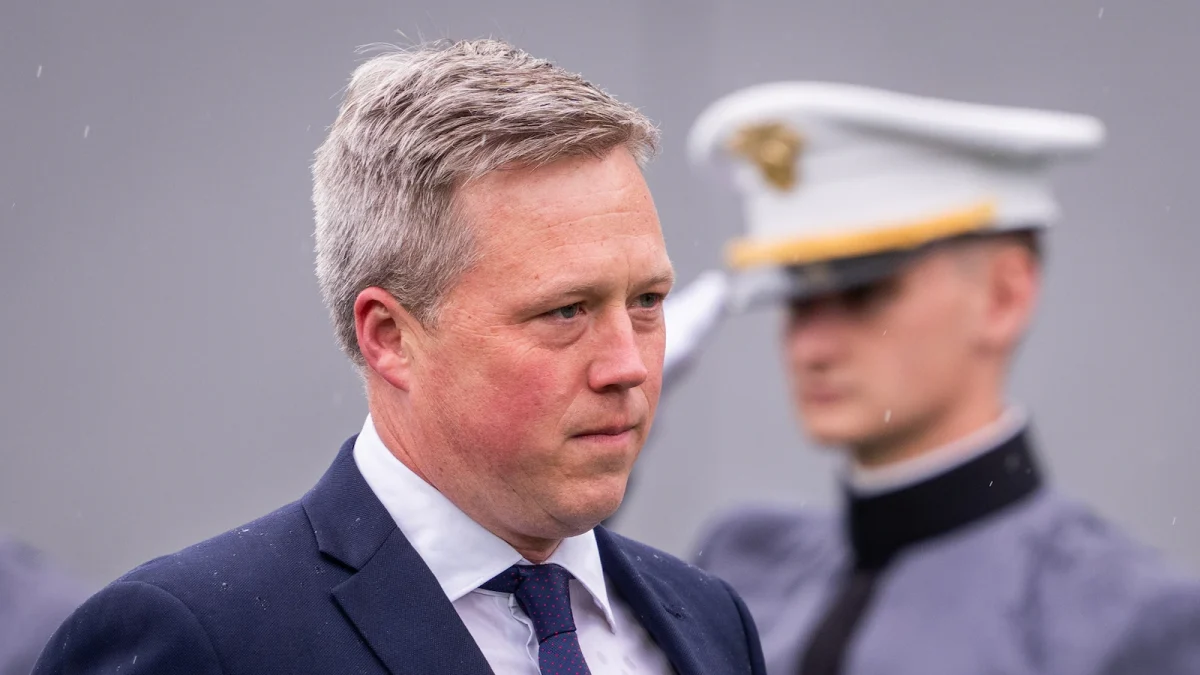
Tyunews.com – The top civilian leader of the U.S. Army has left his post, ending a turbulent tenure marked by open clashes with the Defense Secretary and an unusual diplomatic assignment that stretched well beyond the traditional boundaries of a service secretary’s portfolio. Dan Driscoll’s departure, confirmed by a senior U.S. government official, came after months of escalating discord between him and Pete Hegseth, who oversees the entire Department of Defense. President Donald Trump formally accepted the resignation on Monday evening, bringing to a close a period in which the Army’s civilian leadership had become a flashpoint in intra-branch power struggles.
A White House Farewell Framed in Superlatives
Despite the reported friction behind closed doors, the administration’s public tone toward Driscoll remained warmly complimentary. In a statement issued Monday, the White House characterized his tenure as a period of decisive accomplishment, with spokesperson Anna Kelly delivering a lengthy endorsement of his record.
“Secretary Driscoll has been highly effective in advancing President Trump’s agenda to Make America Strong Again at the Department of the Army by providing outstanding leadership during historic military operations, restoring an emphasis on readiness and lethality, assisting with negotiations between Russia and Ukraine, and more. The United States Army is more powerful than ever thanks to his work alongside the Commander-in-Chief and Secretary of War.”
The language of the statement — invoking “historic military operations” and pairing Driscoll’s name with the Commander-in-Chief — signals that the administration wished to frame the exit as a triumphant conclusion rather than a troubled one. Still, the very need for such emphatic praise underscored how publicly visible the internal disagreements had become.
The Hegseth–Driscoll Rift: Promotions, Firings, and Institutional Norms
Multiple U.S. officials described a pattern of disagreement that accumulated throughout 2025, the year both men assumed their respective posts. At the center of the conflict stood Hegseth’s repeated intervention in the Army’s senior-officer promotion pipeline. According to those officials, the Defense Secretary either dismissed or effectively sidelined several colonels who had been slated for elevation to the rank of general — a move that upended decades of convention in which service secretaries, not the Pentagon’s civilian chief, managed the final steps of the promotion process.
The most conspicuous episode involved General Randy George, who had served as Army Chief of Staff before being removed from his position in April. Hegseth dismissed George without offering a public explanation. Driscoll, who had worked closely with George during the latter’s tenure as the Army’s senior enlisted-and-officer leader, addressed the matter at a congressional hearing by stating plainly that he did not understand the rationale for George’s removal. That candor, delivered before lawmakers from both parties, crystallized the perception on Capitol Hill that the two men were operating from fundamentally different assumptions about civilian-military relations within the Army.
When a Service Secretary Became a Diplomat
Adding to the institutional unease, Trump selected Driscoll last fall to spearhead a diplomatic initiative aimed at restarting peace negotiations between Russia and Ukraine. The assignment placed the Army’s civilian head at the table of a multilateral negotiation — a role that, by conventional design, belongs to the Secretary of State, the National Security Advisor, or at most the Secretary of Defense. A service secretary’s statutory mission centers on training, equipping, and sustaining a single branch of the armed forces; sending that official into a bilateral or multilateral diplomatic track blurred a line that has held, with occasional exceptions, since the post-World War II reorganization of the national-security apparatus.
The decision nonetheless reflected Driscoll’s particular standing with the president. His prior connection to Vice President JD Vance — forged at Yale Law School, where the two crossed paths after Driscoll completed his service as a cavalry officer in the 10th Mountain Division — gave him a direct channel to the vice presidential office that few other military-adjacent officials possessed. That access, combined with his popularity among members of Congress, made him a politically useful figure for a task that required both military credibility and diplomatic cover.
What the Departure Means for Army Leadership
The resignation leaves the Army without its principal civilian overseer at a moment when the branch is still absorbing the operational tempo of recent campaigns and recalibrating its force structure around what the White House has described as a renewed emphasis on lethality. The next nominee will inherit not only the routine burdens of budget execution, personnel management, and acquisition oversight but also the unresolved question of how much latitude the Secretary of Defense will continue to exercise over Army-specific promotion decisions.
For lawmakers on the Armed Services Committees, the episode is likely to reignite debate over the boundaries of civilian authority within a single service. The Constitution vests command in the president and allocates departmental oversight to cabinet secretaries; the practical question — how far a Defense Secretary may reach into the internal personnel machinery of an individual branch — has no clean statutory answer and has been tested, incrementally, for decades. Driscoll’s public willingness to say he did not understand a removal decision, followed by his own departure, gives that debate a concrete, recent case study.
The White House has not announced a successor timeline. Until a new nominee clears Senate confirmation, the Army will operate under its acting leadership while the department works through the transition. For the roughly 480,000 active-duty soldiers and their families, the practical question remains whether the next civilian secretary will restore the institutional norms that Driscoll, however briefly, attempted to defend.
Related Reading
Frequently Asked Questions
What is Army Secretary Dan Driscoll resigns amid?
Army Secretary Dan Driscoll resigns amid is the main topic of this guide. The article explains the context, practical details, and next steps readers should understand.
Why does Army Secretary Dan Driscoll resigns amid matter?
Army Secretary Dan Driscoll resigns amid matters because readers are looking for a useful answer, not just a short summary. Good content should match search intent and help them decide what to do next.