Ontario’s premier says trade war would be ‘devastating’ for US and Canada

Daftar Isi
Ontario Premier Warns Escalating Trade Conflict Will Wreck Both Economies
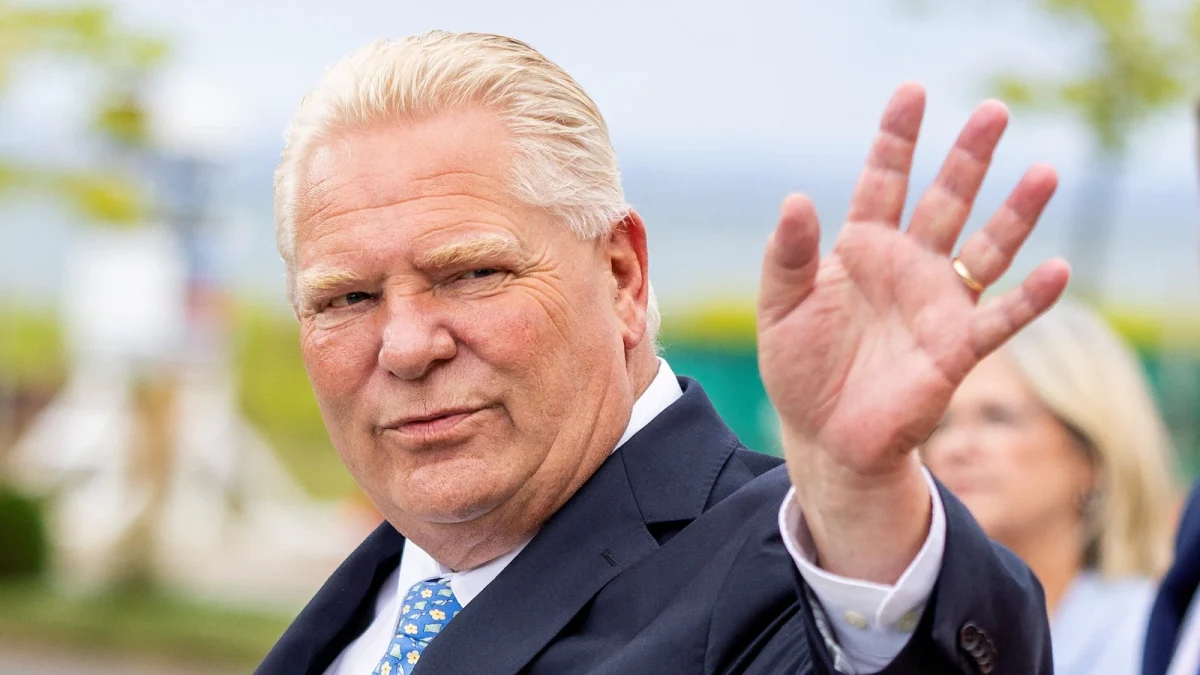
Tyunews.com – The transborder relationship between the United States and Canada — one of the deepest economic partnerships on the planet — has fractured into open confrontation, and Ontario Premier Doug Ford has made clear he believes the trajectory is catastrophic for both sides. Speaking this weekend, Ford rejected the logic behind President Donald Trump’s sweeping tariff measures on Canadian goods, arguing that a full-scale trade war would inflict damage far beyond Ottawa’s borders.
“Everyone’s feeling bullied by President Trump, and this is the worst thing you could do for the American economy,” Ford said. “I just don’t see the purpose. It’s absolutely backwards.”
The Numbers Behind the Dispute
To grasp why Ford’s warnings carry weight, one must look at the sheer scale of bilateral commerce. The United States remains Canada’s single largest trading partner. More than 70 percent of everything Canada ships abroad ends up in American markets, while roughly 60 percent of goods flowing into Canada originate in the U.S. That interdependence means any tariff imposed on one side lands almost immediately on the other’s consumers, manufacturers, and workers.
Energy sits at the center of the imbalance. Prime Minister Mark Carney has noted that 60 percent of the crude oil the United States imports from foreign sources arrives from Canada. That pipeline dependency gives Ottawa considerable leverage in negotiations — or so the logic goes — yet it has not prevented the current standoff.
How the Conflict Escalated
The rupture came after bilateral trade negotiations collapsed. Trump announced he would impose 50 percent tariffs on a broad swath of Canadian products. Canada answered in kind, rolling out retaliatory duties on numerous American goods effective September 8. What had been a managed disagreement between two NATO allies became, within days, a tit-for-tat tariff spiral.
The situation grew more complicated over the weekend when Washington and Caracas struck a deal granting the United States a majority stake in more than 65 billion barrels of Venezuelan oil reserves. Ford was pressed on whether that arrangement hands Trump an additional bargaining chip over Ottawa.
“Well, you know something? That’s going to be up to President Trump. Who do you want to deal with? An unstable government like Venezuela, or do you want to deal with your No. 1 trading partner, your No. 1 ally?” Ford said.
Auto Tariffs and the January Deadline
The stakes will rise sharply at the start of next year. Trump has stated his intention to double existing automobile tariffs on Canadian vehicles beginning January 1, 2027, posting on social media that “Canada will be treated like a state no longer.” Ford called the prospect of doubled auto duties “devastating” for both nations, though he insisted the blow would fall hardest on American consumers and dealers.
“It’d be devastating on both countries, but it’d be definitely devastating on the U.S. We’re the largest purchaser of vehicles in the entire world off the U.S. … and they’re already seeing the effect,” Ford said. “A tariff on Canada is nothing more than a tax on American people, and it’s probably the worst move he could ever do.”
Canada’s auto sector, concentrated heavily in Ontario, assembles millions of vehicles annually for export to the United States. A doubling of duties would compress margins, threaten plant employment in the Windsor corridor and beyond, and push prices upward for American buyers who already face elevated costs from earlier tariff rounds.
Lake Ontario Becomes “Lake America”
The friction has spilled well beyond trade policy. After a series of pointed social-media jabs at Canadian leaders, Trump signed an executive order last week renaming Lake Ontario — one of the five Great Lakes shared by both countries — as “Lake America.” Ford reacted with visible exasperation.
“It was like something out of ‘Saturday Night Live’ when he signed documents saying change to Lake America. No one’s going to call it Lake of America. It’s been Lake Ontario for hundreds of years. It’s going to continue being Lake Ontario, and it’s just so, so disappointing,” Ford said.
The renaming, while legally binding only within federal U.S. documents, symbolizes a broader pattern of unilateral gestures that Canadian officials view as dismissive of centuries of shared geography and diplomatic tradition.
People Versus Government
Despite the volume of public criticism, Ford took care to draw a line between the American public and the administration. He emphasized that Canadians’ affection for their southern neighbors remains intact and that the dispute is aimed at policy choices, not at ordinary citizens on either side of the border.
“I love the American people. Canadians love the American people,” Ford said. “We differentiate between the great American people and the president.”
With midterm elections approaching in the United States and Canadian voters watching closely from the northern side of the border, the tariff standoff is likely to remain a dominant political issue through the fall. Whether the two governments can find a path back to negotiation before the January auto-tariff deadline remains the central question of the coming weeks.
Related Reading
Frequently Asked Questions
What is Ontario s premier says trade war would?
Ontario s premier says trade war would is the main topic of this guide. The article explains the context, practical details, and next steps readers should understand.
Why does Ontario s premier says trade war would matter?
Ontario s premier says trade war would matters because readers are looking for a useful answer, not just a short summary. Good content should match search intent and help them decide what to do next.