Trump’s face is now on money, with $1 coins going into circulation

Daftar Isi
A Living President on Circulating Currency: Trump’s Portrait Hits the Dollar Coin
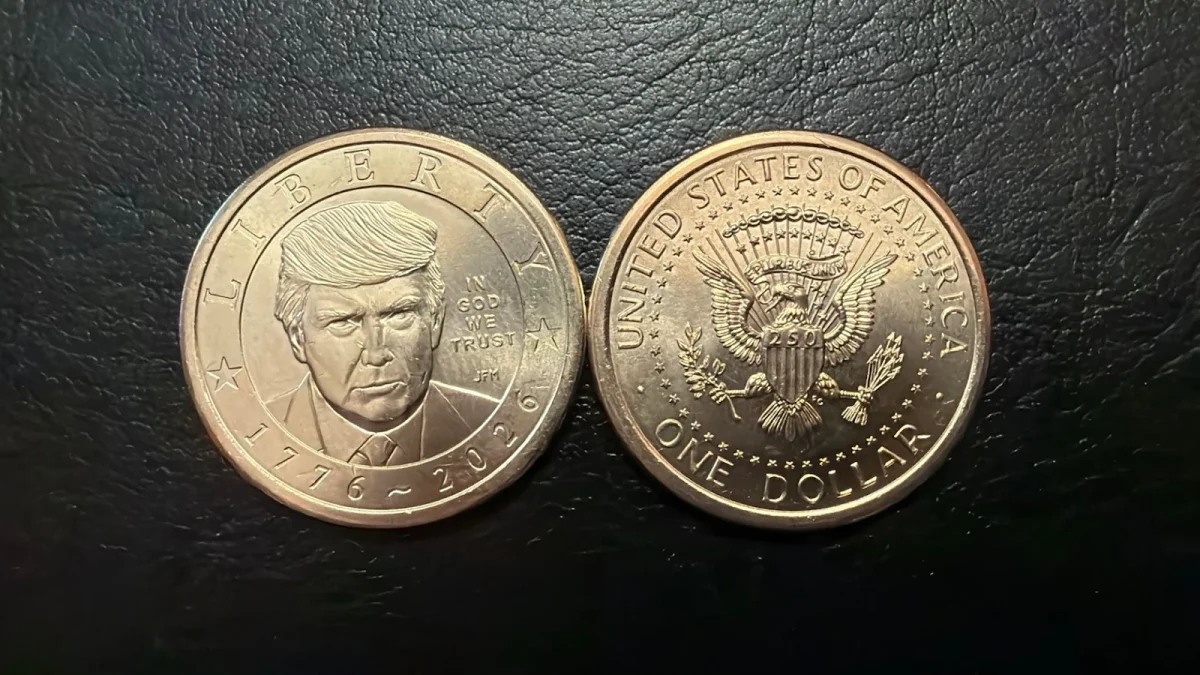
Tyunews.com – For the first time in roughly a century, the face of a sitting president will appear on coins that Americans can spend at the grocery store or find in their pocket change. The U.S. Mint confirmed on Wednesday that one-dollar coins bearing Donald Trump’s likeness have officially entered circulation and are available for purchase through the Mint’s online storefront. The move marks a sharp break from a long-standing convention that kept incumbent presidents off hard currency, and it has drawn both celebration from supporters and scrutiny from critics of the administration’s approach to monetary symbolism.
What the Coins Commemorate
The coins are not merely a portrait piece. They are tied to the nation’s Semiquincentennial — the 250th anniversary of the signing of the Declaration of Independence in 1776. The obverse carries the presidential likeness alongside the inscriptions “1776 ~ 2026,” “LIBERTY,” and “IN GOD WE TRUST.” By anchoring the design to a bicentennial-plus-50 milestone, the Mint frames the coin as a commemorative artifact rather than a routine redesign, a distinction that matters legally and politically.
Material, Production, and the “July 4th” Subset
Despite their gleaming appearance, the coins are not struck from gold. They carry a gold-colored finish composed of manganese brass, giving them a warm metallic tone without the cost of precious metal. All pieces were produced at the Philadelphia Mint. The total mintage has not been publicly disclosed, though the Mint revealed that 250,000 of the coins bear a special “July 4th” marking. Those pieces were struck on Independence Day itself and were distributed randomly into standard rolls and bags, meaning collectors will have to sort through ordinary purchases to find them.
Pricing and Availability
The coins went on sale beginning September 2, 2026. A roll containing 25 coins is priced at $61, while a sealed bag of 100 coins costs $154.50. Because the pieces are legal tender, they can be used for everyday transactions at face value. The Mint encouraged the public to look for them in daily commerce:
“These coins are also in circulation, so check your pocket change. Collect them today!”
A household order limit of two items remains in effect through 2 p.m. Eastern Time on September 3, a measure the Mint has used in past releases to prevent bulk purchasing and ensure broader access.
The Legal Question: Can a Sitting President Appear on Currency?
Under conventional practice, a president does not appear on U.S. coins or bills while in office. The Trump administration’s position rests on the Circulating Collectible Coin Redesign Act of 2020, which grants the Treasury secretary authority to oversee the minting of special commemorative coins tied to the Semiquincentennial. The same statute prohibits any individual’s image from appearing on the reverse (tail) of a coin, but it imposes no comparable restriction on the obverse (face) — precisely where Trump’s portrait is placed. In the administration’s reading, the law permits the design without requiring additional congressional action.
That interpretation has not gone unchallenged. Members of the Citizens Coinage Advisory Committee, an 11-person bipartisan body created by Congress to advise the Treasury secretary on hard-currency designs, have raised questions about whether the coin’s production followed proper review channels. Treasury Secretary Scott Bessent, they say, did not submit the design to the committee for formal consideration before the coins were struck.
The Treasury responded by stating that it extended the committee “multiple reasonable opportunities to review proposed designs” but that the body declined to act. In a March statement, U.S. Treasurer Brandon Beach wrote:
“Accordingly, the Mint’s statutory obligation to seek CCAC review has been fulfilled.”
Beach added that Bessent retains “sole discretion on final design selection,” a claim that underscores the executive branch’s broad latitude under the 2020 statute while leaving open whether that latitude was exercised in good faith.
Historical Precedent: Coolidge and the Sesquicentennial
The last instance of a living president appearing on U.S. hard currency dates to 1926, when the Mint struck a silver half-dollar for the nation’s Sesquicentennial. That coin placed then-President Calvin Coolidge in silhouette behind a bust of George Washington. The Mint produced one million of the pieces, but public interest proved tepid: 860,000 were eventually returned and melted down. The episode left a lasting institutional memory that presidents on coins tend to generate collector curiosity but not sustained demand.
Whether the Trump dollar coin will follow a similar arc remains to be seen. Unlike the Coolidge half-dollar, which was a silver piece with intrinsic metal value, the current coin is a base-metal brass item whose appeal rests entirely on its novelty and commemorative framing. Collectors who seek the rare “July 4th” variant may drive secondary-market premiums, but the broader question is whether millions of ordinary Americans will actually spend these coins or simply set them aside.
Why It Matters Beyond the Numismatic
Currency design in the United States has long functioned as a quiet statement about which figures the republic chooses to honor in everyday transactions. Placing a sitting president on a coin that passes through millions of hands daily compresses that statement into something immediate and personal. Supporters see a celebration of the Semiquincentennial wrapped in patriotic symbolism; critics see an erosion of the norm that keeps currency design insulated from the politics of the moment. The coins are now in wallets, registers, and change jars across the country, and the debate they ignite will outlast the minting run.
Related Reading
Frequently Asked Questions
What is Trump s face is now on money?
Trump s face is now on money is the main topic of this guide. The article explains the context, practical details, and next steps readers should understand.
Why does Trump s face is now on money matter?
Trump s face is now on money matters because readers are looking for a useful answer, not just a short summary. Good content should match search intent and help them decide what to do next.