Russia Intensifies Attacks on Ukraine, Leaving Devastation in Wake
Tyunews.com – On June 2, 2026, a devastating wave of Russian air and ground assaults struck multiple regions of Ukraine, resulting in the deaths of at least 17 civilians and the injury of over 100 others. The attacks, which occurred during the early hours of the morning, targeted Kyiv with particular intensity, marking a significant escalation in Moscow’s campaign. London-based officials confirmed the scale of the destruction, stating that the strike was part of a coordinated effort involving both missiles and drones, which have become a central tool in Russia’s military strategy.
Ukrainian Government Statements
Interior Minister Ihor Klymenko shared details of the attack through a Telegram post, emphasizing that the most severe damage was concentrated in Kyiv, Dnipro, and Kharkiv. Local Ukrainian authorities reported that six individuals were killed in the capital, while Dnipro saw 11 fatalities, including a young child. These figures underscore the toll of the overnight barrage, which included both long-range missile strikes and drone attacks. The Ukrainian Air Force further noted that Russia deployed 73 missiles and 656 drones during the assault, with 40 missiles and 602 drones intercepted or neutralized by defensive systems.
“This attack is a clear declaration from Russia: if Ukraine is not shielded from ballistic and other missile strikes, these assaults will persist,” said President Volodymyr Zelenskyy in a social media post. He stressed the urgency of bolstering Ukraine’s defenses, urging international partners to provide anti-missile systems like the Patriot to bring the conflict to a close.
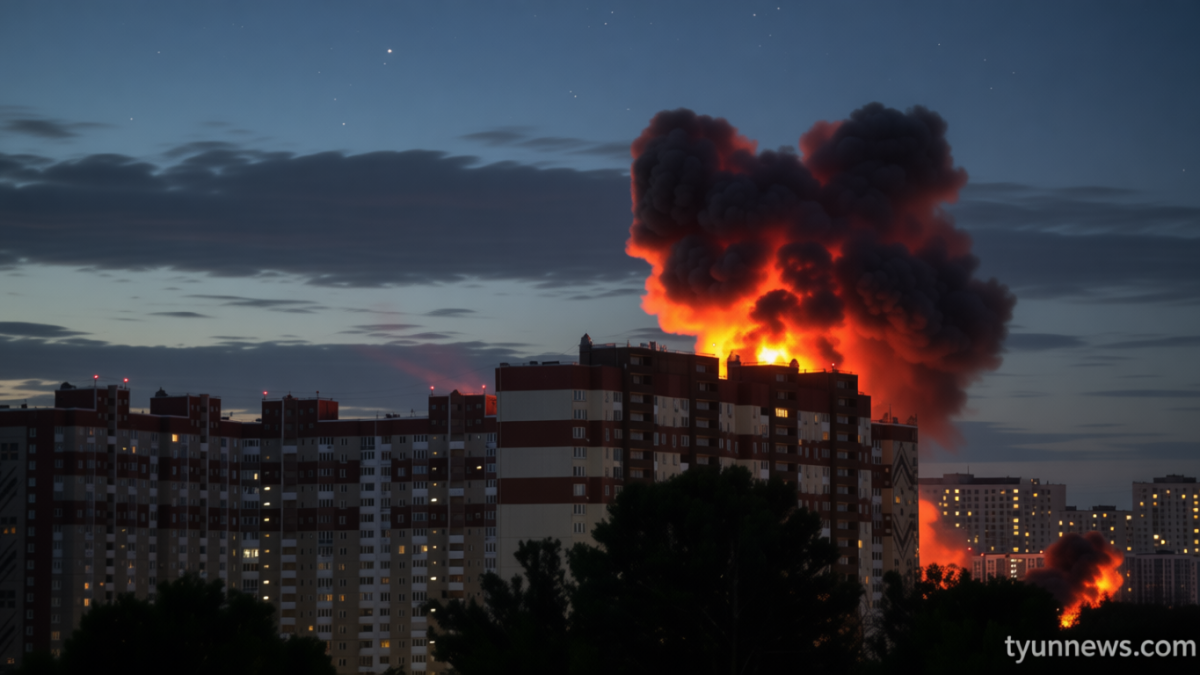
Among the structures damaged in the attack were four medical facilities in Kyiv, according to Mayor Vitali Klitschko. The city’s leadership described the assault as a “large-scale attack,” highlighting its dual purpose of military and civilian disruption. Ruslan Stefanchuk, a parliamentary leader, added that the Podilskyi district suffered the worst damage, with a nine-story residential building collapsing under a Russian strike. He warned that survivors might still be trapped beneath the rubble, emphasizing the human cost of the operation.
“Russia’s latest offensive proves that Vladimir Putin is a war criminal and a loser, relying solely on terror to achieve his goals,” stated Ukrainian Foreign Minister Andrii Sybiha in a social media message. He called the attack “horrific” and urged allies to take stronger action, not just issue condemnations. Sybiha emphasized the need for increased European funding for NATO’s PURL program, which would enable Kyiv to access more advanced weaponry and ammunition.
Russian Defense Ministry Response
The Russian Defense Ministry claimed that its forces executed a “massive strike” using high-precision long-range weapons, including hypersonic aeroballistic missiles and unmanned aerial vehicles. According to the ministry, the targets included military-industrial complexes, fuel depots, transport hubs, and bases in Kyiv, Zaporizhzhia, Kharkiv, Dnipro, Poltava, Khmelnytskyi, and Sumy. They asserted that all designated objects were successfully hit, showcasing the effectiveness of their offensive operations.
Additionally, the ministry reported that at least 148 Ukrainian drones were intercepted overnight. These figures, shared via a Telegram update, suggest a complex battle between Russian firepower and Ukraine’s aerial defenses. Meanwhile, Russia’s federal air transport agency, Rosaviatsiya, imposed temporary flight restrictions at several airports, including Volgograd, Kaluga, Saratov, Krasnodar, and Penza, as part of the broader strategic impact of the attacks.
“Moscow is losing on the battlefield. No matter how many missiles they launch, this trend cannot be reversed,” Sybiha wrote in another post. He argued that sustained pressure on Russia is essential for peace, calling for partners to increase funding for Ukraine’s long-range capabilities and intensify sanctions against the aggressor. The minister also highlighted the importance of advancing Ukraine’s European Union membership negotiations as a step toward long-term stability.
Global Implications and Related Developments
The scale of the attack has reignited concerns about the ongoing conflict’s trajectory. With Kyiv’s infrastructure and civilian populations under threat, the international community is being asked to evaluate its support for Ukraine’s defense. Sybiha’s appeal for European funding and U.S. assistance underscores the economic and military dimensions of the war, as Kyiv seeks to build resilience against future strikes.
Meanwhile, the attack coincided with reports from NATO allies about increased Russian drone activity. Romania, for example, noted a surge in drone incursions and fighter jet alerts, suggesting a coordinated effort to overwhelm Ukrainian defenses. The incident also aligns with earlier data indicating that Ukraine has gained an edge in cross-border drone warfare, with March statistics showing a notable shift in the balance of airpower between the two nations.
“Peace efforts will only succeed when they are backed by real pressure on Moscow,” Sybiha reiterated. His comments reflect the growing consensus among Ukrainian leaders that sustained support from international partners is critical to counteract Russia’s relentless assault. The minister’s call for more European funding highlights the need for greater coordination in addressing the war’s multifaceted challenges.
Aftermath and Resilience
Residents of Kyiv and other affected areas described scenes of chaos, with black smoke rising from damaged buildings and people scrambling to take shelter. Firefighters worked tirelessly to extinguish fires at car dealerships and other structures, illustrating the immediate impact of the strikes. Despite the devastation, Ukrainian officials reiterated their determination to continue resisting, framing the attacks as a test of their resolve and capabilities.
As the dust settles, the incident has reinforced the urgency of enhancing Ukraine’s defensive infrastructure. The use of hypersonic missiles and drones has complicated Russia’s strategy, forcing Kyiv to adapt and innovate in its countermeasures. Analysts suggest that the attack is part of a broader campaign to weaken Ukraine’s ability to sustain prolonged conflict, while also sending a message to potential allies about the stakes involved.
With the attack’s aftermath still unfolding, the focus remains on recovery and preparedness. Kyiv’s efforts to rebuild and protect its citizens are seen as a testament to the nation’s endurance. However, the continued escalation underscores the challenges ahead, as both sides seek to outmaneuver each other in a war that has transformed into a high-tech, high-stakes contest of attrition and strategy.
As the international community watches the developments, the question of who will prevail in this battle of will and technology remains unanswered. For now, the scars of June 2, 2026, serve as a stark reminder of the war’s toll on Ukraine’s people and cities. The nation stands resolute, even as it faces the relentless advance of Russian firepower and the ever-present threat of further devastation.