Canadian Wildfires Spread: ‘Trees Vanished in Seconds’ as Smoke Sparks 17-State Air Quality Alerts
Tyunews.com – As Canadian wildfires escalate, the phrase “trees vanished in seconds” has become a vivid reminder of the region’s devastating blazes. On Thursday, air quality alerts were issued in 17 U.S. states, from Minnesota to Virginia, due to hazardous smoke drifting across the country. Over 850 wildfires are currently burning in Canada, with more than 100 beyond control, and the smoke has traveled over 1,000 miles, impacting areas as far east as New York City. This unprecedented spread of smoke has forced authorities to issue warnings, highlighting the growing threat to public health and environmental stability.
Smoke Blankets Major Urban Centers
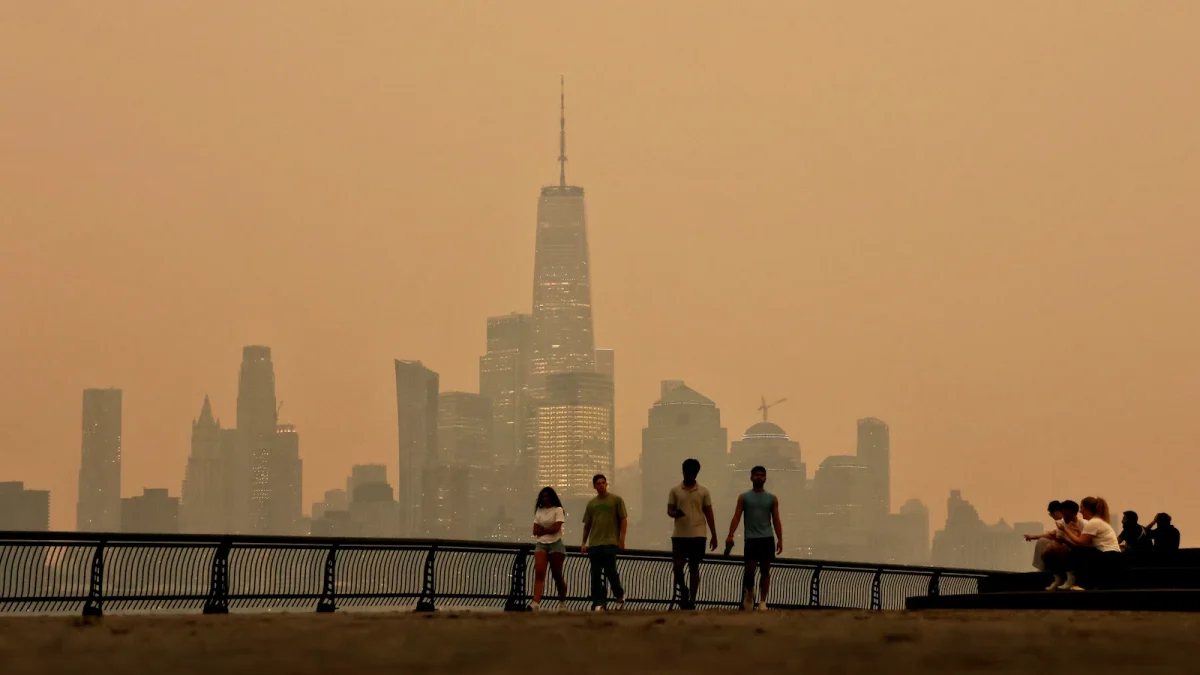
The haze from Canadian wildfires has created a surreal atmosphere in major cities, with Detroit leading the global AQI rankings on Thursday morning. The city’s Air Quality Index (AQI) hit nearly 570, surpassing the hazardous threshold of 301. Minneapolis, Chicago, and Toronto followed closely, underscoring the widespread impact of the smoke. In New York, the smoke obscured views of lower Manhattan and One World Trade Center at sunset, as seen from Hoboken, New Jersey, on July 15, 2026. Such conditions not only disrupt daily life but also pose significant risks to respiratory health.
“I’ve never seen it stick to the windshield like this,” said an American Airlines pilot during a communication with air traffic controllers, describing the dense ash accumulation on his aircraft’s windshield. The situation has forced the FAA to implement delays at Philadelphia International Airport, citing reduced visibility as a critical factor.
Residents in affected areas report coughing fits, eye irritation, and difficulty breathing, with some comparing the air quality to that of industrial zones. The smoke’s long-range travel is attributed to strong wind patterns, which have carried pollutants across borders and into densely populated regions. Scientists warn that such conditions could linger for weeks, exacerbating existing health issues and potentially leading to increased hospital admissions in the coming days.
Witness Accounts of Catastrophic Loss
Steve Ventling of Montana experienced the raw power of the wildfires firsthand while on a fishing trip in Northern Ontario. A sudden blaze erupted near a lakeside forest, and he shared images of the scene, where entire trees “vanished in seconds” due to the rapid fire spread. “The landscape was consumed in moments,” Ventling described, emphasizing the scale of destruction witnessed in the region. The incident occurred on June 13, 2026, and was among over 800 active wildfires burning in Canada at the time.
Ventling and fellow anglers evacuated the area by boat as the flames advanced. This event reflects a broader trend of wildfires consuming vast tracts of land, with the Canadian Wildland Fire Information System reporting 3,549 fires burning 2.3 million hectares by July 16. Such figures highlight the severity of the situation, which has already displaced thousands and disrupted ecosystems across North America. The crisis underscores the need for coordinated regional efforts to combat the growing threat.
Environmental and Health Implications
The smoke from these wildfires is not just a visual phenomenon—it’s a health hazard. Fine particulate matter (PM2.5) and other pollutants have reached dangerous levels, particularly in the eastern U.S., where residents face increased risks of respiratory illnesses. Public health officials recommend limiting outdoor activity, wearing masks, and staying indoors during peak pollution hours. The prolonged exposure to these conditions could have lasting effects, especially for vulnerable populations such as children and the elderly.
Environmental experts also note the long-term consequences of the fires. The destruction of millions of hectares of forest has disrupted local wildlife habitats and contributed to carbon emissions, worsening climate change effects. While the immediate focus is on air quality, the ecological damage is expected to compound over time. This crisis serves as a stark example of how climate-driven wildfires can transcend borders, creating a domino effect on both natural and human systems.
Authorities are working to monitor the situation closely, with the National Weather Service and EPA collaborating to provide real-time updates. The smoke’s trajectory is being tracked using advanced weather modeling, which helps predict where the next wave of pollutants might settle. Meanwhile, communities in the path of the smoke are preparing for extended periods of poor air quality, with schools and businesses implementing precautionary measures to protect residents.
Regional Collaboration and Response
As the situation evolves, regional collaboration has become essential in mitigating the impact of the smoke. The Canadian government has deployed additional resources to contain the most dangerous wildfires, while U.S. states have activated emergency protocols to safeguard public health. This includes issuing air quality advisories, deploying air quality monitoring stations, and coordinating with healthcare providers to manage cases of smoke-related illnesses.
Residents in affected areas are advised to check local air quality updates and adjust their activities accordingly. The smoke’s effects are expected to persist for several days, with some experts predicting that the haze could reach as far as the Midwest. The phrase “trees vanished in seconds” encapsulates the urgency of the situation, serving as a powerful reminder of nature’s ability to transform landscapes in an instant. As the blazes continue, the focus remains on reducing exposure and protecting both people and the environment.