South Carolina Republicans Aim to Extend Dominance in State Politics
Tyunews.com – South Carolina Republicans seek to extend their stronghold in state elections as voters prepare to cast ballots in pivotal races for governor and U.S. Senate on Tuesday. The party’s candidates are leveraging their connection to former President Donald Trump, a figure who remains influential in the state despite shifting national support. With a history of consistent wins, the GOP faces a key opportunity to reinforce its dominance in a competitive political climate.
Endorsements and Rivalries Define Republican Race
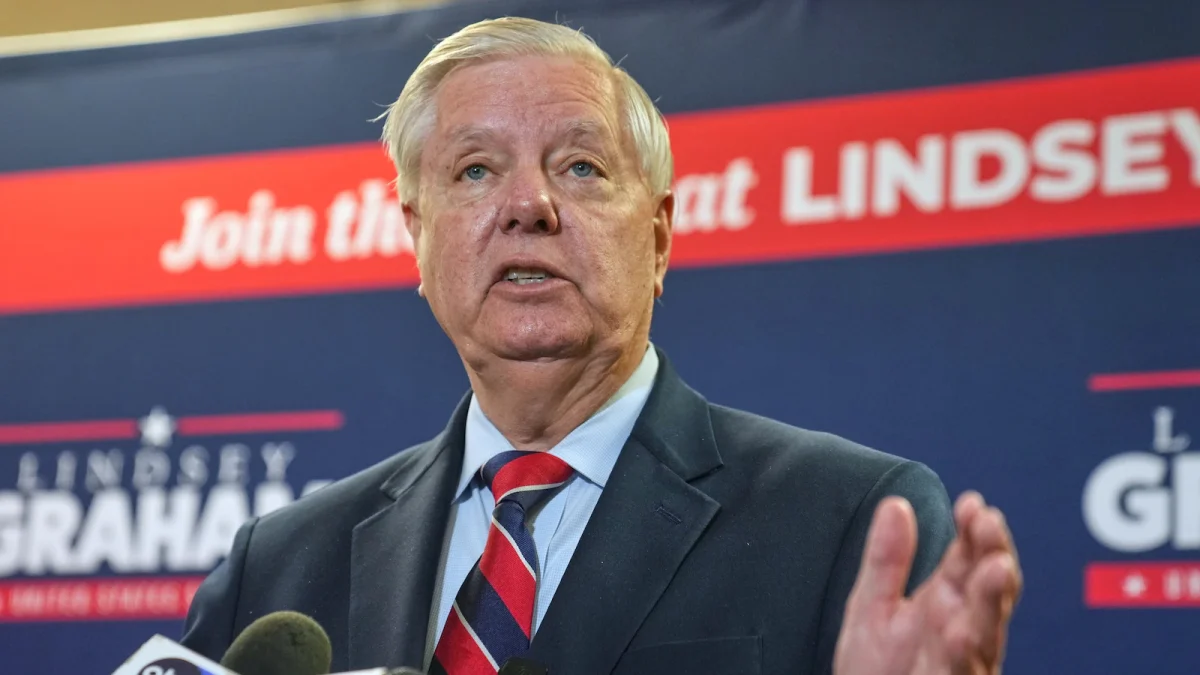
The Republican primary in South Carolina has become a battleground for Trump’s favor, with candidates vying to secure his backing to bolster their campaigns. Sen. Lindsey Graham, a longstanding Trump ally, received the president’s endorsement early in the race, signaling his strong position. Meanwhile, Lt. Gov. Pamela Evette, who will run for governor, has aligned herself with Trump’s vision, a strategy that has drawn attention from both allies and critics. Her campaign emphasizes her ties to the president, while rival Rep. Nancy Mace, a potential challenger, has positioned herself as a unifying figure for the party.
“The Republicans’ strategy hinges on Trump’s brand, which continues to resonate deeply in this state.”
Trump’s influence is evident in the race for U.S. Senate, where Sen. Graham faces a formidable primary opponent. His campaign has emphasized the senator’s role in shaping national policy, particularly his hardline stance on Iran. Graham’s campaign has also highlighted his personal rapport with Trump, including frequent golf outings and shared political goals. This relationship has been a cornerstone of his re-election bid, though some opponents argue it may not be enough to secure a fifth term.
Democratic Challenges and Statewide Trends
Despite the GOP’s historical dominance, Democrats are mounting a renewed effort to break through in South Carolina’s state races. The last time a Democrat won a statewide election, it was over two decades ago, a streak that has solidified Republican control. However, this cycle has seen a surge in Democratic fundraising and grassroots mobilization, particularly in urban and suburban areas where voters are increasingly concerned about issues like healthcare, education, and climate change.
For the gubernatorial race, State Rep. Jermaine Johnson has emerged as a prominent Democratic candidate, competing against a field that includes former congressional candidate Billy Webster and attorney Mullins McLeod. Webster, a payday loan entrepreneur, has invested heavily in his campaign, while McLeod’s recent dashcam incident has raised questions about his viability. Johnson’s campaign, meanwhile, has focused on modernizing state government and addressing voter registration disparities.
In the Senate race, Charleston physician Annie Andrews is challenging Rep. Nancy Mace, a key Republican figure. Andrews has drawn support from progressive Democrats, while Mace continues to emphasize her conservative credentials and alignment with Trump. The race underscores the broader trend of Republicans maintaining control in South Carolina, though the Democratic push for change could shift the balance in 2024.
Key Issues and Campaign Strategies
South Carolina Republicans are emphasizing issues that align with Trump’s platform, such as tax cuts, deregulation, and strong national defense. Graham’s campaign has highlighted his bipartisan achievements in recent years, while also reinforcing his loyalty to Trump’s policies. This dual approach aims to appeal to both traditional Republican voters and moderate independents. Meanwhile, Evette’s gubernatorial bid has focused on economic growth and education reform, framing her as a pragmatic leader in a state with a strong conservative base.
For the Democrats, the messaging has centered on expanding access to healthcare, reducing income inequality, and climate action. These issues resonate with younger voters and suburban populations, who make up a growing share of the electorate. The party is also stressing the importance of representation, with Andrews and Johnson representing diverse backgrounds that could attract new voters. However, the Republican advantage in rural areas and among older demographics remains a challenge for the Democrats.
Historical Context and Voter Behavior
South Carolina’s political landscape has long been shaped by its conservative values and a strong Republican majority. The state’s last Democratic gubernatorial victory was in 1996, and its Senate seats have been held by Republicans for over 20 years. This historical context gives the GOP a significant edge in the current cycle, but the race for governor and Senate has intensified as candidates seek to capitalize on shifting voter sentiments.
Recent polls indicate that while Trump remains a popular figure in the state, voter preferences are more nuanced than in previous cycles. Some Republicans are distancing themselves from Trump’s more controversial policies, while others are doubling down on his leadership. This internal debate could impact the party’s unity, but for now, the shared goal of maintaining control in state elections appears to outweigh ideological differences. The outcome of Tuesday’s races will likely set the tone for the 2024 presidential campaign, as South Carolina’s political dynamics continue to evolve.
“Extending the winning streak is not just about policy—it’s about maintaining momentum in a state where political identity is deeply tied to tradition.”
With the stakes high and the races tightly contested, South Carolina Republicans are determined to solidify their position. The party’s candidates are navigating a complex landscape of endorsements, policy priorities, and voter expectations. Whether they succeed in extending their winning streak will depend on their ability to balance Trump’s influence with the needs of a diverse electorate. As the polls close on Tuesday, the state’s political future hangs in the balance.