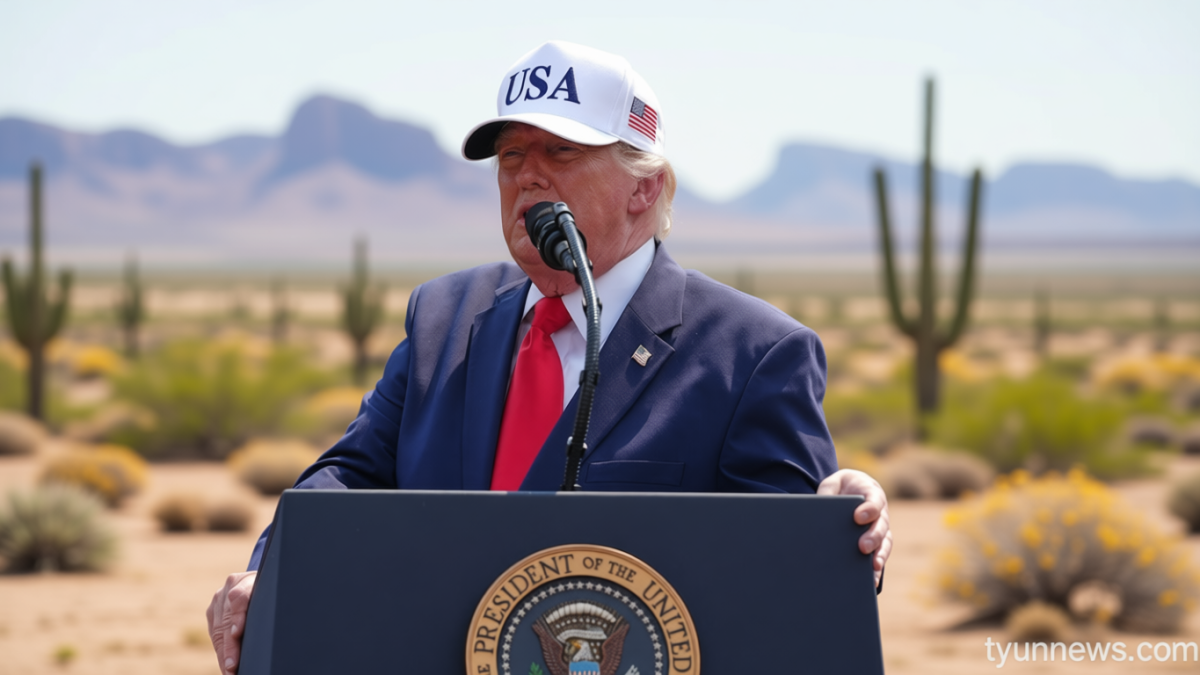
US Won’t Renew USMCA Trade Deal with Mexico and Canada
Tyunews.com – The United States has decided not to renew the United States-Mexico-Canada Agreement (USMCA) trade deal, originally negotiated by President Donald Trump during his first term. This move signals a shift in the administration’s approach to trade relations with its northern neighbors, as officials emphasize the need for renegotiation to address ongoing economic concerns. The decision, announced on Wednesday, highlights the growing tension over the agreement’s terms and underscores the administration’s commitment to securing better conditions for American businesses and workers. By not extending the deal, the U.S. is preparing to initiate a new round of talks, signaling that the USMCA may not be the final chapter in North American trade negotiations.
USMCA’s Legacy and Current Challenges
Formerly known as the United States-Mexico-Canada Agreement (USMCA), the pact replaced the North American Free Trade Agreement (NAFTA), which was signed in 1994 under President George H.W. Bush. While the USMCA aimed to modernize trade rules and strengthen labor and environmental standards, it has faced criticism for not fully addressing the trade deficits that persist between the U.S. and its partners. The current administration argues that the agreement’s provisions, such as its treatment of agricultural exports and labor protections, are still insufficient to meet American interests. “The USMCA is the fairest, most balanced, and beneficial trade agreement we have ever signed into law,” a senior official reiterated, but added that its renewal is now under question due to unresolved issues.
“The USMCA is the best agreement we’ve ever made,” stated a Trump administration spokesperson, though the current policy direction suggests a different outlook. “However, it’s clear that the U.S. needs more than what was originally established to ensure long-term economic benefits.”
Trade Deficits and Negotiation Deadlines
The decision to not renew the USMCA is tied to persistent trade imbalances, with the U.S. facing a significant deficit in goods traded with Mexico and Canada. While the agreement introduced provisions to address these imbalances, such as enhanced labor standards and stricter rules of origin, the administration claims they are not enough. The USMCA, which entered into force in 2020, is set to expire in 2036, but the administration has the authority to terminate it earlier if progress is not made. “If the countries cannot agree on new terms within the 10-year timeframe, the USMCA will not be extended,” a trade official explained, emphasizing the urgency of the current review process.
Trump’s Evolving Stance on the Trade Deal
President Trump initially praised the USMCA as a landmark achievement, highlighting its benefits for U.S. manufacturers and farmers. However, his recent criticisms of the deal suggest a more critical perspective. “Mexico and Canada have ripped us off,” Trump said in a recent speech, arguing that the agreement does not adequately protect American interests. The administration has also pointed to tariff policies implemented under Trump as factors that have reshaped the North American trade landscape. These policies, which were part of the USMCA negotiations, are now seen as part of a broader strategy to re-evaluate the pact’s effectiveness and secure more favorable terms for the U.S. economy.
“We must treat the U.S. better if we are to have a fair trade deal,” Trump added, framing the decision as a necessary step to ensure the U.S. remains the top priority in North American trade talks. This sentiment aligns with the administration’s broader goal of renegotiating trade agreements to better serve American industries and workers.
Implications for the U.S. Economy and Trade Relations
The potential non-renewal of the USMCA could have far-reaching consequences for the U.S. economy, particularly for sectors reliant on stable trade relationships with Mexico and Canada. The decision opens the door for a new trade framework, which may include stricter protections for American industries and more aggressive measures to reduce trade deficits. Analysts suggest that the administration is likely to prioritize sectors such as manufacturing, agriculture, and energy in these negotiations, aiming to secure stronger commitments from Mexico and Canada. Additionally, the move may create uncertainty for businesses operating in the region, prompting them to prepare for potential changes in trade policies.
Next Steps and Industry Reactions
With the USMCA review process underway, the administration is now focusing on drafting new terms that reflect its evolving priorities. Officials have indicated that negotiations may take months, and the outcome will depend on the willingness of Mexico and Canada to agree to more stringent conditions. Industry leaders, including representatives from the agricultural and manufacturing sectors, have responded with mixed reactions. Some welcome the opportunity to secure better terms, while others express concerns about the potential for prolonged uncertainty. “This is a pivotal moment for trade policy,” said one industry analyst. “The USMCA’s renewal or replacement could reshape the economic dynamics of North America