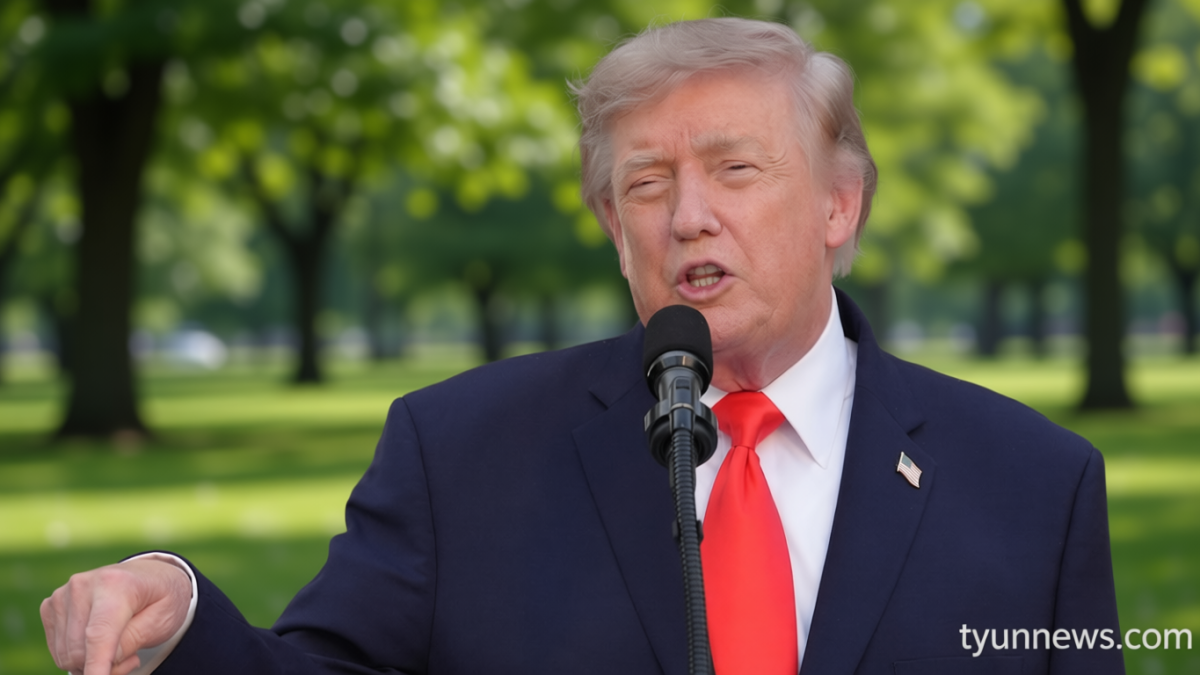
Trump Threatens 100% Tax on European Imports
Tyunews.com – President Donald Trump has escalated his trade strategy by threatening to impose a 100% tax on goods imported from European countries, a move that signals growing frustration with their digital service levies on U.S. firms. This announcement, made during a routine press briefing, comes as the administration seeks to address what it calls “unfair” policies imposed by the European Union. The tax would target a wide range of products, from electronics to luxury items, and is part of a broader effort to pressure European nations into renegotiating trade terms. Trump’s plan aims to shift the economic burden onto European exporters while defending American companies from what he describes as discriminatory tax practices.
Trade Disputes and the EU’s Digital Tax Policy
The threat to impose a 100% tax on European imports is rooted in the U.S. president’s longstanding criticism of the European Union’s approach to taxing digital businesses. In recent months, the EU has proposed a 3% tax on revenues generated by large technology firms operating within its borders, a measure designed to ensure that these companies pay their fair share of corporate taxes. Trump, however, views this as an unfair advantage for European nations, arguing that it penalizes American firms for their global success. The proposed tax could apply to all EU member states, potentially disrupting the flow of goods between the U.S. and Europe and triggering retaliatory measures from the bloc.
“The EU’s decision to impose digital taxes without prior consultation is a direct attack on American economic interests,” said a White House official. “We will take decisive action to protect our companies and ensure fair competition.”
Trump’s stance on digital taxes aligns with his broader philosophy of trade protectionism. Last year, he launched a campaign against “foreign countries” that he believed were unfairly taxing U.S. companies, using Section 301 of the Trade Act of 1974 to justify potential tariffs. The current threat follows a series of warnings from the administration, including a public social media post where Trump highlighted the “imminent” nature of the EU’s tax policies. This move could mark a pivotal moment in U.S.-EU trade relations, with the potential to reshape global supply chains and economic partnerships.
UK’s Role in Digital Tax Innovation
While the UK is no longer part of the EU, its introduction of a 2% digital services tax in 2020 has had a significant influence on the bloc’s current approach. The UK’s policy targets tech giants that profit from online services in the country, such as search engines, social media platforms, and e-commerce sites. This tax was framed as a way to address the “tax gap” between where companies generate revenue and where they are taxed, a concern echoed by the European Commission. The UK’s initiative served as a blueprint for other EU nations, prompting the bloc to adopt a unified strategy against U.S. digital firms.
Trump’s threat to impose a 100% tax on European imports builds on his previous actions against digital taxation. In 2020, the U.S. government investigated the UK’s tax as part of its broader efforts to challenge global tax policies. The investigation revealed that the UK’s approach could set a precedent for other countries to follow, potentially leading to a fragmented global tax system. Trump’s new proposal seeks to counter this trend by imposing a steep tax on all European imports, ensuring that these countries bear the cost of their regulatory decisions.
Analysts suggest that Trump’s 100% tax proposal is a calculated move to exert pressure on European nations during ongoing trade negotiations. The administration has been pushing for a trade agreement that caps EU export tariffs at 15%, a deal signed in May after months of back-and-forth discussions. However, the digital tax issue remains unresolved, with the EU insisting that it is a necessary step to fund public services and address tax inequality. Trump’s threat may serve as a bargaining chip in these negotiations, forcing European countries to reconsider their approach or risk facing additional tariffs.
Global Implications and Economic Impact
The potential 100% tax on European imports could have far-reaching consequences for global trade dynamics. By targeting a wide range of products, the U.S. would force European exporters to absorb the cost of their digital taxes, which could lead to higher prices for consumers. This could also disrupt supply chains, particularly in industries reliant on European manufacturing and distribution networks. Analysts warn that the tax could provoke retaliatory measures from the EU, such as imposing tariffs on American agricultural products or technology goods, escalating trade tensions.
Trump’s strategy reflects his pattern of using tax threats as a tool to reshape international trade agreements. In 2018, he imposed a 100% tax on European imports as part of his efforts to win back public support after the Brexit vote. The move was criticized for its potential to harm the European economy, but it underscored Trump’s willingness to use economic pressure to achieve political goals. This time, the threat is more targeted, focusing on countries that have implemented or plan to implement digital taxes, which Trump sees as a direct challenge to American economic leadership.
As the U.S. and EU navigate these trade disagreements, the focus keyword “Trump threatens 100 tax on European imports” will likely remain central to the discussion. The administration’s decision to introduce this measure highlights the growing divide between the U.S. and Europe, with each side accusing the other of unfair trade practices. The outcome of these negotiations could determine the future of transatlantic trade relations and set a precedent for how nations approach digital taxation in the global economy.