Iowa Democrats to settle a tense Senate primary
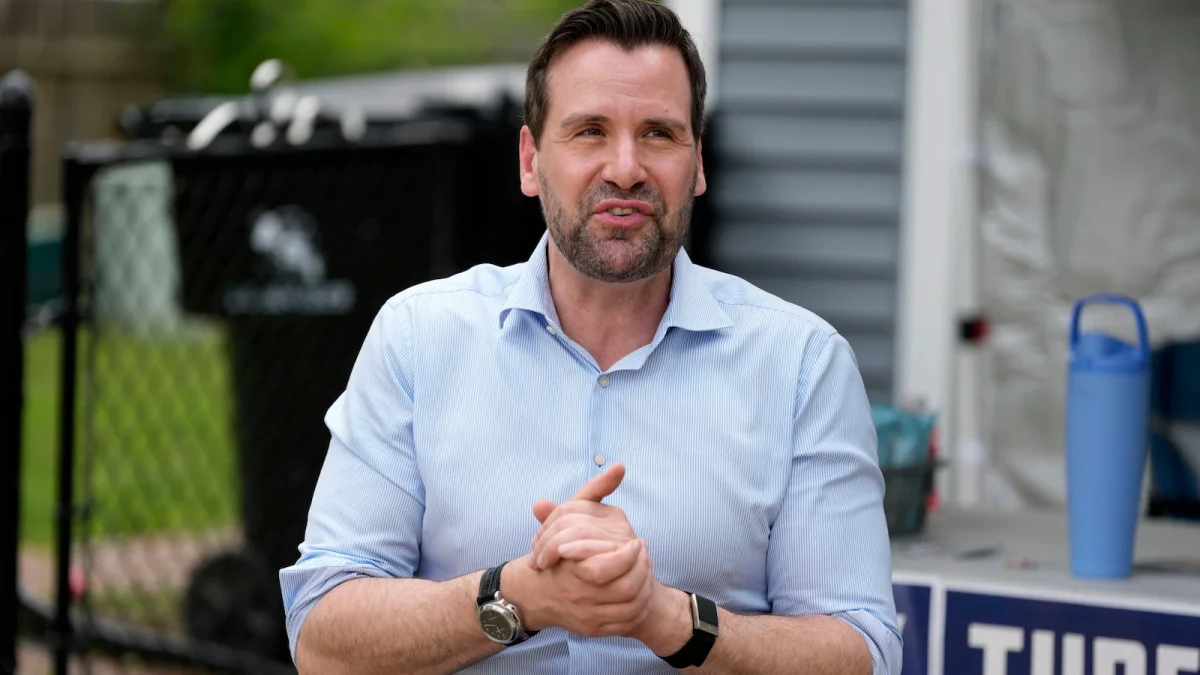
Tyunews.com – DES MOINES, Iowa — In the final stretch of the U.S. Senate race, Iowa Democrats will determine their nominee in a high-stakes primary on Tuesday. The contest pits two state lawmakers against each other: Josh Turek, a relatively new figure in politics, and Zach Wahls, a seasoned leader with a prominent national story. Both candidates claim they are the best choice to unseat two-term Republican Sen. Joni Ernst, a key figure in maintaining the GOP’s Senate majority. The outcome of this race will shape the Democratic strategy in a state where the party is aiming to challenge the current Republican dominance.
A Battle for Senate Control
The primary represents a pivotal moment for Democrats seeking to reclaim the Senate. With Ernst’s seat considered a stronghold for the Republican Party, the contest is framed as a test of whether the party can capitalize on growing dissatisfaction among voters. Issues like rising living costs, the decline of manufacturing jobs, and the closure of healthcare facilities have fueled Democratic hopes. These challenges, coupled with a struggling agricultural sector, are seen as opportunities to shift power from the GOP to the Democrats.
Leading the Democratic ticket is State Auditor Rob Sand, a candidate for governor and the only statewide officeholder in the party. His campaign has benefited from a steady flow of support, allowing him to build a strong moderate platform and amass an $18 million fundraising total. Sand’s appeal lies in his ability to connect with rural and working-class communities, emphasizing his roots in agriculture and his experience as a state auditor. His campaign has positioned him as the ideal choice to take on the Republican establishment in November.
The Candidates: Turek and Wahls
The two contenders for the Democratic nomination, Josh Turek and Zach Wahls, share common ground on several policy issues. Both support a public health insurance plan, advocate for a higher minimum wage, and push for expanded labor rights. They also align on critiques of political corruption, arguing that it benefits corporate interests at the expense of working-class Americans. However, their approaches to winning the November election diverge significantly, prompting distinct strategies from their Republican opponents.
Josh Turek, a newcomer to elected office, has built his campaign on a narrative of underdog determination. Previously a professional wheelchair basketball player in Europe, he competed in four Paralympics, including the 2021 Games. His transition to politics began in 2022, when he won a state House seat with a message focused on fiscal responsibility and grassroots appeal. Turek has positioned himself as a voice for rural and small-town Iowans, arguing that his background gives him an edge in a state where many voters feel disconnected from Washington’s agenda.
Zach Wahls, in contrast, has a long history of political influence. He gained national attention in 2011 when, as a 19-year-old, he stood up to lawmakers debating a resolution against same-sex marriage. Wahls’ advocacy for LGBTQ+ rights earned him a spot at the Democratic National Convention the following year. He later served as a state senator and held a leadership role for nearly three years before being ousted as minority leader. Wahls now emphasizes a “new vision for small town and rural Iowa,” which he claims resonates with voters frustrated by the status quo.
“We desperately need a new vision for small town and rural Iowa,” Wahls stated in a recent debate. “The current direction doesn’t address the real concerns of working-class families.”
Republican Challenges and National Support
On the Republican side, the race for the Senate seat is equally intense. Sen. Joni Ernst’s departure has left a vacuum that five candidates are vying to fill, including U.S. Rep. Ashley Hinson, who has the backing of former President Donald Trump and Sen. Joni Ernst. Hinson is facing off against former state Sen. Jim Carlin, a candidate who has spent much of the campaign season building a grassroots coalition. The GOP’s efforts are bolstered by a $29 million investment from their campaign arm, aimed at ensuring their nominee can counter the Democratic challenge.
Meanwhile, the Republican primary for governor has also drawn national attention. The race features five candidates, all of whom must navigate the complexities of replacing outgoing Gov. Kim Reynolds. Reynolds, who declined a third run, left behind a political landscape where the GOP is still optimistic about maintaining control. The nomination will be crucial for securing the party’s dominance in statehouse elections and its Senate majority.
A Changing Political Landscape
The Democratic Party’s internal debates over strategy and direction are playing out in Iowa, though with a different tone than in other states. In Maine and Texas, the focus has been on ideological divides, but here, the race is more about uniting the party behind a candidate who can translate local issues into a national appeal. Democrats have been cautious in their messaging, aiming to avoid alienating conservative voters while addressing economic anxieties.
Turek’s campaign has drawn support from outside groups, including VoteVets, which has poured $10 million into his effort. This funding has helped Turek dominate airwaves, social media, and direct mail outreach. Political allies of Senate leaders Chuck Schumer and Kirsten Gillibrand have also contributed to Turek’s campaign, underscoring the party’s belief in his viability. However, Wahls has countered these efforts by highlighting his credibility as a statesman and his track record in legislative leadership.
“I’m not a D.C. insider,” Turek asserted in a recent interview. “My experience in a Trump-won district proves that I can win statewide.”
Broader Implications
The stakes of this race extend beyond Iowa. A Democratic victory could signal a shift in the Senate’s balance of power, particularly in the Midwest. For the Republicans, the challenge is to prevent their Senate majority from slipping while also addressing the state’s economic and social concerns. The outcome will also influence the party’s approach to other races, including the presidential contest and the governor’s race.
Despite the GOP’s financial resources, Democrats remain confident. They argue that the current administration’s policies have created a ripe environment for a political realignment. With unemployment rates rising and inflation threatening family budgets, the party believes it can leverage these issues to mobilize voters. The primary, therefore, is not just a local event but a test of national relevance for the Democratic Party.
Conclusion
As Tuesday approaches, the tension in Iowa’s Democratic primary is palpable. Both Turek and Wahls have distinct narratives, but the race is ultimately about who can best unite the party and appeal to a diverse electorate. The Democrats’ ability to succeed here may determine whether they can make a dent in the Republican stronghold. For now, the focus remains on the state’s political dynamics, with the nation watching closely to see if Iowa can become a turning point in the larger contest for Senate control.