Central Bank Maintains Current Rate Amid Middle East Tensions
Tyunews.com – Wednesday’s monetary policy announcement came as the U.S. economy navigates renewed inflationary pressures stemming from the ongoing conflict in Iran. Oil markets experienced significant volatility while equity indices declined, reflecting investor concerns about the escalating geopolitical situation. These developments present central bankers with a complex balancing act as they work to moderate rising costs across the economy.
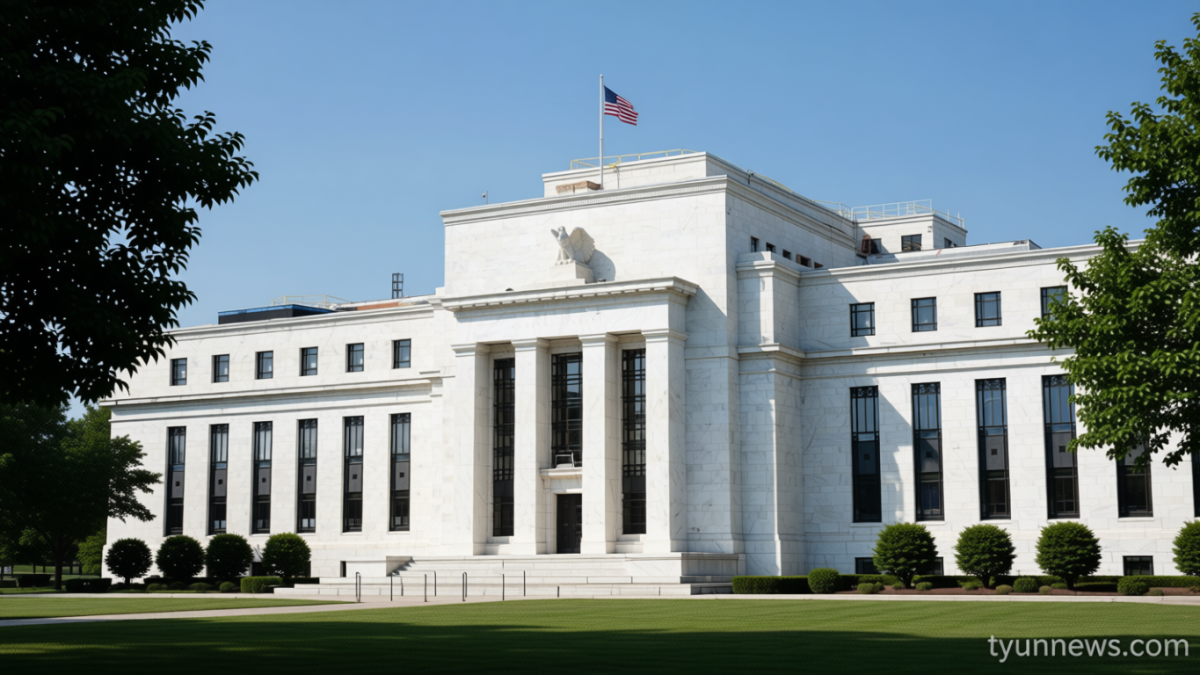
Kevin Warsh, who assumed leadership of the Federal Reserve in May, has consistently emphasized his commitment to reducing inflation toward the institution’s stated objective of two percent. Current measurements indicate that the annual rate of price growth sits at 3.5 percent, well above the target threshold.
“The committee remains resolute — you’ve heard this before — that we will deliver price stability,” Warsh informed journalists during a Washington, D.C. briefing on Wednesday.
Despite enduring multiple years of elevated inflation, Warsh maintained that the central bank would continue efforts to temper price increases. He noted that prolonged periods of high costs have created misconceptions among various economic participants.
“Some households, businesses and market professionals after five years of high inflation have been left with a mistaken impression that’s hard to shake: That the Fed’s implicit inflation target was somehow above 2%,” Warsh explained. “Let me reiterate: There is no soft inflation target. There is only a target and it’s 2%.”
Policy Decision Breakdown
The Federal Open Market Committee, comprising twelve voting members, reached its consensus on maintaining current interest rate levels. Nine participants cast their votes in favor of keeping rates unchanged, while three members advocated for a quarter-point increase instead.
The ongoing Iran conflict has precipitated a significant disruption in oil supplies, pushing fuel expenses higher and contributing to inflation reaching its highest point in three years. Although a preliminary diplomatic accord reached in June provided temporary relief, renewed hostilities over recent weeks have once again elevated crude prices.
According to the CME Group’s FedWatch Tool, which tracks market expectations, investors are pricing in a higher probability of a rate increase when central bankers convene again in September.
Labor Market Resilience
Elevated price growth presents particular challenges for policymakers attempting to control inflation without triggering economic contraction. While raising interest rates represents a conventional approach to cooling demand, such action could potentially slow employment growth.
Recent data suggests the labor market has demonstrated considerable strength despite mounting costs for consumers and corporations alike. U.S. Bureau of Labor Statistics figures reveal that the employment sector added an average of 92,000 positions monthly during the first six months of this year. This represents a substantial improvement compared to the second half of 2025, when the economy lost approximately 7,000 jobs per month on average.
Oil Price Volatility
Crude oil, a critical component influencing overall price levels, has experienced dramatic fluctuations recently. Prices briefly touched their lowest point since the late February outbreak of hostilities when news emerged regarding a preliminary peace settlement. However, renewed large-scale combat between American and Iranian forces cast uncertainty over the durability of that arrangement.
Shipping activity through the Strait of Hormuz decreased considerably as military operations intensified. This vital maritime corridor transports roughly one-fifth of the world’s total oil production. Consequently, international crude prices exceeded $100 per barrel during the previous week.
By Monday, prices had dropped beneath $90 per barrel following an American pause in military strikes, signaling potential willingness to pursue additional diplomatic channels. Fighting resumed on Wednesday, pushing prices back above the $90 mark.
Crude oil constitutes a substantial portion of gasoline retail pricing. The national average for a gallon of fuel currently reaches $4.09 according to AAA estimates, representing a 37 percent increase since the conflict began in February.