Russia Bombards Kyiv with Drones, Targets Historic Cathedral
Tyunews.com – On June 15, 2026, Russian forces launched a significant assault on Kyiv, utilizing drones and missiles to strike critical infrastructure. Ukrainian officials confirmed the attack, which led to casualties and widespread damage, including a devastating strike on the Kyiv Pechersk Lavra. The operation, described as a coordinated military strike, underscored Russia’s ongoing efforts to assert control over the capital while symbolically targeting cultural landmarks. President Volodymyr Zelenskyy emphasized that the attack marked a severe blow to Kyiv’s historical and religious heritage, highlighting the strategic importance of the cathedral in the conflict.
Historic Cathedral Amidst the Strikes
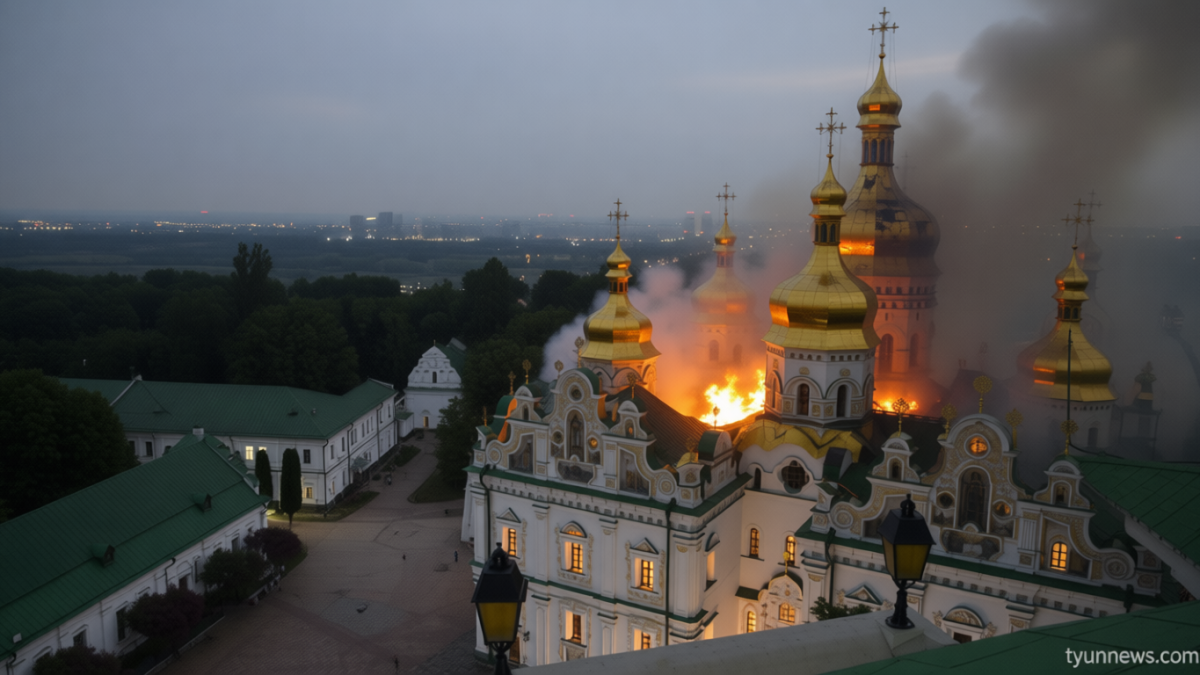
The Kyiv Pechersk Lavra, a UNESCO-listed Orthodox cathedral dating back to the 11th century, was among the primary targets of the Russian assault. The structure, renowned for its architectural significance and spiritual importance, suffered extensive damage, with its roof catching fire during the attack. Emergency crews swiftly intervened to prevent a total collapse, though the incident sparked global outrage. Zelenskyy, in a social media post, called the attack “one of the largest Russian crimes against Christian culture to date,” underscoring the symbolic nature of the strike.
“This is one of the biggest Russian crimes against Christian culture to date,” said President Volodymyr Zelenskyy. “We will not allow our history to be erased by those who seek to dominate our land.”
Missile and Drone Assault Details
Ukraine’s air force reported that Russia deployed 70 missiles and 611 drones during the attack, with 50 missiles and 582 drones intercepted or neutralized. According to data analyzed by ABC News, 20 ballistic missiles and 27 drones struck Kyiv, Kharkiv, Dnipro, Donetsk, Zaporizhzhia, Sumy, and Mykolaiv. The coordinated strike, the largest combined Russian assault since June 1, targeted both military installations and civilian areas, showcasing the scale of the attack. Russia’s use of drones and missiles in Kyiv demonstrated its ability to conduct precision strikes, though the cathedral’s damage suggested a broader, more symbolic strategy.
Ukrainian Defense and Strategic Response
As the attack unfolded, Ukrainian forces mobilized their air defense systems to counter the incoming barrage. The successful interception of over half the missiles and drones highlighted the country’s growing defensive capabilities. However, the remaining projectiles caused significant destruction, including the historic cathedral. Zelenskyy used the incident to rally international support, framing it as a critical moment for the G7 summit in France. He called on leaders to address the crisis with “decisive and meaningful” actions, including advanced air defense systems and humanitarian aid.
The assault on Kyiv with drones and missiles also intensified pressure on the G7 nations to escalate their support for Ukraine. Analysts noted that the attack on the cathedral could influence public opinion, particularly in countries with strong historical ties to Eastern Europe. Meanwhile, the Russian Defense Ministry claimed the damage was inflicted by an interceptor missile from a U.S.-made Patriot system, but the assertion lacked concrete evidence. This sparked debates about the accuracy of Russian reports and the extent of its military involvement in the attack.
Aftermath and Global Reactions
In the aftermath of the attack on Kyiv with drones and missiles, the city faced a difficult recovery process. Smoke from the damaged Dormition Cathedral rose above the skyline, drawing attention from global media and activists. Genya Savilov/AFP via Getty Images captured the scene, while Efrem Lukatsky/AP Photo documented the chaos in the streets. The incident not only raised concerns about civilian casualties but also reignited discussions about the cultural and historical implications of the war.
International reactions to the attack on Kyiv with drones and missiles were swift. Several countries condemned the assault, with some pledging increased military aid to Ukraine. The G7 summit in France became a focal point for diplomatic efforts, as leaders sought to address the crisis. Meanwhile, Russia’s claims of using precision weapons in the attack were met with skepticism, as the damage to the cathedral suggested a mix of strategic and symbolic intent. The event highlighted the evolving nature of modern warfare, where military targets and cultural sites are often intertwined in the conflict.