Trump scales back US-South Korea drills, cites ‘very good’ ties with Kim Jong Un

Trump Scales Back US South Korea Drills
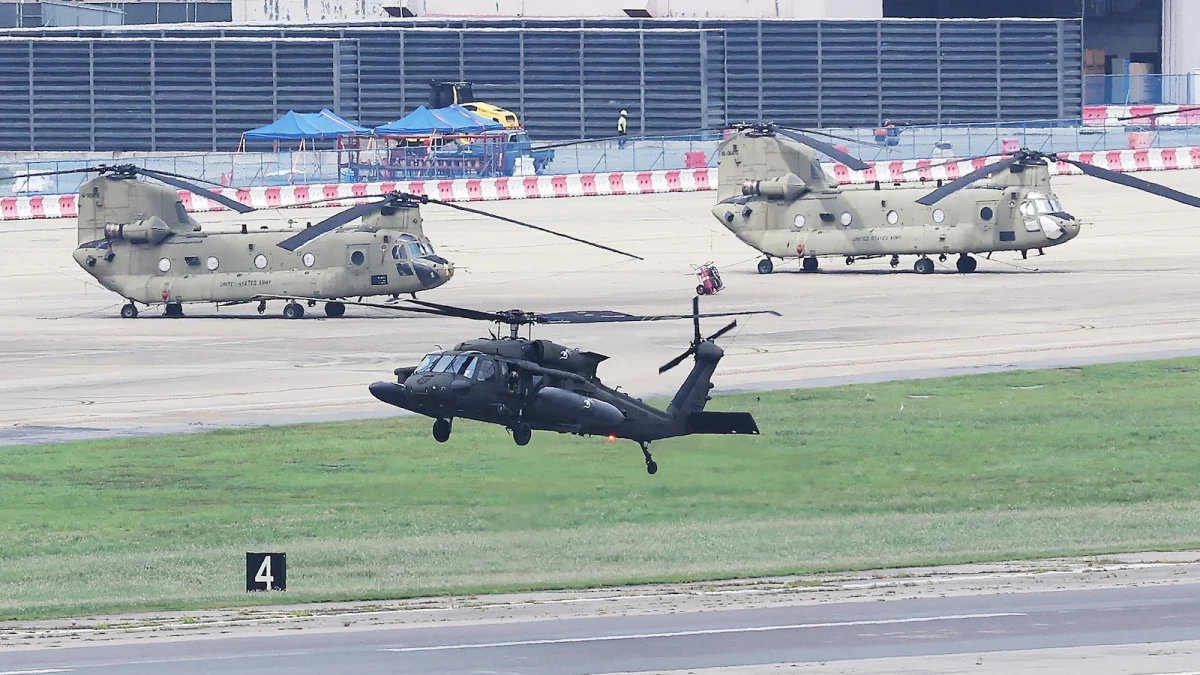
Tyunews.com – In a sweeping social-media post on Sunday, President Donald Trump announced that he had directed Secretary of War Pete Hegseth to sharply reduce the scope of the annual combined military exercises conducted alongside South Korea. The president framed the decision around his personal rapport with Kim Jong Un, arguing that the drills send the wrong message to Pyongyang. The move — effectively a case of Trump scales back US South Korea cooperation at the tactical level — lands at a moment when tensions on the peninsula remain elevated.
“Based on my very good relationship with Kim Jong Un, of North Korea, I am not happy with the fact that the United States has, long ago, agreed to participate in Joint Military Exercises with South Korea. Therefore, and based on the fact that it is too late to cancel, I have instructed Secretary of War, Pete Hegseth, to substantially reduce the Joint Military Exercises!”
Trump went on to describe the exercises as projecting “inappropriate and hostile” signals toward the North, while characterizing Pyongyang’s conduct under his watch as “unthreatening and respectful.” The language marks a notable departure from the hardline posture his first term adopted, when he repeatedly branded Kim “little rocket man” and threatened “fire and fury” before the two leaders eventually met three times in 2018 and 2019 — in Singapore, Vietnam, and the Demilitarized Zone between the Koreas.
What Happens to the Exercises Already Underway
The Ulchi Freedom Shield exercise began on Monday, and a South Korean Ministry of Defense spokesperson told ABC News the operation “will be carried on as planned” even as its overall scope is trimmed. South Korea hosts roughly 28,500 American service members, a footprint long justified as a deterrent given that the 1950–1953 Korean War was never closed by a peace treaty. The presence also serves as a strategic counterweight to Beijing, which remains Pyongyang’s principal patron.
The announcement followed a Friday statement in which Pyongyang threatened a forceful response against both Washington and Seoul over the scheduled drills. In recent years the North has deepened ties with Moscow and Tehran, tightening a bloc that complicates Washington’s regional calculus. Since detonating its first nuclear device in 2006, North Korea has steadily expanded its atomic arsenal and advanced a ballistic-missile program now capable of reaching the continental United States, all while operating under successive rounds of international sanctions.
The Iran Dimension and Seoul’s Response
In the same post, Trump referenced South Korea’s decision not to join the U.S. military campaign against Iran and its stated goal of Iranian “denuclearization,” yet he dismissed the issue as “somewhat unrelated (?)” to his drill-reduction decision. South Korea’s Ministry of Foreign Affairs pushed back diplomatically, telling ABC News that the government “has actively participated from the outset in international discussions aimed at securing a ceasefire in Iran and restoring freedom of navigation through the Strait of Hormuz.”
Seoul’s ministry also issued a statement expressing hope that the president’s overture would translate into substantive diplomacy: “The friendly relationship between the leaders of the United States and North Korea will lead to meaningful dialogue between Washington and Pyongyang and pave the way for discussions aimed at advancing peace and stability on the Korean Peninsula.” That optimism sits in tension with the fact that Trump’s first term never achieved its declared objective of North Korean denuclearization; after negotiations collapsed in 2019, Pyongyang resumed a steady cadence of missile tests, including two launches in rapid succession earlier this month as the current drills drew near.
Frequently Asked Questions
Why did Trump scales back US South Korea joint exercises? He cited his personal relationship with Kim Jong Un and argued the drills send hostile signals to Pyongyang, instructing Hegseth to reduce their scope rather than cancel them outright.
Will the Ulchi Freedom Shield exercise still take place? Yes. South Korea’s defense ministry confirmed the exercise already underway will proceed as planned, though its overall scale is expected to be trimmed in line with the president’s directive.
How many U.S. troops are stationed in South Korea? Approximately 28,500 American service members remain on the peninsula, a presence maintained as a deterrent given the Korean War’s unresolved status.
What is North Korea’s reaction? Pyongyang threatened a forceful response to the scheduled drills in a Friday statement, even as Seoul’s foreign ministry expressed hope the president’s overture could open meaningful dialogue.