UK Prime Minister Keir Starmer Announces Resignation with ‘Good Grace’
Tyunews.com – UK Prime Minister Keir Starmer has officially declared his intention to step down from both the Labour Party leadership and his role as head of government, signaling a pivotal shift in the country’s political landscape. The announcement, made on Monday, comes after nearly four years in office and marks the seventh prime ministerial change in a decade, reflecting the ongoing volatility of UK politics. Starmer, who has been a key figure in the Labour Party since 2020, expressed confidence in the process, stating he would remain in his position until a new leader is elected. His resignation was confirmed following a meeting with King Charles III, underscoring the formal nature of his departure from the role.
Starmer’s leadership began in 2024 after a decisive general election victory that reinvigorated the Labour Party. His tenure has been characterized by efforts to address economic stagnation, reduce the cost of living crisis, and reform public services. However, the challenges of governing in a post-Brexit, post-pandemic era have tested his ability to deliver on promises. With the UK facing a period of political transition, Starmer has set July 9 as the deadline for the formal launch of successor nominations, ensuring a structured process for the Labour Party to select its next leader. A new prime minister is expected to be chosen by September, when Parliament reconvenes after its summer break.
Leadership Challenges and Party Dynamics
Starmer’s decision to resign followed months of mounting pressure within the Labour Party. The recent May local elections, which saw Labour lose over 1,000 council seats, intensified calls for leadership change. Critics argue that Starmer has struggled to translate his party’s electoral success into effective governance, particularly in the wake of the Conservative Party’s long-standing dominance. Despite this, Starmer has maintained a relatively stable position, with no formal challenge yet to be launched. His potential successor, Andy Burnham, a former Greater Manchester mayor and recent by-election winner, has emerged as a leading candidate, backed by influential party members.
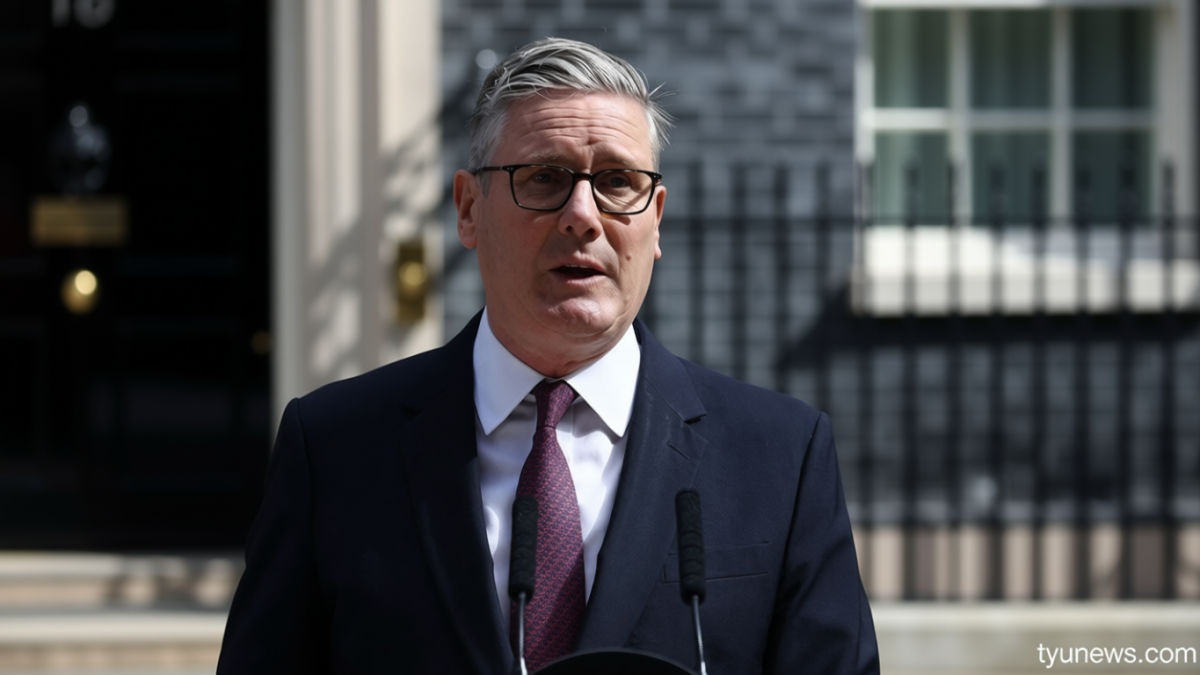
“The question my party is asking now is whether I am best placed to lead us into the next general election,” Starmer stated outside 10 Downing Street. “I have heard the answer of my parliamentary party to that question, and I accept that answer with good grace.”
Burnham, who secured a parliamentary seat in a recent by-election, emphasized the need for a new direction, stating, “People want to see progress on economic growth, cost of living, public services, housing, and opportunities for the next generation. Political change should never distract from the responsibility to improve people’s lives.” His campaign has focused on economic reforms and addressing the legacy of austerity, which many Labour members feel has been left unchallenged by previous leaders. Wes Streeting, the former health secretary who resigned in May, has publicly endorsed Burnham, arguing that the party must prioritize unity and decisive action over internal disputes.
Public Reaction and Political Analysis
The announcement has sparked a mix of reactions across the UK. While some praise Starmer’s decision as a pragmatic move to ensure a stable transition, others criticize it as a sign of uncertainty in Labour’s leadership. Public opinion polls suggest that voters are broadly supportive of Starmer’s policies, particularly his focus on social welfare and environmental initiatives, but many remain skeptical about his ability to navigate the complex political landscape. Analysts argue that Starmer’s resignation may accelerate the party’s efforts to realign itself with younger voters and address the growing concerns over economic management.
Starmer’s departure also highlights the evolving role of the UK Prime Minister in a fragmented political environment. His leadership has been marked by a blend of centrist policies and progressive commitments, aiming to bridge the gap between Labour’s traditional base and the broader electorate. However, the pressure to deliver tangible results in a short time has proven difficult, especially with the Conservative Party still dominant in key areas. As the Labour Party moves forward, the focus will shift to rebuilding momentum and presenting a cohesive vision for the future, with Burnham’s potential leadership seen as a test case for the party’s direction.
The impact of Starmer’s resignation could extend beyond the Labour Party, influencing the broader political narrative in the UK. With the general election looming, the transition period offers an opportunity for the opposition to capitalize on Labour’s internal dynamics. Meanwhile, the Crown’s involvement in the process, through the meeting with King Charles III, underscores the ceremonial yet crucial role of the monarchy in UK politics. As the nation awaits the next leader, the question remains whether the Labour Party can harness this change to reinvigorate its campaign and secure a strong mandate in the upcoming elections.