Democratic Socialist Janeese Lewis George Wins DC Mayoral Primary
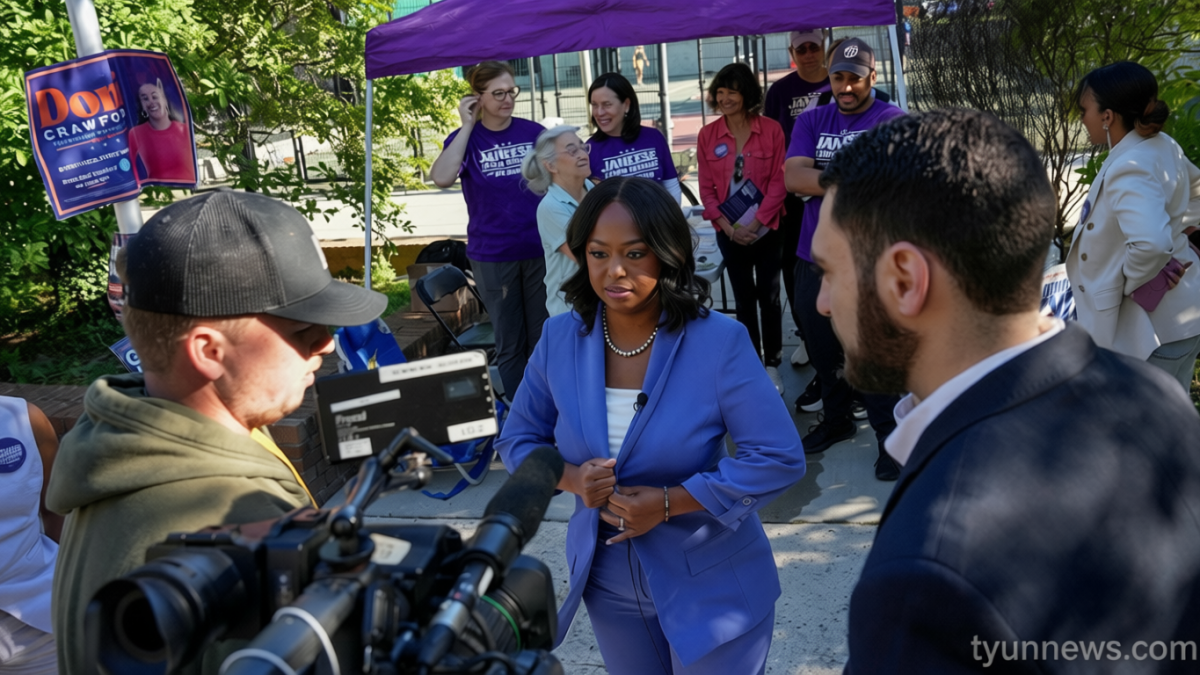
Tyunews.com – Democratic socialist Janeese Lewis George has emerged victorious in the Democratic primary for Washington, D.C. mayor, securing the nomination with a decisive lead. As of Thursday afternoon, the Associated Press confirmed her win, reporting that Lewis George received 52.9% of the vote in the first major election since Muriel Bowser’s tenure began in 2015. Her nearest competitor, former Ward 5 and at-large councilmember Kenyan McDuffie, trailed with 36.4% of the support, highlighting a clear shift in voter alignment within the district.
Ranked-Choice Voting and Political Shifts
This primary marked the first DC mayoral contest in over a decade without the incumbent mayor, Muriel Bowser, as a candidate. It also introduced ranked-choice voting, a system designed to reflect nuanced voter preferences by allowing candidates to rank their choices. Lewis George, who has long advocated for progressive reforms, leveraged this structure to consolidate support across multiple factions, ultimately outpacing her opponent. The system’s implementation has sparked discussions about its effectiveness in representing diverse political views and its potential to influence future elections in the district.
During the campaign, Lewis George emphasized her commitment to addressing systemic issues such as housing inequality and police accountability. Her platform included plans to reduce the police department’s budget and redirect funds toward community-based initiatives, a stance that resonated with many voters in a city grappling with ongoing social challenges. McDuffie, on the other hand, focused on his experience as a councilmember and his approach to fiscal responsibility, though he acknowledged the challenges posed by Lewis George’s progressive agenda.
Policies and Campaign Finance Controversy
One of the central policy debates centered on Lewis George’s proposal to restructure DC public safety funding. She argued that reallocating resources from the police department to violence interruption programs would improve community trust and reduce crime. This stance, which she first articulated in 2019, has been a cornerstone of her campaign and a key differentiator from her opponent. McDuffie criticized her plan as a “scare tactic,” citing her past support for police budgets during her time as a councilmember.
The race also took an unexpected turn when the DC Office of Campaign Finance imposed a $16,000 fine on Lewis George’s campaign for alleged coordination with a super PAC and labor unions. The fine, which came after an investigation into campaign practices, was contested by Lewis George, who claimed it was a politically motivated move. The controversy underscored the intense scrutiny of campaign finance in the district and raised questions about the fairness of the electoral process for progressive candidates.
Additionally, Lewis George’s campaign highlighted her focus on economic equity, including proposals for increased funding for public education and affordable housing. Her emphasis on these issues aligns with the broader Democratic socialist movement, which seeks to address wealth disparities and expand social safety nets. While McDuffie prioritized pragmatic solutions, Lewis George’s bold vision for DC has drawn both praise and criticism from political analysts and voters alike.
Significance for Democratic Socialists and the National Stage
As the first democratic socialist to win a major city mayoral primary, Lewis George’s victory signals a growing influence of progressive ideologies in urban politics. Her success is seen as a potential blueprint for other candidates seeking to challenge traditional political parties. The movement’s focus on issues like wealth redistribution and environmental justice has gained traction in recent years, and her win reinforces its viability as a political force in the United States.
Political commentators have noted that Lewis George’s campaign capitalized on voter dissatisfaction with the status quo, particularly among younger and minority populations. Her message of “fundamental change” has struck a chord with many in DC, where the Democratic socialist movement has been steadily gaining momentum. The outcome of this primary could have broader implications for the movement, potentially shaping its strategy in future elections and amplifying its presence in national politics.
Looking ahead, Lewis George will now face the general election, where she will need to solidify her position as the Democratic candidate. The Republican field remains open, with several prominent figures vying for the nomination. Her ability to translate primary success into a general election victory will depend on her campaign’s messaging, fundraising efforts, and outreach to a wider electorate. For now, her win stands as a milestone in DC’s political evolution and a testament to the power of progressive narratives in shaping urban governance.