Kennedy Center Misses Deadline to Remove Trump’s Name as Extension Request Rejected
Tyunews.com – The Kennedy Center missed its deadline to remove Trump’s name from the iconic performing arts venue, as a federal appeals court on Friday evening denied the Trump administration’s request for a 12-hour extension. The court’s decision upheld the original order issued by U.S. District Judge Christopher Cooper, which mandated the removal of all references to former President Donald Trump from the Kennedy Center’s grounds, website, and digital platforms by midnight on June 13, 2026. The administration had argued that the rushed timeline would disrupt fundraising, delay essential repairs, and create public confusion, but the appeals court found the case insufficient to warrant a stay.
Background of the Renaming Order
The renaming order was part of a broader effort to distance the Kennedy Center from political associations, following the Trump administration’s decision to rebrand the institution. The center, originally named after President John F. Kennedy, had been under pressure to remove Trump’s name after his presidency ended in 2021. Judge Cooper had previously granted the administration 14 days to complete the renaming, but the deadline was later pushed forward by the government’s request for an extension. This decision, however, was met with skepticism, as critics questioned whether the 12-hour extension was enough time to execute the required changes without further complications.
Under the original timeline, the Kennedy Center was expected to complete the removal of Trump’s name from its physical and digital presence by June 13, 2026. The order required the center to update its signage, website, and social media accounts, ensuring that the former president’s name no longer appeared on its premises. Despite the government’s last-minute appeal, the appeals court ruled that the extension would not provide sufficient time to address the issue thoroughly. This left the Kennedy Center with no choice but to proceed under the original deadline, sparking a mix of reactions from supporters and opponents of the renaming process.
Arguments Against Immediate Removal
The Trump administration had submitted a detailed argument to the D.C. Circuit, emphasizing the logistical challenges of removing Trump’s name in such a short timeframe. They claimed that the name was prominently displayed on the building’s facade and that expediting the process could lead to a financial and structural collapse. According to the government’s filing, the center’s ability to fund operations and maintain its architectural integrity was at risk without the name remaining visible for the final 12 hours. This argument was bolstered by the administration’s assertion that Trump’s leadership had brought global attention to the Kennedy Center, positioning it as a “beacon of excellence” on the world stage.
“The removal of Trump’s name would not only disrupt the Kennedy Center’s fundraising but also create confusion among the public,” the administration stated in their appeal. “The center’s reputation and operational continuity are tied to the visibility of the former president’s name, which has served as a symbol of its prominence.” This claim was countered by Judge Cooper, who argued that the extension request was an attempt to delay the necessary steps of the renaming process. He highlighted that the government had already taken measures to remove Trump’s name from online platforms, suggesting that the physical removal could be completed within the original timeframe without major setbacks.
The decision to deny the extension came amid ongoing debates about the role of public institutions in political discourse. While the Kennedy Center’s name change was seen by some as a symbolic shift, others viewed it as an overreach of government authority. The administration’s argument that the renaming process could jeopardize the center’s financial stability was met with mixed responses. Supporters of the order argued that the Kennedy Center should remain neutral in political matters, while critics warned that the rushed timeline might lead to incomplete changes or a loss of public support.
Legal and Public Reactions to the Ruling
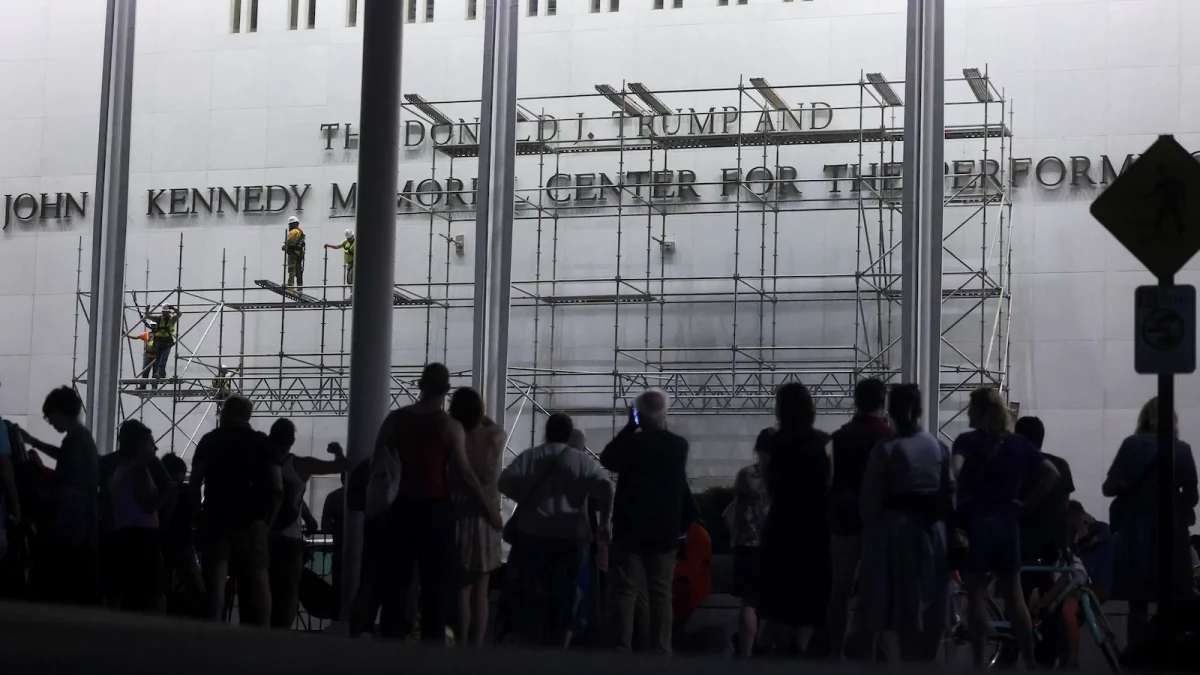
The ruling has sparked renewed discussions about the balance between political influence and institutional independence. Legal experts noted that the denial of the extension request could have long-term implications for how public spaces are managed in relation to political figures. Meanwhile, the Kennedy Center’s staff continued their work to remove Trump’s name from its physical and digital presence, with employees visible on scaffolding near the building’s entrance. The process, though time-sensitive, is expected to be completed by the June 13, 2026 deadline, marking a significant moment in the center’s history.
Public reactions have been divided, with some applauding the court’s decision to enforce the renaming order and others criticizing it as a partisan move. Social media platforms have seen a surge in posts from both sides, highlighting the symbolic weight of the Kennedy Center’s name change. The ruling also underscores the ongoing tension between the Trump administration and the judicial branch, as the case continues to be a focal point in debates over executive power and the renaming of public landmarks. As the deadline approaches, the Kennedy Center’s ability to meet the requirements of the order will be closely watched by political observers and the public alike.