Mamdani Won Big, But It’s a Mistake to Think All Democrats Swung Left: Analysis
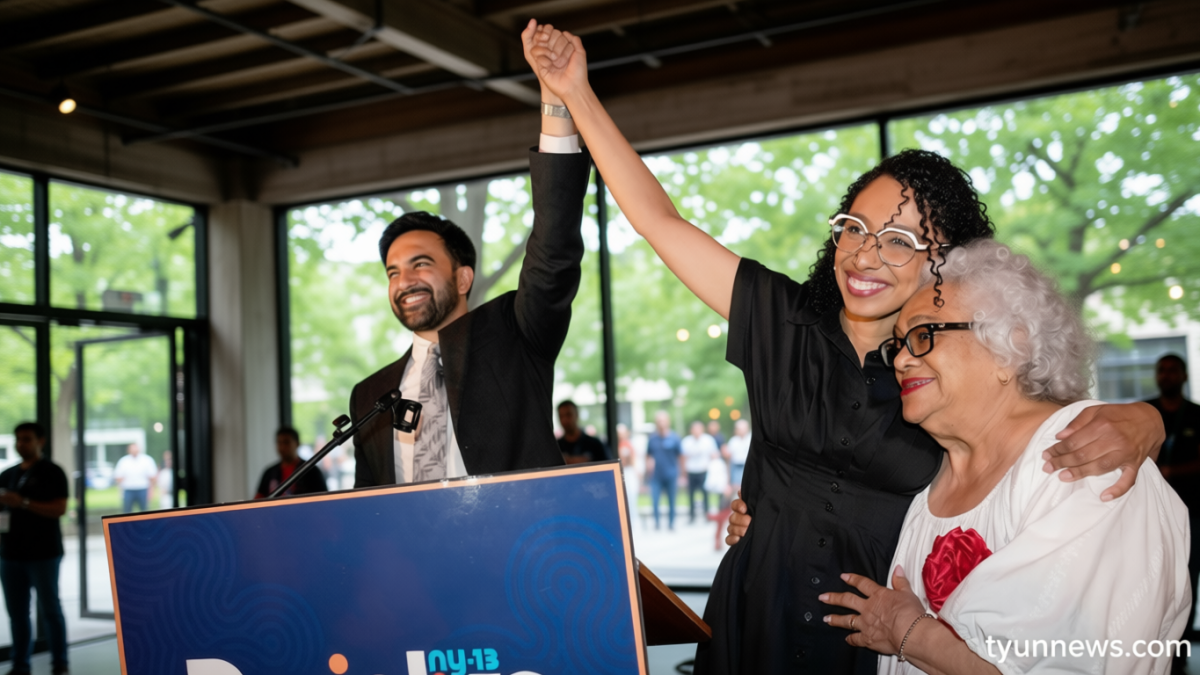
Tyunews.com – Mamdani won big but it’s a mistake to think all Democrats swung left. While New York Mayor Zohran Mamdani’s influence was undeniable in Tuesday’s elections, his endorsements did not uniformly shift the Democratic Party toward progressive policies. Three candidates he backed—Claire Valdez, Darializa Avila Chevalier, and Brad Lander—secured victories in key races, overcoming formidable opposition from well-funded incumbents. Yet, the results reveal a more nuanced picture, showing that Democratic voters remain divided in their priorities and that Mamdani’s support was strategically tailored to specific local contexts.
The impact of Mamdani’s endorsements highlights the growing power of grassroots organizing within the Democratic Party. In Brooklyn, where Valdez unseated the veteran Borough President Antonio Reynoso, the campaign emphasized affordable housing and racial equity, resonating with a voter base that has long sought more radical change. Similarly, in Queens, Darializa Avila Chevalier’s campaign focused on revitalizing public transportation and expanding access to healthcare. These wins suggest that voters are increasingly drawn to candidates who align with their immediate concerns, even if they are not the most ideologically extreme figures in the party.
Internal Debates and Pragmatic Voting
Despite these progressive victories, the broader Democratic electorate continued to favor candidates with moderate platforms in several races. In the 17th Congressional District, for instance, Cait Conley—a candidate with a more centrist approach—defeated her more left-leaning rivals. Her focus on national security and cost-of-living issues reflects a strategic choice to appeal to voters in swing districts, where the party’s traditional base may not be sufficient to secure a majority. This shift underscores the challenge of balancing ideological consistency with electoral viability.
“Asked by ABC News Wednesday whether voters had sent him a message by rejecting candidates he supported, Jeffries declined to engage and instead pivoted to New York’s 17th Congressional District, where Democrats are hoping to defeat Republican Rep. Mike Lawler this fall.”
The city’s results also reveal the influence of internal party debates on key issues like immigration and economic policy. While Mamdani’s allies concentrated on progressive themes such as housing affordability and racial justice, other Democrats prioritized pragmatic approaches to attract a wider range of voters. This divergence suggests that the party’s base is not monolithic and that candidates must navigate both ideological fervor and the realities of the general election electorate to succeed.
A New Era for Democratic Politics?
The election outcomes may signal a subtle but significant evolution in Democratic strategies. In New York, the focus on working-class issues and community-driven policies demonstrated that progressive messaging can still resonate in urban centers. However, the successes in other regions, such as Utah, highlight a different trajectory—one where candidates adapt to local concerns like economic stability and national security. These contrasting approaches indicate that the Democratic Party is still in a phase of experimentation rather than a full-scale ideological shift.
Analysts argue that while Mamdani’s influence has amplified progressive voices, it has not erased the party’s existing fractures. In races where moderate candidates won, they often leveraged cross-ideological appeal, emphasizing bipartisan solutions to issues like job creation and infrastructure. This strategy may be more effective in battleground states, where a narrow coalition of progressive voters is not enough to ensure victory. As a result, Democratic leaders are likely to continue testing various approaches, balancing bold rhetoric with electoral pragmatism.
The Broader Implications for the Party
The results of Tuesday’s elections offer a mixed message for Democrats. On one hand, they validate the growing support for candidates who prioritize social justice and economic equity. On the other, they show that voters in key districts remain open to more centrist options, particularly when those candidates address issues like healthcare and education with a pragmatic tone. This duality means that the party’s future will depend on its ability to unify its base while remaining responsive to diverse voter needs.
As the Democratic Party moves forward, Mamdani’s role as a mobilizer of progressive energy will be critical. His endorsements not only helped secure wins but also demonstrated that a strong grassroots campaign can challenge entrenched establishment figures. However, the need to adapt to suburban and swing voters suggests that the party must continue refining its messaging. The combination of bold, left-leaning platforms and pragmatic, issue-focused strategies may be the key to maintaining momentum in the face of a divided electorate.