Hurricane Nolo lashes Hawaii as new threat of ‘volcanic hail’ arises

Daftar Isi
Hawaii Braces for Hurricane Nolo While Kilauea Activity Raises Fresh Concerns
Tyunews.com – Hawaii residents are facing a difficult weekend as Hurricane Nolo sends rain, powerful gusts and hazardous surf toward parts of the island chain, while officials on the Big Island monitor unusual activity at Kilauea that could create a separate danger.
By Sunday morning, Nolo was a Category 2 hurricane with sustained winds reaching 105 mph. The storm’s center was roughly 200 miles south of South Point on Hawaii Island and was traveling west at about 9 mph. Although its projected track keeps the core of the hurricane well south of the islands, its broad outer bands are still affecting exposed areas of the Big Island and Maui.
Heavy downpours and strong winds are expected to continue through part of Sunday before conditions gradually ease later in the day. A flood watch remains active for the Big Island through Sunday night, and localized gusty-wind alerts are in place across portions of the Hawaiian Islands until 6 p.m. local time.
Storm weakened, then regained strength
Nolo temporarily fell to Category 1 status on Saturday before intensifying again overnight. Forecasters expect the cyclone to strengthen further as it turns more decisively westward, with its center remaining south of Hawaii.
That track led to the cancellation of all tropical alerts previously issued for the state after the storm’s Saturday weakening. The end of those alerts does not mean hazardous weather has ended. Residents in affected areas may still encounter periods of intense rain, sudden wind gusts and large waves, especially near shorelines and on windward slopes.
Flood watches are issued because tropical moisture can produce rainfall faster than drainage systems, streams and low-lying roads can handle. Even where the hurricane itself does not make landfall, outer rain bands can bring rapidly changing conditions. Travelers and residents should remain alert to local warnings, road conditions and ocean hazards as the remaining bands move through.
Air travel and daily activity disrupted
The storm’s approach has already disrupted normal routines. At Hilo International Airport on Sept. 25, 2026, sandbags lined a closed Southwest Airlines ticket counter as Nolo moved nearby. Such preparations reflect the risk of wind-driven rain and potential flooding around transportation facilities, even when the most severe winds remain offshore.
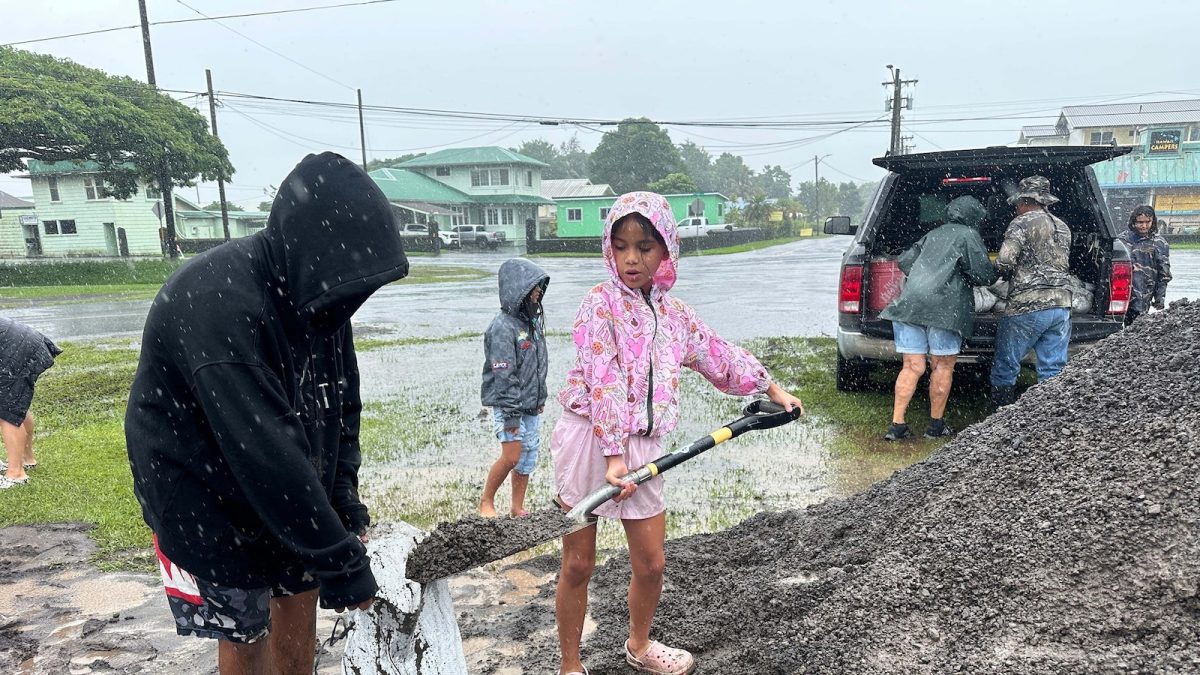
For communities still recovering from recent storms, the renewed threat is especially challenging. Hurricane Lala struck the Big Island only six weeks earlier, leaving residents to clear debris before Nolo’s rain and wind arrived. Hawaii has endured four natural disasters in 2026, and Gov. Josh Green has said recovery from them will cost $1 billion.
Kilauea monitoring adds another layer of risk
As weather conditions remain unsettled, Hawaii County officials are also watching precursor activity at Kilauea volcano. The concern is the possible release of tephra, airborne fragments of volcanic material that could fall over nearby areas if an eruption-related event develops.
Hawaii County Mayor Kimo Alameda described the potential material as “volcanic hail,” highlighting how wind could carry it beyond the volcano’s immediate vicinity. If it enters rainwater catchment systems, pools or roadways, the cleanup and safety consequences could be significant.
“It could shoot as high as a thousand feet, right? And then if there is wind, then that wind pushes that tephra all over to the surrounding community,” Alameda said.
Tephra can vary in size, from very fine ash to larger particles. Its impact depends heavily on wind direction, the scale of any activity and where material falls. In communities that depend on catchment tanks for water, contamination is a practical concern. Volcanic debris on roads can also affect visibility and traction while adding a cleanup burden for public crews and property owners.
“If that tephra … got into our catchment tank, it impacts our water. So it messes up the catchment tanks, the swimming pools. The roads [have] got to be cleared because it’s very dangerous if it’s on our roads. So, it becomes to the threshold of a disaster.”
Emergency teams are monitoring whether the precursor activity develops further. Alameda stressed that Hawaii does not need to contend with several disasters at the same time, particularly while recovery work from earlier weather events continues.
“It’s been rough, and we’re doing the best we can in responding and trying to keep the spirits up for our residents,” Alameda said. “But you know, it brings us together. I believe in every unfortunate situation there are many blessings, and so we look for those blessings, and that’s what keeps us strong.”
Three hurricanes active in the Pacific
Nolo is one of three hurricanes active in the Pacific. Hurricane Polo remained the strongest of the group Sunday morning, with maximum sustained winds of 120 mph, making it a Category 3 major hurricane. Tropical-storm conditions from Polo could reach parts of Baja California Sur as soon as Sunday night or early Monday.
Hurricane Odalys, meanwhile, was weakening and only narrowly retained Category 1 strength, with maximum sustained winds of 75 mph. It is expected to curve south and begin dissipating later Sunday.
The simultaneous presence of Nolo, Polo and Odalys is an unusual Pacific setup. The previous instance of three hurricanes existing at once in the basin came in 2015, when Kilo, Ignacio and Jimena formed.
For Hawaii, the immediate focus remains on Nolo’s rain bands, rough ocean conditions and the possibility of flooding, alongside close observation of Kilauea. Even with the hurricane center forecast to stay offshore, residents on the Big Island and Maui are being urged to treat the lingering weather hazards seriously as the system continues west.
Related Reading
Frequently Asked Questions
What is Hurricane Nolo lashes Hawaii as new threat?
Hurricane Nolo lashes Hawaii as new threat is the main topic of this guide. The article explains the context, practical details, and next steps readers should understand.
Why does Hurricane Nolo lashes Hawaii as new threat matter?
Hurricane Nolo lashes Hawaii as new threat matters because readers are looking for a useful answer, not just a short summary. Good content should match search intent and help them decide what to do next.