Daftar Isi
Senators Wary of $397M Secret Service Transfer Amid Ballroom Construction
Tyunews.com – Recent financial decisions by the Trump administration have drawn cautious attention from Senate lawmakers, as nearly $397 million in taxpayer funds was quietly transferred to accounts supporting the Secret Service. The move, part of a larger $1.2 billion provision under the “One Big Beautiful Bill Act,” has raised concerns about whether the money is being directed toward essential security upgrades or to fund a new White House ballroom. Senators are scrutinizing the allocation, which occurred in two installments on June 12 and June 15, as the administration has yet to provide a detailed breakdown of how the funds will be utilized.
Controversy Over Funding Allocation and Legislative Intent
The $397 million transfer includes $11 million allocated to the Secret Service’s “Operations and Support” account and over $385 million tagged for “Procurement, Construction and Improvements.” While the White House has described the funds as part of broader security upgrades, some senators are questioning the link to the ballroom project. A senior administration official confirmed the allocation but emphasized that the money would cover “necessary upgrades” to the executive mansion, including a new visitor screening center. However, the lack of clarity has fueled speculation about the project’s true purpose.
“The president claimed the ballroom would be funded by private donations,” remarked Sen. Susan Collins, R-Maine, to Bloomberg. “This leaves us wondering if federal resources are also contributing to the project, or if these are merely standard security enhancements the agency requires.”
When Congress approved the $1.2 billion provision last year, it specified that the funds could be used for Secret Service operations, such as personnel, training, and technology. The legislation, however, did not explicitly name the White House ballroom as a priority. The White House’s rationale for the transfer remains opaque, with officials citing the need for “security upgrades” as justification. This ambiguity has prompted lawmakers to call for greater transparency in the spending process.
Discrepancies in Funding Estimates and Contractor Reports
Additional scrutiny has been cast on the project’s cost after the Washington Post reported that the contractor overseeing the ballroom estimated the total cost could exceed $600 million. This figure contrasts with earlier claims by administration officials, who stated the budget would be capped at $400 million. The report indicated that more than half of the funding would come from government sources, not private donors, as initially suggested. The White House has not yet addressed these discrepancies, leaving lawmakers to question the project’s financial sustainability.
Senator Elizabeth Warren, D-Massachusetts, has criticized the allocation, arguing it reflects a lack of fiscal responsibility. “We’re seeing a pattern where funds are being diverted to high-profile projects without clear justification,” she stated in a recent press briefing. “The Secret Service needs resources, but this transfer seems more about visibility than necessity.” Her comments align with broader concerns that the administration is using the ballroom as a symbol of executive power, rather than focusing on core security needs.
Reconciliation Bill and Ongoing Political Debate
In a separate funding effort, the administration sought additional support for the Secret Service through a reconciliation bill focused on immigration enforcement. While $220 million was earmarked for the “East Wing Modernization Project,” this provision was excluded from the final legislation. The White House maintains that the ballroom is critical to modernizing security infrastructure, but critics argue that the exclusion of the East Wing provision suggests a shift in priorities. The debate over the budget highlights tensions between lawmakers and the executive branch over the scope and purpose of the funds.
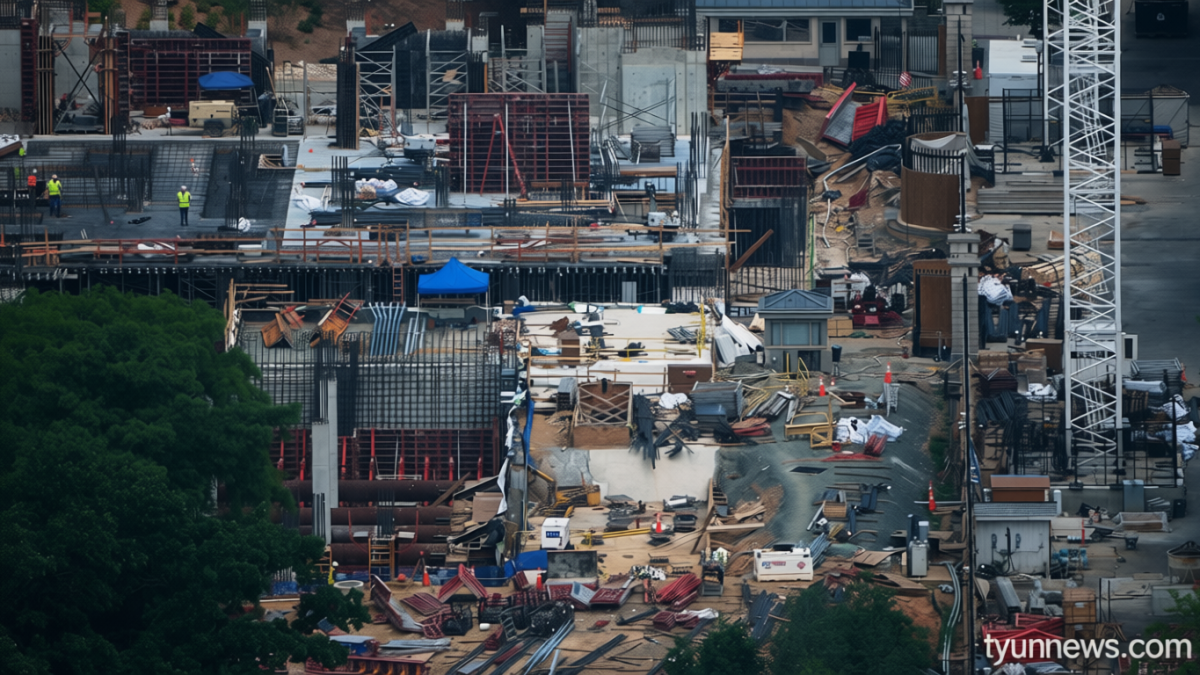
As the construction of the ballroom continues, senators are pushing for audits and detailed reports on the project’s progress. The focus keyword “Senators warily eye transfer of 397M” reappears in discussions about the administration’s transparency, with some lawmakers demanding that the funds be justified in terms of both security and public accountability. The controversy underscores a growing divide between the White House and Congress over how taxpayer money is allocated and spent.
Despite the skepticism, the administration has defended the transfer, asserting that the ballroom is a strategic investment in national security. “This facility will enhance our ability to protect the president and visitors during high-profile events,” a spokesperson said. However, with the focus keyword “Senators warily eye transfer of 397M” now central to the debate, the project’s future depends on whether the White House can reconcile its spending priorities with congressional scrutiny. As the budget year progresses, the spotlight on the transfer is likely to remain intense.