Supreme Court Rolls Back Limits on Carrying Guns on Private Property
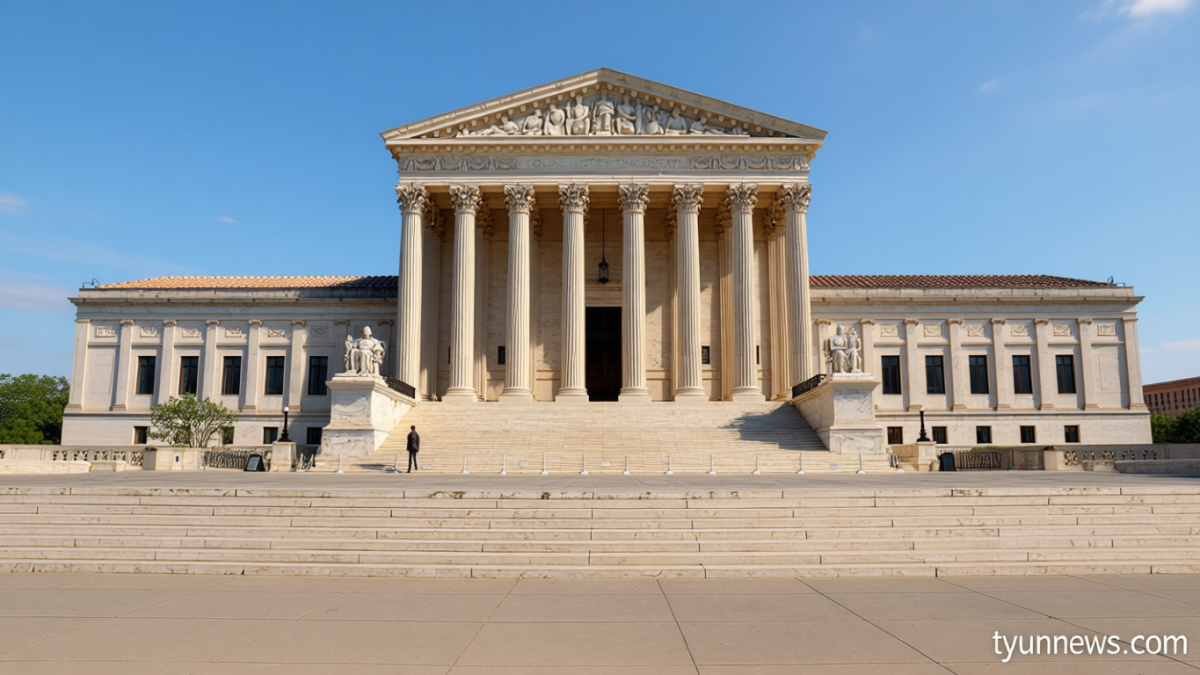
Tyunews.com – On Thursday, the U.S. Supreme Court took a significant step in reshaping gun rights by reversing a key restriction on carrying firearms on private property open to the public. The 6-3 decision, authored by Justice Samuel Alito, struck down Hawaii’s law that required property owners to explicitly permit individuals to bring guns onto their premises. This ruling marks the Supreme Court’s latest move to expand Second Amendment protections, emphasizing that gun owners have the right to carry weapons in public spaces unless clearly prohibited. The decision has sparked widespread debate over the balance between individual freedoms and public safety concerns, with implications that extend beyond Hawaii’s borders.
Legal Framework and the Hawaii Case
The case centered on Hawaii’s 2021 law, which imposed a requirement that anyone carrying a firearm onto property accessible to the public must obtain permission from the owner. The law, passed by the state legislature, aimed to reduce gun violence by limiting access to private areas where people could gather, such as parks or shopping centers. However, the Supreme Court majority argued that this law unfairly burdened the fundamental right to bear arms. By a 6-3 vote, the justices concluded that the law’s broad restrictions violated the constitutional guarantee of gun ownership, even on private land that is open to the public.
“The Second Amendment protects the right to carry firearms in public, and this law imposes an unnecessary burden on that right,” Justice Alito wrote in the majority opinion.
The court’s reasoning hinged on the idea that the right to carry guns is not limited to government-controlled spaces. Instead, it applies to any property accessible to the public, as long as it is not specifically closed off to firearms. This interpretation expands the scope of gun rights, allowing individuals to carry weapons into places like beaches, trails, or public parking lots without needing prior approval from the owner.
Implications for Gun Control and State Laws
The ruling has the potential to invalidate similar gun carry restrictions in other states, including California, Maryland, New York, and New Jersey. These laws often require property owners to grant permission for firearms on their premises, effectively creating a barrier to open carry in public areas. With the Supreme Court’s decision, such laws may now face legal challenges, forcing states to reconsider their approach to regulating gun access. While private property owners can still prohibit firearms, the burden of proof now lies with them to clearly communicate their restrictions through signage or other means.
This shift in legal precedent reflects a broader trend of the Supreme Court prioritizing individual gun rights over state-imposed limitations. The decision underscores the court’s commitment to interpreting the Second Amendment as a fundamental right that extends to all public spaces, regardless of their ownership. Advocates argue that this ruling empowers gun owners and aligns with the original intent of the amendment, which was designed to protect citizens from potential tyranny by ensuring they could carry weapons for self-defense. Critics, however, contend that the decision weakens state authority to address gun violence and may lead to increased firearm-related incidents in public areas.
Dissenting Opinions and Safety Concerns
Justice Ketanji Brown Jackson, joined by Justice Sonia Sotomayor, dissented, arguing that the ruling fails to account for the practical risks of gun carry on private property. “This decision prioritizes the right to carry firearms over the state’s interest in protecting public safety,” Jackson wrote. She emphasized that Hawaii’s law was a reasonable measure to prevent armed conflicts in shared spaces, particularly in areas where gun violence has been a persistent issue. The dissenting justices also raised concerns about the potential for confusion among property owners and the public, suggesting that the ruling could lead to inconsistent enforcement of gun restrictions.
While the majority opinion focused on constitutional principles, the dissent highlighted the real-world consequences of the decision. For instance, in places where public and private spaces overlap, such as college campuses or commercial districts, the ruling could complicate efforts to manage gun access. The justices who opposed the decision warned that the majority’s interpretation may erode the ability of states to adapt gun laws to local needs, creating a one-size-fits-all approach that might not address specific safety challenges in all communities.
Reactions from Advocacy Groups and Public Opinion
The National Rifle Association (NRA) praised the decision, calling it a victory for gun owners and a clear statement that the Second Amendment is a “fundamental right that cannot be restricted without justification.” The group argued that the ruling reaffirms the constitutional protections for individuals to carry firearms in public spaces, regardless of the property owner’s preferences. Meanwhile, the Brady Campaign to Prevent Gun Violence expressed disappointment, stating that the decision “threatens to make our streets less safe by removing key restrictions on gun access.”
Public opinion on the issue remains divided. Supporters of the ruling see it as a necessary correction to overreach by state governments, while opponents worry about the increased likelihood of gun violence in public areas. The case has reignited discussions about the role of the Supreme Court in shaping gun policy and the extent to which individual rights should take precedence over collective safety. As the decision takes effect, lawmakers and advocacy groups will likely continue to push for legislative changes to either reinforce or revise the current framework for gun carry on private property.