What to Know About Birthright Citizenship Ahead of Supreme Court’s Ruling
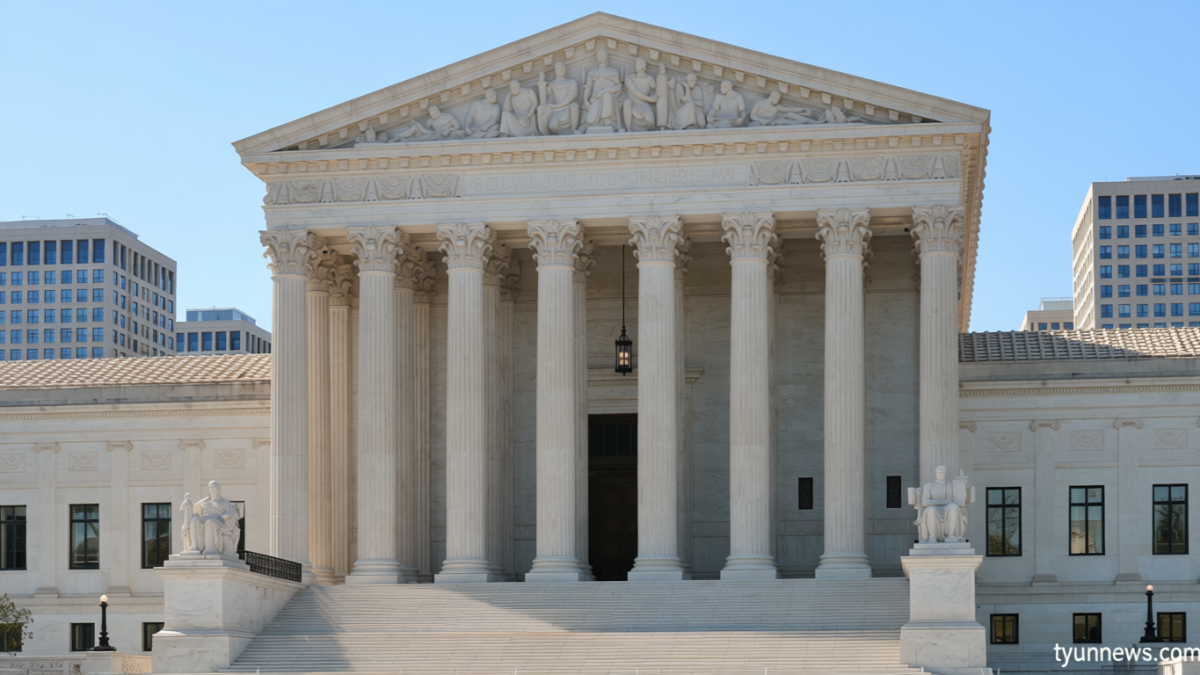
Tyunews.com – The U.S. Supreme Court is set to address a pivotal legal question regarding President Donald Trump’s proposal to eliminate birthright citizenship through an executive order. This decision could redefine a foundational principle in American law that has endured for over a century, affecting the status of millions of children and their families.
Understanding Birthright Citizenship
Birthright citizenship, also known as jus soli, grants automatic nationality to individuals born within a country’s borders, irrespective of their parents’ legal status. This contrasts with jus sanguinis, where citizenship is determined by parental nationality rather than place of birth.
“All ‘persons born or naturalized in the U.S. and subject to the jurisdiction thereof’ are citizens,” states the 14th Amendment, ratified in 1868 to secure civil rights for formerly enslaved individuals and their descendants.
Congress later formalized this principle in the 1940 Nationality Act, ensuring the same legal framework. Courts have consistently interpreted this amendment to confirm that even children of undocumented immigrants or temporary residents are entitled to citizenship.
Impact of the Proposed Change
President Trump argues that children born to noncitizens who are unlawfully present or hold temporary visas, such as tourists or students, are not fully under U.S. jurisdiction. His executive order would limit citizenship to offspring of legal residents or citizens who have established a domicile in the country.
Currently, over 3.6 million U.S. children are born annually, with their birth certificates serving as the primary proof of citizenship. These documents are essential for accessing services like Social Security, passports, and educational benefits, and they remain critical for adulthood activities including voting and military enlistment.
Global Perspectives on Birthright Citizenship
Many nations, including Brazil, Canada, and Mexico, maintain similar policies to the U.S. Meanwhile, countries like France and Spain restrict automatic citizenship to those born to nationals. Others, such as Australia and Germany, offer it to children of legal residents.
Pew Research Center data shows that 32 countries mirror the U.S. approach, while approximately 50 more have variations of this system. The ruling may reshape how birthright citizenship is perceived both domestically and internationally.
Trump’s Motivation for the Change
On his first day in office, Trump signed an executive order aiming to revise the 14th Amendment’s interpretation. The proposal seeks to tighten immigration policies by excluding children of noncitizen parents from automatic citizenship, prioritizing national sovereignty over birthplace alone.