Appeals Court Denies Trump’s Request to Remove Kennedy Center Name
Tyunews.com – The U.S. Court of Appeals for the District of Columbia Circuit has rejected President Donald Trump’s bid to pause the removal of his name from the John F. Kennedy Memorial Center for the Performing Arts. This decision follows a lower court ruling that mandated the name change, which was implemented after the Trump-led board voted in December to rename the iconic cultural institution. The appeals panel, which included Trump-appointed Judge Gregory Katsas, determined that the center’s officials had not sufficiently demonstrated irreversible harm from proceeding without a temporary delay.
Legal Battle Over the Name Change
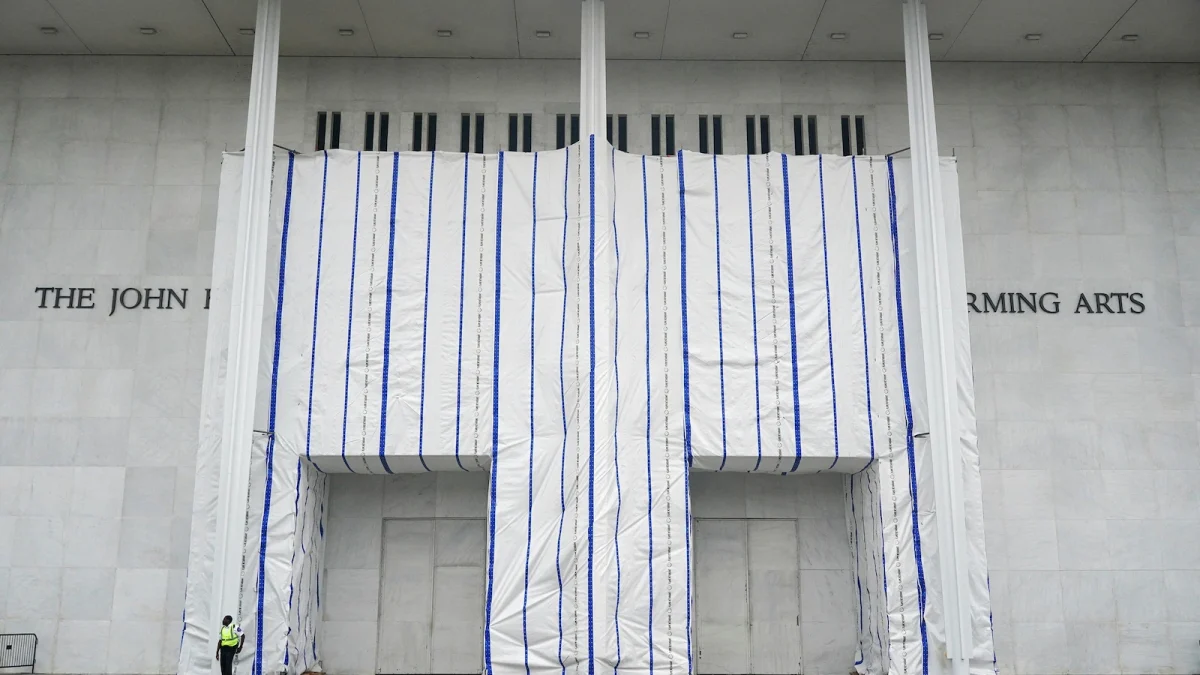
Since the initial order to strip Trump’s name from the building’s exterior, the Kennedy Center’s leadership has faced scrutiny over the implications of the decision. A tarp covered the facade on June 28, 2026, as workers prepared to erase the president’s name, a move that has sparked debate about the symbolism of the center’s renaming. The lower court’s ruling in May, which invalidated the board’s decision to rename the facility, was based on arguments that the change threatened the center’s legacy and fundraising potential. However, the appeals court found no compelling evidence to support these claims.
“The administration’s effort to rename the Kennedy Center was a political maneuver that lacked legal standing,” stated a spokesperson for the National Endowment for the Arts. “The appeals court’s decision to deny Trump’s request underscores the importance of maintaining institutional integrity over partisan symbolism.”
Context and Historical Significance
The Kennedy Center, established in 1971, has long been a symbol of American cultural excellence and bipartisan unity. Its renaming to the “Trump-Kennedy Center” by the board in December 2025 marked a pivotal moment in its history, with critics arguing that the change was an attempt to align the institution with Trump’s political agenda. Supporters of the name change, however, emphasized the need to reflect modern leadership and the president’s contributions to the arts during his tenure. The appeals court’s denial of Trump’s request to halt the process now clears the way for the final name removal, which is expected to be completed before the next major event at the center.
The legal battle has highlighted the tension between political influence and institutional independence. While the center’s leadership defended the name change as a necessary update, opponents raised concerns about the potential for political bias to overshadow the organization’s mission. The appeals court’s decision, which focused on the lack of evidence for harm, has been interpreted as a validation of the center’s autonomy in making such decisions. This ruling also reinforces the precedent set by the lower court, which had previously ruled that the name change was procedurally sound.
As the removal of Trump’s name progresses, the center’s board is now tasked with presenting a comprehensive plan for its new identity and any adjustments to programming or events. The decision to proceed without a pause has been welcomed by some as a timely correction to a name that has become a point of contention. Meanwhile, the Trump administration continues to challenge the move, arguing that it undermines the recognition of his achievements in promoting the arts. The appeals court’s rejection of the request to stop the process, however, signals that the legal challenge may not halt the transformation of the Kennedy Center’s legacy.
The case has drawn attention to the broader implications of political influence in cultural institutions. With the name change finalized, the Kennedy Center now stands as a symbol of shifting priorities and the ongoing debate over the role of public spaces in reflecting political values. As the center moves forward, it will need to balance its new identity with the expectations of its diverse stakeholders, ensuring that the decision aligns with its mission to foster artistic innovation and inclusivity. The appeals court’s affirmation of the name removal marks a significant milestone in this evolving narrative.