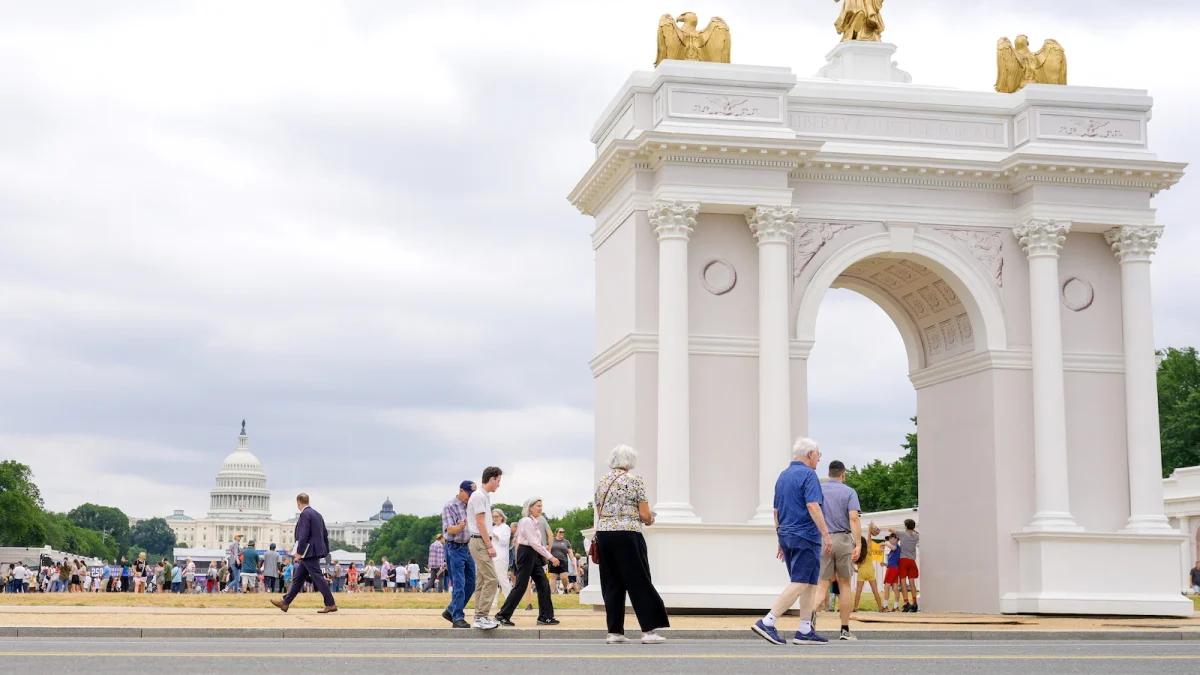
Trump’s Triumphal Arch Plan Reviewed by National Commission
Tyunews.com – President Donald Trump’s vision for a 250-foot (76-meter) triumphal arch in Washington, D.C., is entering a critical phase of evaluation by the National Capital Planning Commission (NCPC). The monument, which would stand at a traffic circle on the Virginia side of the Memorial Bridge, has sparked both enthusiasm and controversy among policymakers, historians, and the public. While the NCPC’s upcoming meeting on Thursday will focus on assessing the design, the project’s approval hinges on its ability to meet federal regulations that govern the city’s skyline and preserve its architectural legacy.
Design and Structural Adjustments
The NCPC’s 185-page report highlights that the triumphal arch’s design, though conceptually strong, requires revisions to comply with the Height of Buildings Act. This regulation limits the vertical expansion of structures in downtown Washington to ensure visual harmony with the city’s existing landmarks. The report suggests that the height distribution between the main structure, habitable roof, and statuary elements must be adjusted to align with the law. However, the final height of the arch will still reflect Trump’s original goal of creating a bold, symbolic monument.
“The commission recommends revising the project design to harmonize with the nation’s iconic skyline while preserving the arch’s imposing presence,” the report states. This could involve modifying the arch’s proportions or relocating certain elements to balance its grandeur with the surrounding architecture.
Historical and Cultural Significance
Trump’s triumphal arch is positioned to commemorate the nation’s history, particularly its role in unifying the country after the Civil War. The proposed location—adjacent to the Memorial Bridge—aims to connect the Lincoln Memorial and Arlington National Cemetery, two of D.C.’s most revered sites. Yet, critics argue that the arch’s scale might overshadow these historical symbols, altering the carefully curated vistas that have defined the city’s landscape for decades.
Supporters of the project emphasize its potential to serve as a modern tribute to American resilience and leadership. The monument’s inclusion of a public observation deck and three gilded statues further enhances its appeal as a multifunctional landmark. However, opponents warn that the design’s dominance could disrupt the symbolic balance between the Lincoln Memorial and the National Cemetery, which have long been central to the nation’s collective memory.
Legal and Political Challenges
Despite the NCPC’s initial approval of the design in May, the project has faced legal scrutiny. A coalition of veterans and historians has filed a lawsuit in federal court, arguing that the triumphal arch’s construction would obstruct key historical sightlines. The lawsuit seeks to halt the project until its impact on the city’s architectural and cultural heritage is fully evaluated.
“The plaintiffs claim the arch’s height would disrupt the visual connection between the Lincoln Memorial and Arlington National Cemetery, which is essential for symbolizing the reconciliation of North and South,” according to the legal filing. The case is expected to draw attention to the tension between presidential symbolism and the preservation of national landmarks.
Politically, the NCPC’s alignment with Trump’s agenda is significant. Will Scharf, a White House advisor appointed to lead the commission, has been instrumental in shaping the review process. His presence ensures that the project will receive favorable consideration, but it also raises questions about the commission’s impartiality. Critics suggest that the arch’s approval is a reflection of the administration’s broader influence on urban planning decisions.
Funding and Public Investment
The triumphal arch’s funding structure has evolved since its initial proposal. Initially, Trump cited surplus corporate donations and private contributions as the primary source of funds. However, recent disclosures reveal that public funds will also support the construction, including a $400 million ballroom at the White House. This shift has prompted debates about the allocation of taxpayer money for a presidential monument versus other public projects.
“The White House has not yet released a detailed cost breakdown for the arch, leaving concerns about budgetary transparency and prioritization,” noted a local watchdog group. The combination of private and public financing may complicate the project’s feasibility, especially as D.C. faces ongoing discussions about infrastructure and public spending.
Proponents of the arch argue that its construction would be a worthwhile investment in national identity and tourism. The monument’s design includes features such as a public observation deck, which could attract millions of visitors annually. However, opponents stress the need for a comprehensive cost-benefit analysis to ensure the project aligns with the city’s long-term interests.
Public Reaction and Debate
The triumphal arch has ignited a wide-ranging public debate, with opinions split between admiration for its bold vision and skepticism about its practicality. Supporters hail the project as a tribute to Trump’s legacy and a symbol of American pride, while critics question whether it will endure as a meaningful landmark or become a political monument.
Public opinion polls show mixed results, with many Americans associating the arch with the Trump administration’s symbolic efforts. Meanwhile, local historians and urban planners advocate for a more inclusive review process, emphasizing the importance of community input in shaping the nation’s capital. As the NCPC prepares to finalize its recommendations, the outcome will likely shape the future of D.C.’s skyline and its cultural narrative.
With the commission’s review process concluding soon, the triumphal arch remains a focal point of political and cultural discourse. The decision will not only determine the fate of the monument but also set a precedent for how future presidential projects influence the urban landscape. As the debate continues, the arch stands as a testament to the interplay between ambition, regulation, and public perception in shaping the nation’s capital.