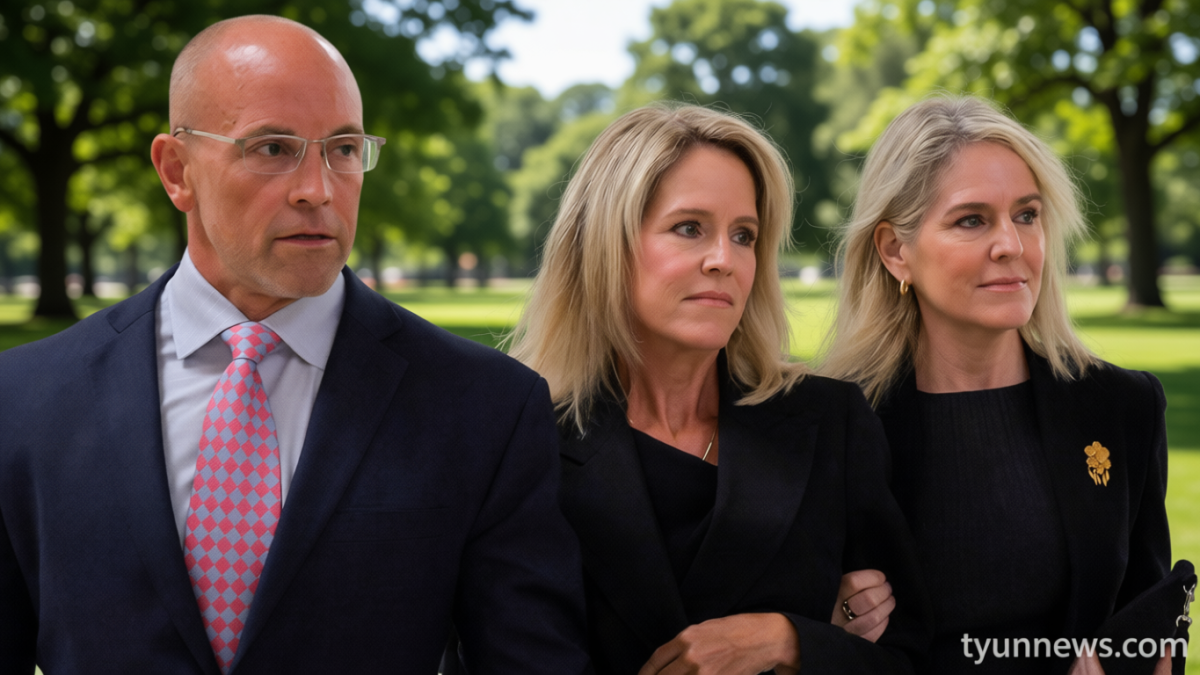
Lesley Groff: ‘I Did Not Know’ About Jeffrey Epstein’s Sex Crimes
Tyunews.com – Lesley Groff, former executive secretary to Jeffrey Epstein, testified before the House Oversight Committee on June 9, 2026, insisting she was unaware of her boss’s alleged sex crimes. During the session, she repeatedly emphasized her lack of knowledge, stating, “I did not know” about Epstein’s predatory behavior. Groff, who worked under Epstein for over 18 years, described her responsibilities as primarily administrative, including scheduling massages for him, but claimed she never arranged appointments involving minors.
Groff’s Role and Testimony Details
“I never met these women, so I didn’t know if they were young or how old they were,” Groff said, highlighting her belief that Epstein’s actions were routine. She compared his behavior to activities like going to the gym, suggesting she viewed them as ordinary. Her testimony came as part of a broader inquiry into how the federal government managed Epstein’s case and its aftermath.
Epstein, a financier accused of sexual misconduct with underage girls, had previously described Groff as “an extension of my brain.” Her appearance, which lasted eight hours, included questions about her awareness of Epstein’s relationships with minors and his partner Ghislaine Maxwell. Groff maintained that she followed clear instructions from Epstein and Maxwell, who set boundaries for her interactions with clients.
Committee’s Scrutiny and Groff’s Defense
“You want us to believe that after 18 years working for Mr. Epstein, not once did you suspect any of his contacts were minors, correct?” asked Rep. Raja Krishnamoorthi, D-Ill. Groff responded, “That is correct,” reinforcing her claim of ignorance. Lawmakers pressed her on how she could remain oblivious to Epstein’s conduct, even as his case gained national attention.
Groff’s testimony included her assertion that Epstein’s sexualized massages were part of his daily routine, and she did not consider them unusual. When asked if a 14-year-old sounds the same as an adult, she replied, “It’s possible. I don’t know. I was not evaluating voices.” This answer drew skepticism from committee members, who questioned her ability to overlook the age of individuals she interacted with regularly.
Background on Epstein’s Case and Groff’s Experience
Groff joined Epstein’s team in 2001, working in a high-profile environment that included former presidents and celebrities. She described the initial impression of Epstein’s circle as “truly impressive,” but admitted that the extent of his activities became apparent only after his death. Groff recalled Epstein explaining that he had been blackmailed by a girl who misrepresented her age, framing the situation as a “shakedown for money.”
Epstein’s legal troubles began in the mid-2000s with the Palm Beach police and later escalated to federal investigations led by the FBI. Groff noted that she was first informed of the criminal case in 2007 when the FBI visited her Connecticut home. Despite this, she maintained that her role as an executive secretary kept her focused on logistics rather than the deeper implications of Epstein’s behavior.
Voluntary Testimony and Legal Context
Groff’s appearance followed an FBI interview in 2021, two years after Epstein’s death in 2019. Her attorneys stated that prosecutors had assured her she would not face charges. This legal context influenced her willingness to testify voluntarily, as she sought to clarify her role in Epstein’s operations. She also mentioned the FBI’s scrutiny of her personal life, which added pressure during the hearing.
The House Oversight Committee’s questions centered on whether Groff’s claims of ignorance were credible. While she denied awareness of Epstein’s alleged crimes, her testimony was framed within the larger narrative of how his network operated. Groff’s statements were part of a broader effort to understand the extent of Epstein’s influence and the complicity of those around him. As the hearing progressed, her role as a key witness became central to the discussion.
Lesley Groff’s testimony continues to shape public perception of Epstein’s case. Her assertion that she “did not know” about his crimes underscores the complexity of the investigation, as it seeks to distinguish between ignorance and complicity. While her account provides insight into the inner workings of Epstein’s operation, it also raises questions about the awareness of others in his circle. The hearing has highlighted the challenges of proving intent in cases involving high-profile figures and their associates.