Supreme Court Denies Rastafarian’s Lawsuit Over Forced Baldness in Prison
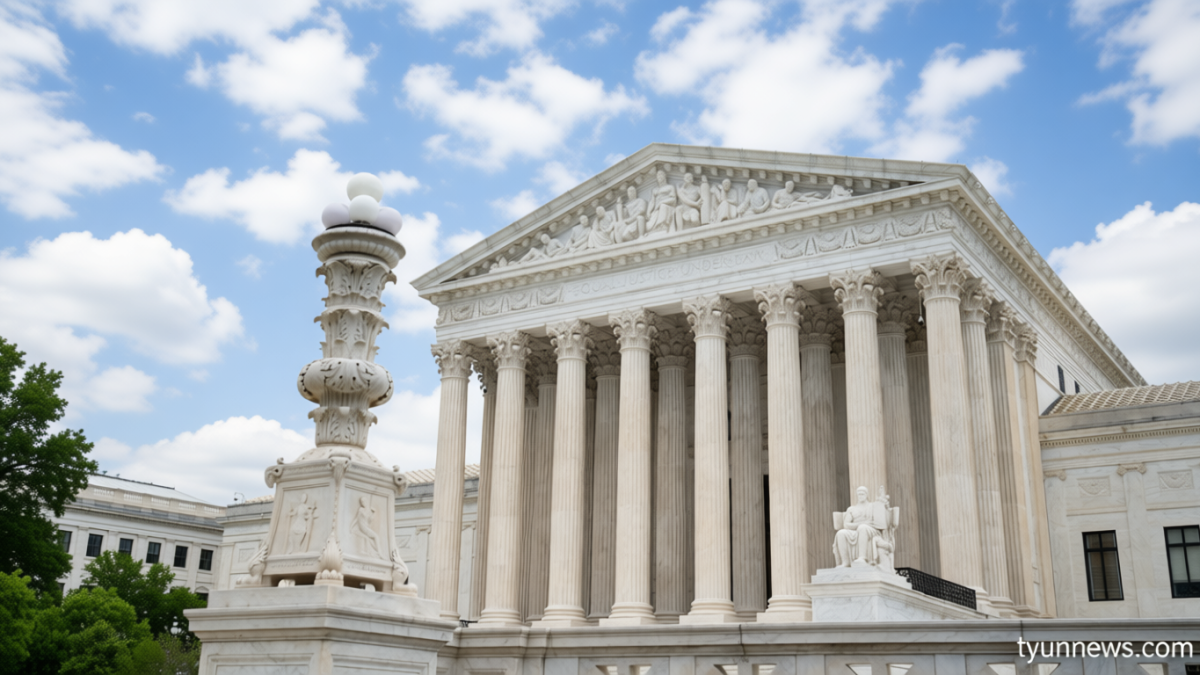
Tyunews.com – In a landmark decision that has sparked debate, the Supreme Court has denied a Rastafarian’s lawsuit challenging the forced shaving of his hair while incarcerated. The ruling, which split the Court along narrow lines, concluded that federal law does not allow individuals to claim damages against individual state employees in such cases. The case, which focused on the Religious Land Use and Institutionalized Persons Act of 2000, highlights the ongoing tensions between state autonomy and federal oversight in matters of religious freedom.
Damon Landor, a Louisiana inmate whose hair had remained uncut for two decades, became the central figure in the legal battle. He argued that the act of being shaved bald violated his religious beliefs and personal dignity. “This was not just about my hair—it was about my faith and my identity,” Landor stated in a recent interview. Despite the setback, he remains committed to advocating for his rights, emphasizing that the ruling should not deter others from seeking justice for similar grievances.
Legal Arguments and Federal Constraints
The case hinged on the interpretation of the Religious Land Use and Institutionalized Persons Act (RLUIPA), which requires states that receive federal funds to accommodate prisoners’ religious practices. Louisiana officials defended the decision, asserting that the law only binds states as a whole, not individual prison staff. “The Supreme Court has clarified that federal law cannot be used to impose personal liability on officials,” said Louisiana Attorney General Liz Murrill. “This decision ensures that states maintain control over how they implement religious accommodations within their facilities.”
Justice Neil Gorsuch, authoring the majority opinion, stressed that Congress’s spending power does not extend to personal liability claims. “The Spending Clause allows conditions on federal funds, but it does not create a legal avenue for suing individual employees,” Gorsuch explained. The Court’s reasoning was rooted in the belief that states should have flexibility in managing their prison systems without being held personally accountable for every decision.
Dissenting Opinions and Concerns for Religious Rights
Justice Ketanji Brown Jackson, joined by Justices Sonia Sotomayor and Elena Kagan, voiced strong dissent, arguing that the ruling undermines the purpose of RLUIPA. “By denying this lawsuit, the Court has weakened a key tool for ensuring religious freedom in prisons,” Jackson wrote. “Prisoners who face discrimination—like forced hair removal—should have the ability to hold officials accountable, even if the act was committed by an individual employee.”
Legal experts warn that the decision could have far-reaching consequences. The American Civil Liberties Union (ACLU) called it a “significant setback” for incarcerated individuals, noting that it may embolden prison staff to act without fear of personal liability. “This ruling sends a clear message that even egregious violations of federal law can go unaddressed,” said Daniel Mach, a spokesperson for the ACLU. Advocates for religious rights are now urging Congress to revisit the RLUIPA to strengthen protections for prisoners.
Historical Context and Cultural Significance
The Rastafarian faith, which emphasizes natural living and the spiritual significance of hair, has long been a symbol of cultural identity for its followers. For many, unshaved hair represents a connection to their heritage and a form of resistance against oppression. Landor’s case, however, exposed the challenges faced by Rastafarians in state prisons, where policies often prioritize administrative efficiency over spiritual expression.
Historically, forced hair removal has been a common practice in correctional facilities, with some states citing safety or hygiene as justification. While the Supreme Court’s ruling does not eliminate these practices, it limits the ability of prisoners to seek compensation for the infringement. Legal scholars are now examining whether the decision creates a precedent that could affect other religious freedoms, such as dietary restrictions or prayer time.
Public reaction to the ruling has been mixed. While some support the Court’s decision to protect state autonomy, others argue that it overlooks the cultural and spiritual weight of the issue. “Forcing a Rastafarian to lose their hair is more than a physical act—it’s a cultural erasure,” said a community leader. This sentiment underscores the broader debate over how religious practices should be accommodated in the justice system.
Implications for Future Litigation
The Supreme Court’s denial of Landor’s lawsuit may set a precedent for similar cases. Legal analysts suggest that the decision could influence how prisoners pursue claims against state officials, potentially narrowing the scope of religious freedom protections. “This ruling may deter others from filing lawsuits unless the violation is directly tied to a state policy,” said Richard Garnett, a Notre Dame Law professor. He emphasized the importance of revisiting the RLUIPA to ensure it continues to safeguard individual rights in state prisons.
As the debate continues, the case serves as a reminder of the complex interplay between state authority and federal law. While the Court has upheld the Spending Clause’s limitations, advocates remain hopeful that future rulings will balance these considerations with the cultural significance of religious practices. “This decision is a step back, but the fight for religious freedom in prisons is far from over,” said a legal rights activist. The outcome may