Supreme Court Upholds Racial Bias Claim in Death Row Case for Black Inmate
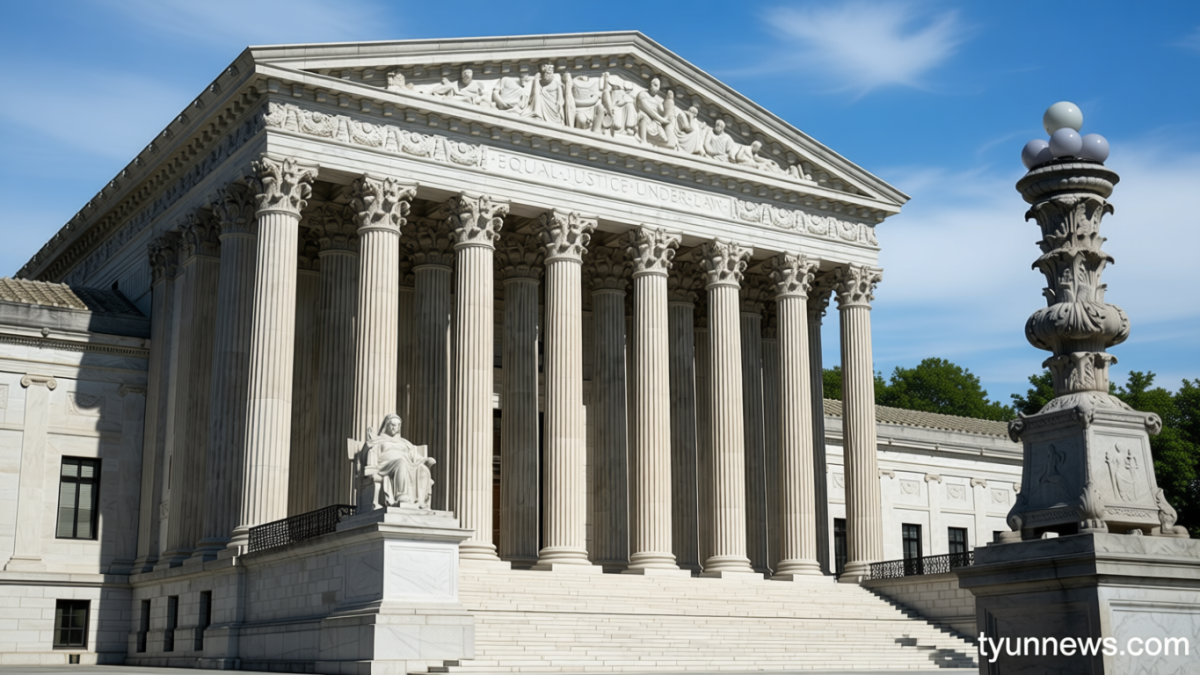
Tyunews.com – The U.S. Supreme Court delivered a landmark decision on Thursday, supporting a Black defendant on death row in Mississippi who argued that racial bias influenced the jury’s composition during his trial. The ruling, split 5-4, granted Terry Pitchford a new opportunity to challenge the fairness of his conviction, which hinged on the prosecution’s systematic exclusion of Black jurors. This case has sparked renewed debate about racial disparities in the U.S. justice system, particularly in capital punishment cases.
Terry Pitchford, currently 40 years old, was convicted of capital murder in 1999 for his involvement in the fatal shooting of Reuben Britt, a grocery store owner in Grenada, Mississippi. The incident occurred when Pitchford, then 18, and a friend robbed the Crossroads Grocery. During the attack, the friend fired three shots, killing Britt, while Pitchford was later sentenced to death. His trial, however, became a focal point for claims of racial discrimination in jury selection.
The case shares striking parallels with a previous high-profile conviction of Curtis Flowers, a Black man whose death sentence was revoked by the Supreme Court seven years prior. In both instances, the prosecution reportedly dismissed Black jurors with a history of racial bias. Doug Evans, a retired Mississippi prosecutor, was central to both trials. In Flowers’ case, Evans had excused four Black individuals from the jury, a move Justice Brett Kavanaugh described as a “relentless, determined effort to rid the jury of Black individuals.” His tactics in Pitchford’s trial were similarly scrutinized.
The Supreme Court’s 5-4 decision reaffirmed the constitutional principle established in
Forty years ago, the Supreme Court established a precedent in Batson v. Kentucky, which barred prosecutors from excusing jurors solely based on race and required trial judges to assess claims of discrimination.
This landmark ruling in 1986 set a framework for evaluating claims of racial bias in jury selection. Under Batson, prosecutors must provide race-neutral explanations when excluding jurors, and judges are obligated to ensure these justifications are valid. Pitchford’s case tested the application of this standard in modern legal proceedings.
Pitchford’s legal team argued that their ability to challenge the jury’s composition was stifled by Judge Joseph Loper’s rulings. They contended that the trial judge failed to grant them sufficient time to object to the prosecution’s dismissals of Black jurors. The state Supreme Court, however, ruled that the lawyers had not adequately raised concerns about the jury’s makeup, upholding the conviction. This decision became the basis for further appeals, with the federal courts now weighing in on its validity.
In 2023, U.S. District Judge Michael P. Mills overturned Pitchford’s conviction, stating that the trial judge had not provided his lawyers with adequate opportunity to challenge the jury’s selection. Mills highlighted the role of Evans’ past actions, noting that his dismissal of Black jurors in prior cases suggested a pattern of discriminatory behavior. The 5th U.S. Circuit Court of Appeals, in a unanimous ruling, reversed this decision, affirming that the state Supreme Court had acted reasonably in its original judgment.
Evans’ history of racial bias in jury selection has drawn significant criticism. In the 2019 case involving Curtis Flowers, the prosecution’s repeated efforts to exclude Black jurors were central to the Supreme Court’s reversal of the death sentence. Loper, who presided over the final two of Flowers’ six trials, faced similar scrutiny in Pitchford’s case. The judge’s rulings in both trials were seen as critical to the outcome, raising questions about whether the jury selection process was truly impartial.
The current ruling underscores the enduring relevance of Batson in ensuring equitable jury representation. While the Supreme Court’s decision did not directly overturn Pitchford’s conviction, it validated his claim that racial bias played a role in his trial. This legal victory could set a precedent for future cases where similar patterns of exclusion emerge. The 5-4 split in the decision also highlights the ongoing divide among justices on the issue of racial discrimination in capital punishment trials.
Key to the case was the argument that the prosecution’s actions in dismissing Black jurors were not justified by race-neutral explanations. Pitchford’s lawyers emphasized that Evans had systematically excluded Black individuals, including four others in the same trial, leaving only one Black juror in the panel. This disparity in representation was alleged to have skewed the jury’s perception of the case, potentially influencing the verdict in favor of the state.
The ruling also reflects broader concerns about the consistency of jury selection practices across the U.S. In Mississippi, where the case originated, the use of peremptory challenges to exclude Black jurors has been a recurring issue. The Supreme Court’s decision to support Pitchford’s claim reinforces the importance of these legal safeguards, even as it leaves the door open for further review of the specific jury dismissals in his trial.
With the case now back at the state Supreme Court, the implications of the ruling could extend beyond Pitchford’s personal journey. It may embolden other death row inmates to challenge their convictions on the grounds of racial bias, particularly in states where similar practices have been documented. The decision also reinvigorates the discussion on how the Batson rule is applied in practice, with critics arguing that its implementation remains inconsistent in many courts.
Evans’ role in both cases has drawn attention to the potential for prosecutorial discretion to perpetuate racial inequities. His history of dismissing Black jurors in past trials, including the 2019 Curtis Flowers case, has been cited as evidence of a broader pattern. The current ruling not only validates Pitchford’s claim but also reaffirms the need for rigorous judicial oversight in such situations.
As the legal battle continues, the focus remains on whether the jury selection process was fair and whether the exclusion of Black jurors contributed to a miscarriage of justice. The Supreme Court’s decision to side with Pitchford marks a significant step in addressing racial disparities in capital punishment, though the ultimate resolution of his case will depend on further appeals and the application of the Batson standard in his specific trial.
Related Stories
Follow the AP’s coverage of the U.S. Supreme Court for additional insights into this and other pivotal rulings. Recent developments in the justice system continue to shed light on the complexities of racial bias in legal proceedings, with this case serving as a critical example of its impact on death row convictions.