Central Bank’s Political Stress Test Threatens Economy, Powell Warns
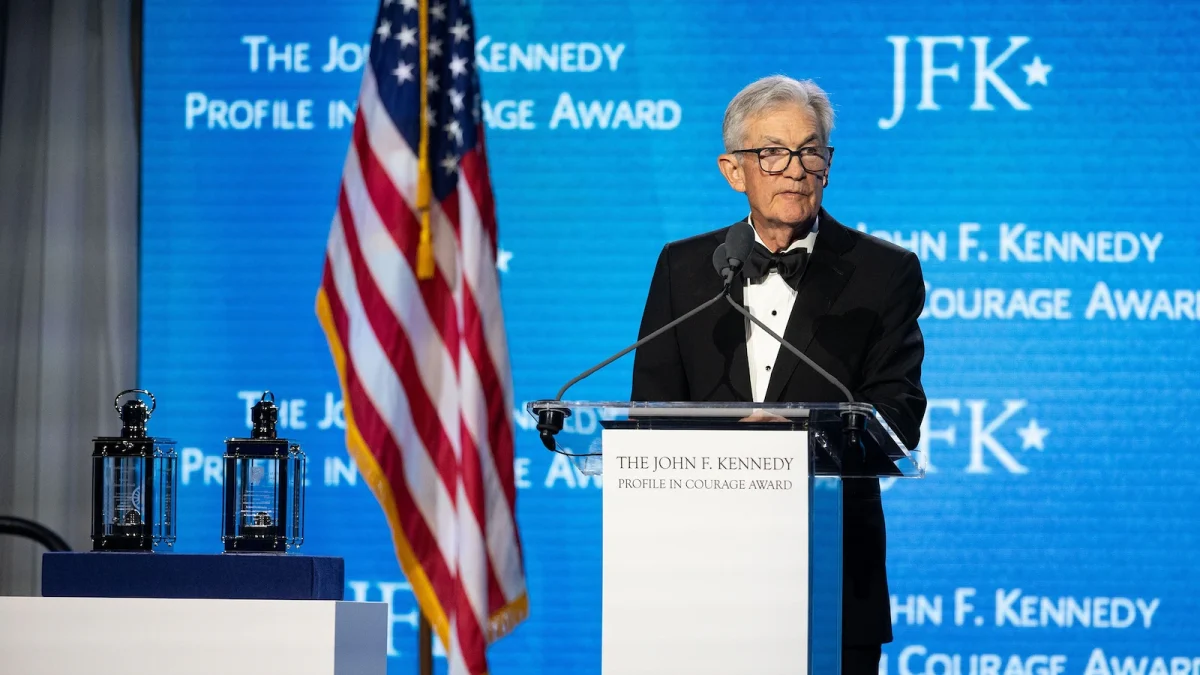
Tyunews.com – Former Federal Reserve Chair Jerome Powell has raised alarms about the central bank’s mounting political challenges, warning that these pressures could undermine economic stability. Speaking at the John F. Kennedy Library Foundation in Boston, Powell highlighted how the current climate is testing the Fed’s independence, with lawmakers and political leaders increasingly seeking to influence monetary policy decisions. This situation, he argued, poses a significant risk to the institution’s ability to act in the public interest and maintain long-term economic health.
Political Interference and Monetary Policy Autonomy
As the central bank navigates its role in the U.S. economy, Powell emphasized the importance of preserving its autonomy from political agendas. “The Fed has been under a political stress test,” he stated, noting that this scrutiny is not limited to the current administration. He praised Congress for historically safeguarding monetary policy from partisan influence, a practice mirrored by central banks in other advanced economies. However, recent developments suggest that this tradition may be under threat.
“Congress wisely chose to insulate monetary policy decisions from political pressure. All other advanced-economy nations have done the same.”
Powell’s remarks come as the Fed faces heightened scrutiny over its decisions, particularly in response to inflationary pressures. The central bank’s independence, he argued, is crucial for making data-driven choices rather than being swayed by short-term political gains. This dynamic has sparked debates about the balance between democratic accountability and the Fed’s mandate to prioritize economic stability over electoral cycles.
Legal Challenges and Institutional Risks
Recent legal actions have further intensified the central bank’s political stress. The Department of Justice initiated a criminal investigation into Powell, focusing on his testimony about cost overruns in a major building project. This marks the first time a Fed chair has faced a criminal probe in the bank’s 113-year history, raising concerns about the potential for political leaders to use legal tools to reshape monetary policy. Powell dismissed the investigation as an attempt to pressure the Fed into aligning with specific economic goals.
Additionally, the Supreme Court is set to rule on a case involving President Donald Trump’s efforts to remove Fed Governor Lisa Cook. The dispute centers on allegations of mortgage fraud, which Cook claimed were politically motivated. This legal battle underscores the vulnerability of the central bank to political maneuvering, with analysts warning that such interventions could lead to inconsistent policy decisions and erode public trust in the Fed’s neutrality.
Historical Precedents and Economic Consequences
Powell’s concerns are rooted in historical examples where political interference disrupted monetary policy. He referenced the 1970s oil crisis, during which President Richard Nixon pressured then-Fed Chair Arthur Burns to lower interest rates. This decision contributed to uncontrolled inflation, which later required aggressive rate hikes to stabilize the economy. The resulting 1981 recession, with unemployment peaking at 10%, serves as a cautionary tale of the risks posed by political influence on central banking.
“If any administration finds a way to remove Fed officials over policy differences, future leaders will follow suit. The public may lose confidence in the central bank’s ability to make decisions based solely on economic needs.”
With the Fed now grappling with a resurgence in inflation driven by the Iran conflict and energy prices, Powell stressed that maintaining independence is more critical than ever. The institution’s credibility, he argued, is essential for anchoring the economy during periods of uncertainty, particularly as the new Fed Chair, Kevin Warsh, takes on the challenge of navigating this complex environment.
Public Confidence and Policy Consistency
Public trust in the central bank has become a central issue in the ongoing political stress. Powell warned that if lawmakers or executives find ways to pressure the Fed through legal or administrative means, the resulting policy shifts could create instability. For instance, the DOJ investigation into his testimony about a renovation project has raised questions about whether officials will be held accountable for monetary decisions or if they will be targeted for political reasons.
These challenges highlight the delicate balance the central bank must maintain between political accountability and operational independence. As inflation and economic uncertainty persist, the Fed’s ability to act decisively without external interference will determine its effectiveness in safeguarding the U.S. economy. Powell’s message serves as a reminder of the stakes involved in preserving the central bank’s autonomy amid growing political tensions.